
The Foundation of Your Arm Tattoo Placement
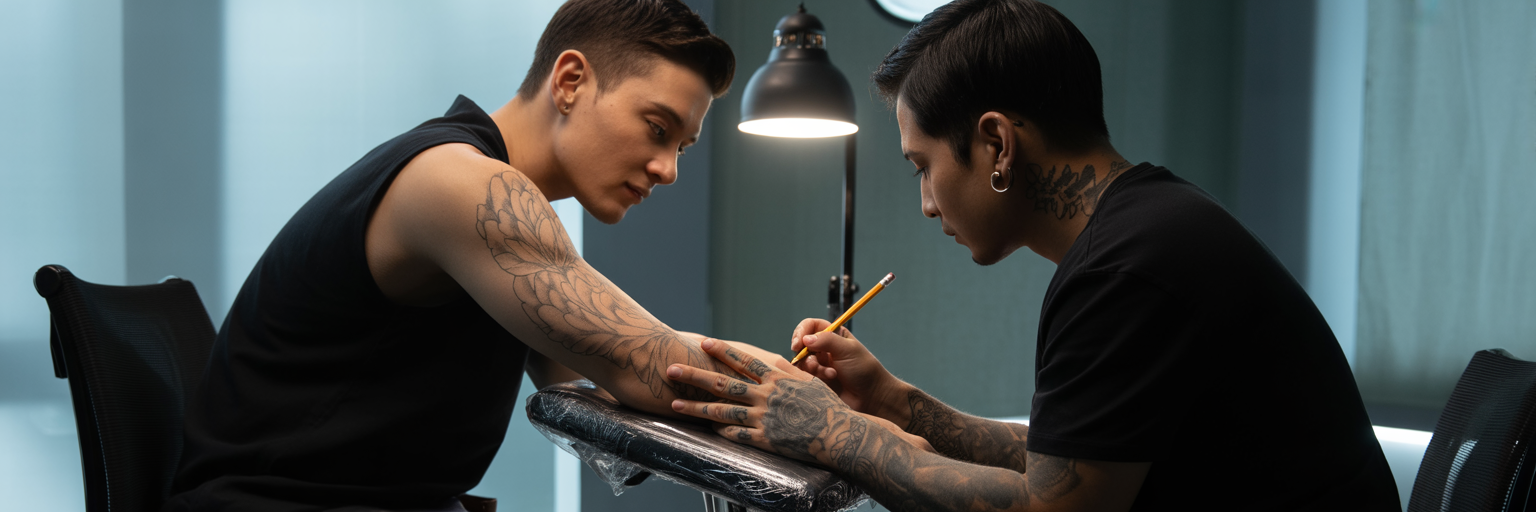
The story of a tattoo begins long before the needle touches the skin; it starts with choosing the canvas. On the arm, placement is the architectural foundation that determines how your art lives, moves, and is perceived. This initial decision is a foundational artistic choice, not just a practical one. Thoughtful arm tattoo placement ensures your design complements your body’s natural form. The arm is a dynamic, three-dimensional surface, and a design must account for muscle curvature and movement to look intentional from every angle.
Beyond aesthetics, we consider personal factors like career visibility, your individual pain tolerance, and the narrative you wish to convey. This decision-making process is the first step in a collaborative partnership with your artist. Together, we explore how placement can enhance your story, ensuring the final piece feels both personal and perfectly integrated with your anatomy.
The Upper Arm: A Versatile Canvas
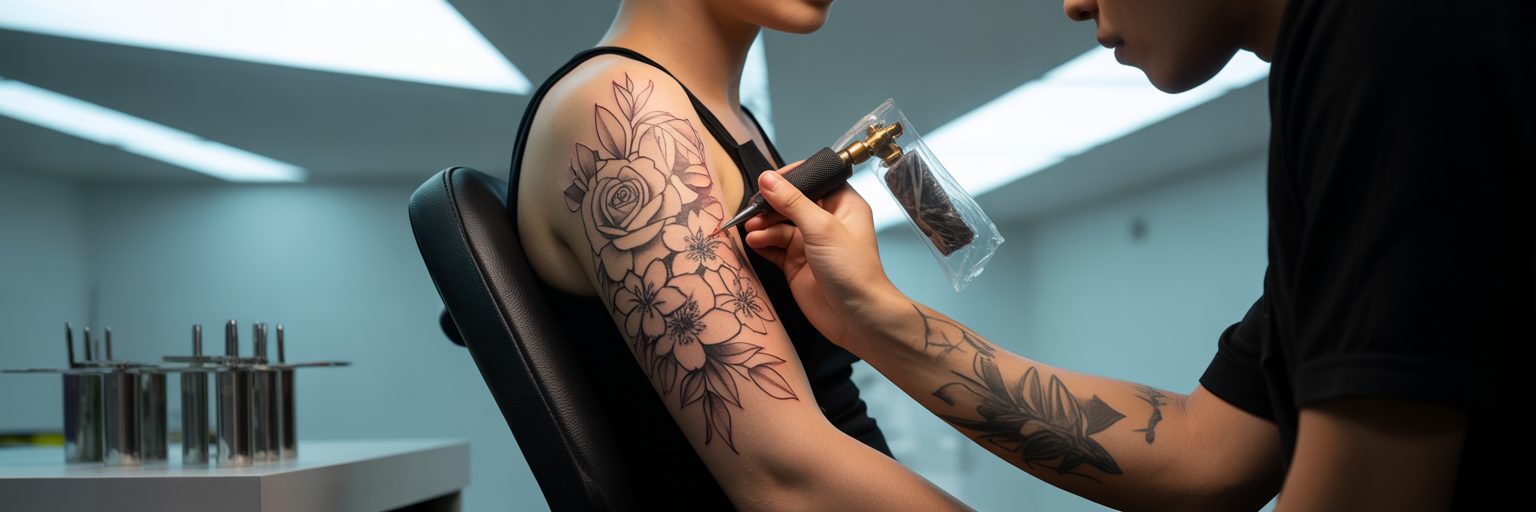
The upper arm offers a diverse range of options, each with distinct characteristics. Choosing between the outer and inner arm depends on your design’s complexity, your comfort with visibility, and your personal pain threshold. This area provides a wonderful starting point for many clients, balancing impact with practicality.
The Outer Arm: A Prime Location for Detail
The outer bicep and deltoid area is a prime location for tattoo artistry. Its broad, relatively flat surface provides a stable canvas, making it ideal for larger, more detailed pieces that require precision. Many artists, as noted in guides like Hyperinkers' 'Arm Tattoo Placement: The Ultimate Guide', consider this one of the best spots for intricate artwork. For professionals in Singapore, it offers the practical benefit of being easily concealed by standard sleeves. The significant muscle and fat padding in this area result in a lower pain level, making it an excellent choice for those new to tattoos or planning extensive sessions.
The Inner Bicep: A Sensitive and Personal Space
In contrast, the inner bicep is a more sensitive and personal space. The skin here is thinner and closer to major nerves, which means the sensation is more intense. The healing process can also be more challenging due to constant friction with your body. For these reasons, this area is best suited for delicate or deeply personal designs that are not always on display. It offers a discreet canvas for art that holds special meaning, revealed on your own terms.
The Forearm: Visibility and Flow
The forearm is a high-visibility canvas, perfect for individuals who want to showcase their art. Its unique cylindrical shape is ideal for designs that wrap and flow with the body’s movement. When considering forearm tattoo ideas Singapore residents often favour, botanicals, script, and geometric patterns are popular choices because they beautifully complement the arm's natural contours. The forearm presents two distinct surfaces for your artist to work with.
- Outer Forearm: This area offers excellent visibility with a manageable pain level. Its convex shape can be used to add dimension and a sense of movement to a design, making the artwork feel more dynamic.
- Inner Forearm: The taut, flat skin of the inner forearm is an exceptional surface for precise, fine-line work and intricate details. However, it is a more sensitive area due to thinner skin and a higher concentration of nerve endings.
A crucial consideration for anyone with a forearm tattoo in Singapore is the sun. The constant exposure to strong UV rays requires diligent sunscreen application to prevent fading and preserve your tattoo's vibrancy. A forearm tattoo is a statement, and we collaborate with you to ensure the design flows harmoniously with your arm's rotation.
Composing a Cohesive Full Sleeve
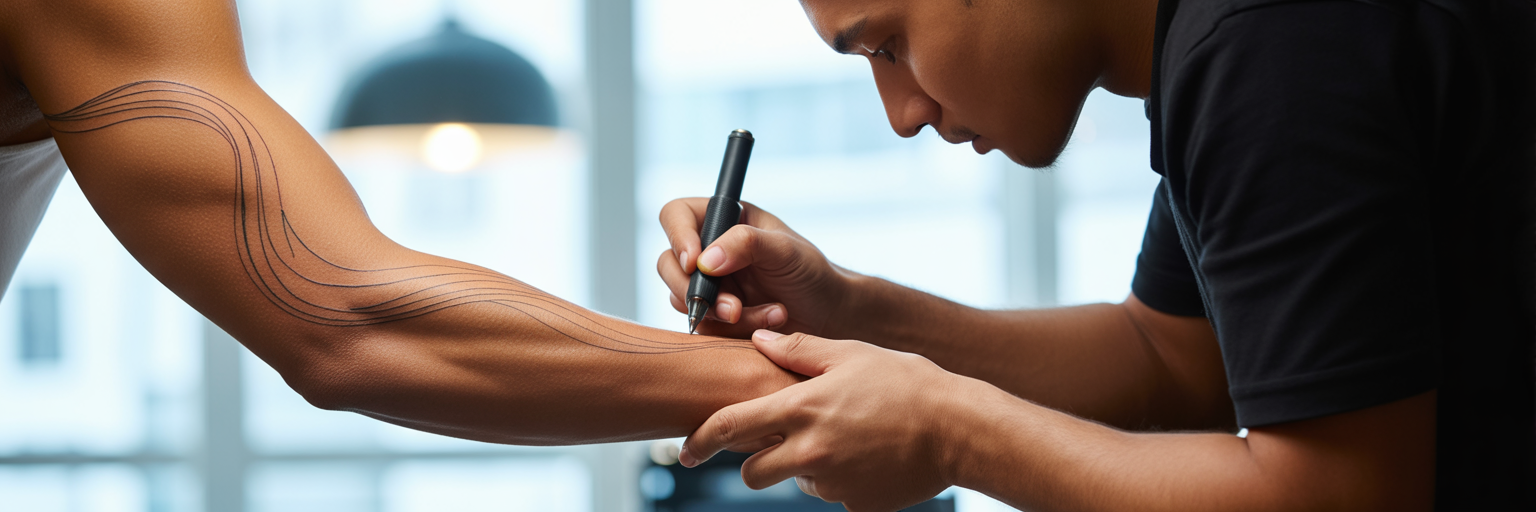
Creating a full sleeve is an immersive artistic process that goes far beyond placing individual tattoos. Successful full sleeve tattoo planning treats the entire arm as a single, unified canvas. The modern approach is not to accumulate a random collection of designs but to develop a cohesive artwork that tells a complete story. This requires significant forethought and collaboration, a sentiment echoed in professional guides like Think Tank Tattoo's 'How to Plan a Sleeve Tattoo'.
Our process begins with what we call 'anatomical mapping'. The artist designs the artwork to wrap and flow with your arm's unique musculature, creating a piece that moves with you and complements your body's form. To connect different focal points, we use transitional elements like smoke, water, or filigree. These details ensure a seamless narrative from your shoulder to your wrist, transforming separate ideas into a single, fluid composition.
From an artist’s perspective, a key piece of advice is to limit the number of major subjects in a sleeve to four or five. This prevents the composition from becoming cluttered and unreadable. Strategic use of negative space is just as important as the tattooed areas, as it allows the main elements to breathe and stand out. This disciplined approach ensures your sleeve has a clear hierarchy and achieves maximum visual impact, resulting in a timeless piece of wearable art.
Understanding Pain and the Healing Process
Understanding what to expect regarding pain and aftercare is a vital part of your tattoo journey. While everyone's pain tolerance is different, certain areas of the arm are naturally more sensitive than others. This is due to factors like skin thickness, proximity to bone, and nerve density. To help you anticipate the sensation, we have prepared a tattoo pain chart arm guide based on common experiences. As placement guides from studios like Burned Hearts Tattoo often note, these ratings are widely acknowledged in the tattoo community.
| Arm Area | Typical Pain Rating (1-10) | Reason for Sensitivity |
|---|---|---|
| Outer Bicep / Deltoid | 2-4 | Significant muscle and fat padding |
| Forearm (Outer) | 3-5 | Good muscle coverage, less sensitive nerves |
| Forearm (Inner) | 5-7 | Thinner skin, more nerve endings |
| Inner Bicep | 7-9 | Very thin, sensitive skin close to the armpit |
| Elbow (Bone) | 8-10 | Directly over bone with minimal padding |
| Elbow Ditch (Inner Crease) | 9-10 | Extremely thin skin with many nerve endings |
| Wrist | 7-9 | Bony area with thin skin and many nerves |
This chart provides a general guide to pain levels. Individual pain tolerance varies, but this reflects common experiences based on the anatomy of the arm.
The healing process is equally important. Surface healing typically takes two to three weeks, but full dermal regeneration can take three to four months. Diligent aftercare is non-negotiable, as it directly impacts the final quality and longevity of your tattoo. For large projects like sleeves, we use a staggered approach, allowing each section to heal properly before proceeding. This ensures the best possible outcome for your investment.
Collaborating on Your Perfect Design
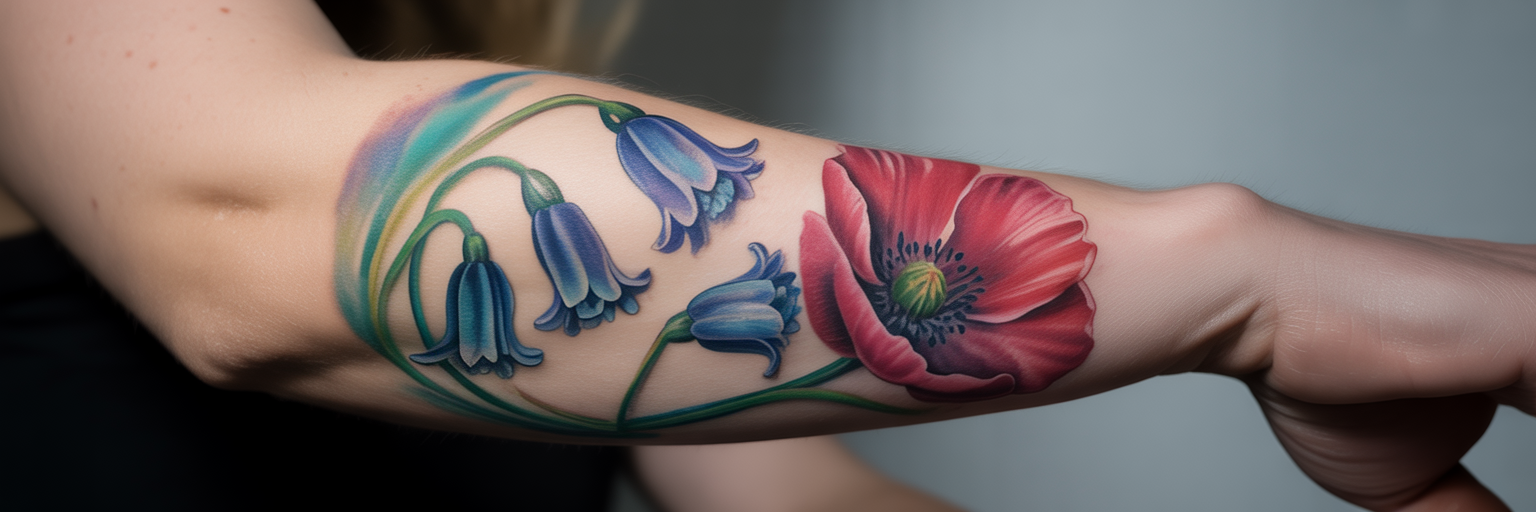
Ultimately, creating an exceptional tattoo is a collaborative partnership. The most compelling results emerge from open communication and a shared vision between you and your artist. At Memory Lane, our process is built on this principle. During your consultation, we listen to your stories and ideas, translating them into a visual concept that is uniquely yours. We then create custom mockups to show how a design will look on your specific arm, accounting for skin stretch and muscle movement to ensure a perfect fit.
We encourage you to bring your inspiration, but also to trust our artistic guidance on what will be anatomically sound and aesthetically timeless. Our experience allows us to refine ideas, ensuring the final design is not only beautiful on paper but also enhances your natural form for years to come. The goal is to create a custom tattoo design Singapore clients will cherish, a piece of art that is both visually stunning and deeply meaningful.
Your story deserves to be told with artistry and care. When you are ready to begin the collaborative process for your own custom tattoo, we invite you to start the conversation with us.