
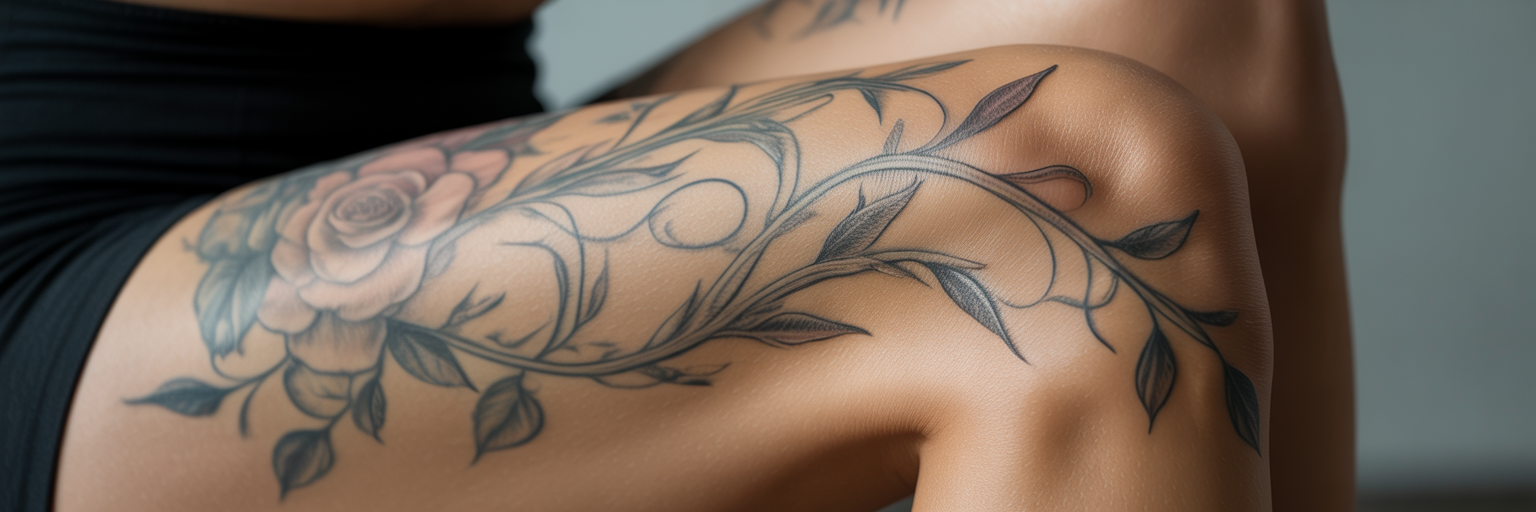
The area behind the knee, often called the knee ditch, is a distinctive canvas for body art. Its placement offers a dynamic quality, revealing and concealing a design with the body's natural rhythm. A successful back of knee tattoo is the result of a thoughtful partnership between you and your artist. This collaboration ensures the final piece is not only visually striking but also harmonizes with your anatomy and movement.
We understand this placement is known for its sensitivity, which makes professional guidance essential. A skilled artist works with you to create a design that is both beautiful and built to last on this high-flexion area. This guide will walk you through the key considerations for your journey. We will explore how to select a durable design, manage comfort during your session, and navigate the specific aftercare required to protect your new artwork.
Designs That Complement Your Leg's Movement
Choosing a design for the back of the knee requires a focus on longevity and anatomical flow. The constant bending and straightening of the joint means that not all styles will age gracefully. A design that works with your body’s movement will remain beautiful for years to come, while one that fights it can become distorted.
Prioritizing Longevity Over Intricacy
The skin behind the knee is in perpetual motion, which directly impacts how a tattoo settles and ages. This constant flexion can cause ink to spread over time. For this reason, designs with extremely fine lines or dense, intricate details may not be the best choice for this specific placement. As noted in a guide on knee tattoo placements, the constant movement means that very fine lines may blur or spread over a period of five to eight years. We prioritize designs with strong foundations and clear forms to ensure your artwork maintains its integrity and clarity as it matures with you.
Designs That Flow with Your Anatomy
The most successful designs for this area are those that embrace the leg's natural curves. Flowing botanicals, custom ornamental patterns, and traditional motifs like vines are excellent choices. These styles can be composed to wrap around the joint, creating a sense of organic movement. An ornamental knee tattoo, for instance, can be drawn to use the joint as a natural centerpiece, enhancing its form rather than fighting it.
We generally advise against rigid geometric patterns or perfectly symmetrical shapes. When the knee is bent, these designs can appear warped or uneven. Instead, we recommend pieces with bold outlines and simplified forms that are adaptable. This approach ensures your tattoo looks intentional and harmonious whether your leg is straight or bent, creating a piece that is truly a part of you.
| Design Style | Longevity & Durability | Aesthetic Harmony |
|---|---|---|
| Fine-Line & Micro-Realism | Lower; prone to blurring from skin flexion. | Can look distorted when knee is bent. |
| Rigid Geometric Shapes | Moderate; sharp lines may soften over time. | High risk of appearing warped with movement. |
| Flowing Botanicals & Vines | High; designs are adaptable and age gracefully. | Excellent; complements the natural curve of the leg. |
| Ornamental & Abstract Patterns | High; often uses bold lines and negative space. | Excellent; can be custom-drawn to flow with the joint. |
Navigating Comfort During Your Tattoo Session
We approach every session with professional transparency, and it is important to acknowledge that the knee ditch tattoo pain is a common concern for clients. While every individual's tolerance is different, general guides from sources like King Ice often place the back of the knee at a moderate to high sensitivity level. However, the experience is entirely manageable with the right preparation and a collaborative mindset.
Your comfort is a priority, and there are several practical steps you can take to prepare for your appointment. Open communication with your artist is key. We encourage you to speak up if you need a break, ensuring the process remains a positive one. Our artists are trained to position you for both stability and minimal strain, creating the best possible canvas for your artwork while keeping you as comfortable as possible.
To help you prepare, we recommend the following:
- Stay well-hydrated in the 24 hours leading up to your appointment.
- Have a nourishing meal about an hour before your session to maintain your blood sugar levels.
- Practice steady, calm breathing techniques during the tattoo process.
- Wear comfortable, loose clothing that allows easy access to the area.
- Avoid alcohol and blood-thinning pain relievers before your session.
Aftercare for a High-Movement Tattoo
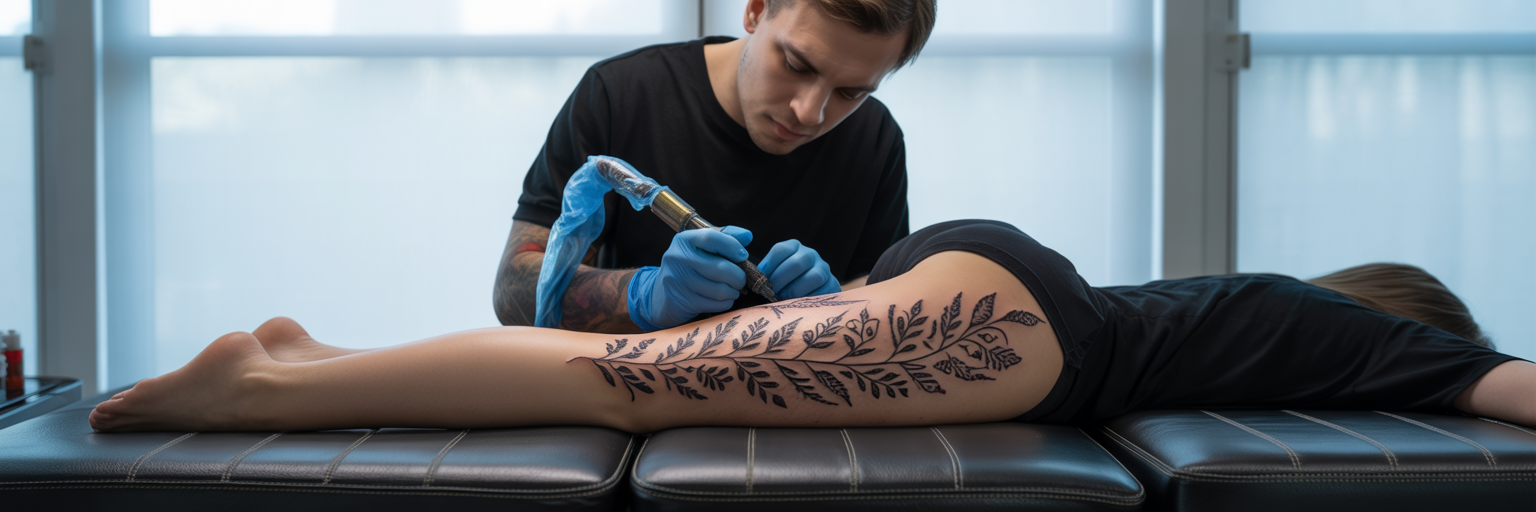
The journey to a beautiful tattoo does not end when you leave the studio. The back of knee tattoo healing phase is perhaps the most critical part of the process, especially for a high-movement area. The constant flexion and potential for friction from clothing present unique challenges. Bending the knee can risk cracking the delicate scabs that form during healing, while tight trousers can cause irritation and disrupt the ink.
Proper aftercare is essential to protect your investment and ensure the artwork heals cleanly and vibrantly. Similar to aftercare for other flexible areas, as noted by Prowear Trends, preventing friction is a key step for any tattoo designs for legs. We provide every client with detailed, personalized instructions, but the following guidelines are fundamental for healing a tattoo on the back of the knee.
Follow these steps to support a smooth healing process:
- Wear loose-fitting trousers or skirts made from soft, natural fibers like cotton to prevent irritation.
- Avoid strenuous leg exercises, such as squats, running, or cycling, for the first 2-4 weeks to prevent cracking the healing skin.
- Keep the area clean and apply a thin layer of the recommended fragrance-free ointment as directed by your artist to keep it moisturized but not oversaturated.
- When resting, try to elevate your leg to help reduce any swelling that may occur in the first few days.
- Avoid soaking the tattoo in baths, pools, or the sea until it is fully healed.
While these are general best practices, always prioritize the specific aftercare guidance provided by your artist. Their instructions are tailored to your skin and your new tattoo.
The Collaborative Design Process at Memory Lane
At Memory Lane, we believe that exceptional tattoo artistry is born from partnership. This is especially true for a complex placement like the back of the knee. The consultation is a crucial step where an experienced tattoo artist Singapore from our team will assess your unique anatomy. We discuss how a proposed design will interact with your body’s shape and movement, ensuring the final piece feels like a natural extension of you.
Choosing the right artist is paramount, as their expertise in placement is just as important as their artistic style. This principle, highlighted by resources like Tattoo Nexus, applies to any placement on the body. We also encourage a ‘visibility test’, where we consider how the tattoo will look with your daily movements and wardrobe choices. An artist’s true skill is revealed in their ability to adjust a stencil for perfect anatomical flow, making the tattoo an integral part of your body, not just an image on it.
This dedication to personalized artistry is at the heart of our process. To begin your own collaborative design journey with our team, we invite you to start a conversation with us at Memory Lane Tattoo Studio.