
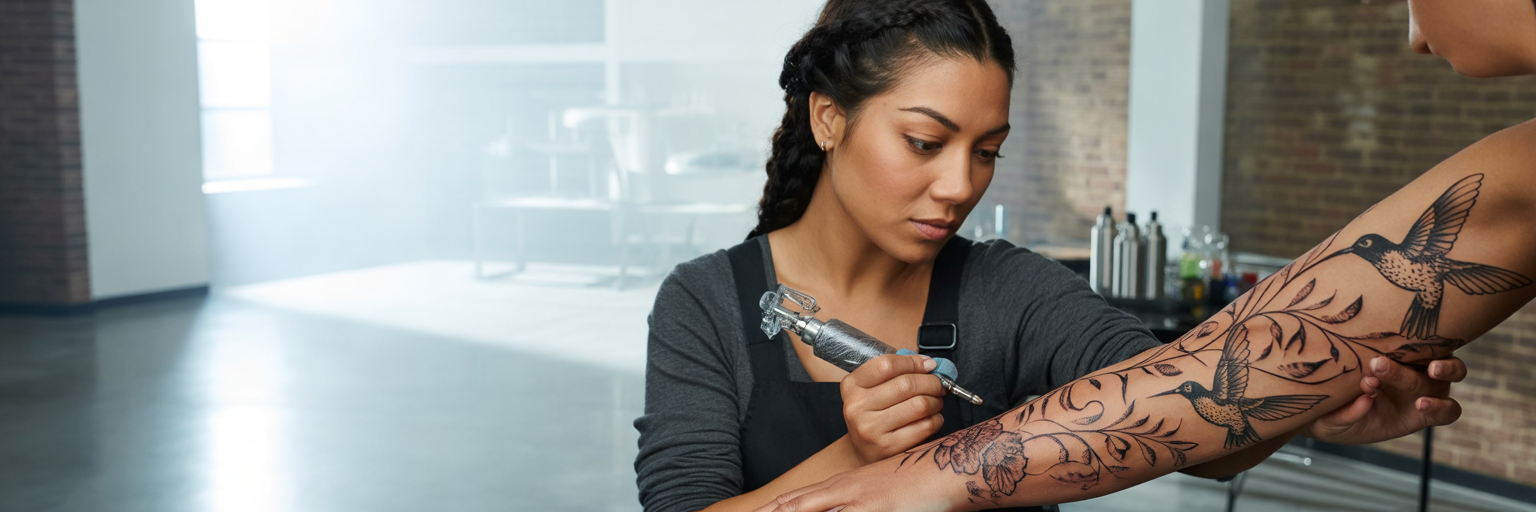
Archaeological discoveries of 5,300-year-old preserved skin show that early humans placed markings directly along acupuncture points and moving joints to connect physical motion with personal history. Selecting the right tattoo placement remains the foundational step in translating your personal milestones into living, breathing art.
Why Tattoo Placement Shapes Your Personal Narrative
Think of your body not as a flat, static canvas, but as a dynamic narrative geography. Where you choose to anchor a memory directly influences how its emotional weight feels to you and how that message resonates with those who see it. As we explore in our strategic guide to tattoo placement, matching the emotion of a milestone with the right physical contour transforms a drawing into an extension of your identity.
Aligning Artistic Flow With Natural Body Movement
Every muscle group carries its own kinetic rhythm. When we curate storytelling tattoo designs together, we look closely at how your natural posture and stride can bring the artwork to life. Linear pathways along the radius of the forearm or the length of the calf naturally convey forward momentum, making them ideal for honoring personal growth, travel, or overcoming adversity. Conversely, rounded compositions that wrap around the deltoid cap or follow the curve of the ribcage reflect continuity, family heritage, and the cyclical nature of life.
Prioritizing Anatomical Context Over Digital Concepts
We have all saved reference images on our phones that look balanced on a bright, flat screen. Yet a two-dimensional digital sketch rarely accounts for how the pronator teres twists when you turn a doorknob or how your shoulder blades shift when you reach forward. A truly collaborative consultation must prioritize your specific anatomy over rigid digital templates. By studying your underlying muscle fibers and bone axes in person, we ensure your bespoke body art remains readable, balanced, and flattering in motion. Choosing the right anatomical location is the essential first step in translating a personal milestone into timeless wearable art.
Mapping Visibility Tiers for Intimate and Public Stories

Beyond physical mechanics, every piece of personal history carries a different level of emotional intimacy. Deciding who gets to read your visual story requires looking at your body through three distinct visibility tiers: public, semi-public, and private zones.
Public, Semi-Public, and Private Narrative Zones
Public zones like the forearms and lower legs act as outward social declarations. Because they remain in your direct line of sight, they also serve as daily personal affirmations. For clients navigating corporate environments in Singapore, or visiting diplomats and executives who require wardrobe flexibility, semi-public zones offer the ideal balance. Placing artwork on the upper arm, shoulder blade, or thigh allows you to conceal or reveal your personal milestones at your own discretion with a simple change of sleeves.
Some chapters, however, belong only to you. Private regions such as the sternum, ribs, and spine are reserved for deeply intimate, spiritual, or memorial pieces. While thin skin directly over bone creates higher physical sensitivity during the session, many collectors find that the profound emotional reward of keeping a sacred memory close to their core outweighs the temporary discomfort.
Balancing Tropical Climates and Delicate Styles
Living in or visiting a sun-drenched equatorial climate adds an environmental layer to your decision. Constant ultraviolet exposure on highly visible areas like the hands and lower arms accelerates dermal pigment breakdown. This environmental reality is especially important when planning a fine line tattoo placement or delicate watercolor transitions, which rely on subtle shading and whisper-thin needles rather than heavy black outlines. To keep these intricate styles crisp, we often recommend placing them in shaded anatomical zones or committing to the protective routines outlined in our guide to maintaining tattoo vibrancy in the tropics.
When selecting the right visibility tier with your artist, evaluate these four practical factors:
- Corporate and Social Wardrobe: Consider how your daily attire in professional or formal settings interacts with the borders of the design.
- Daily Sun Habits: Be realistic about your outdoor routine and willingness to apply broad-spectrum SPF to exposed ink every morning.
- Nerve Sensitivity: Weigh your personal pain threshold against the thinner skin of private zones like the ribcage or spine.
- Emotional Readiness: Decide whether you want your milestone to spark conversations with strangers or remain a quiet sanctuary for yourself.
| Visibility Tier | Anatomical Zones | Narrative Role | Pain and Environmental Factors |
|---|---|---|---|
| Public | Forearms, calves, hands | Outward social declarations and daily reminders | Low to moderate pain; high UV exposure in tropical climates |
| Semi-Public | Upper arms, shoulders, thighs | Personal milestones adaptable for professional settings | Low pain; easily shielded from sun and workplace view |
| Private | Sternum, ribs, spine | Intimate, spiritual, or memorial chapters for the wearer | High sensitivity due to thin skin over bone; maximum UV protection |
Planning Your Body as a Multi-Chapter Anthology
Rarely does a life story stop at a single chapter. Whether you are walking into a studio for your very first piece or adding to an existing collection, approaching your body as an evolving anthology prevents visual clutter years down the road. Without a master blueprint, placing a tiny motif right in the center of a prime muscle group can unintentionally block the flow of a larger, meaningful composition you might want five years from now.
Structuring Initial Chapters and Negative Space
For first-time collectors, we recommend reserving stable, low-pain zones like the outer forearm or outer calf for your opening chapters. These areas feature denser dermis and minimal skin stretching, offering a smooth foundation and easy visual access as you get used to wearing art. As you build a collection of smaller memories, respecting negative space becomes a technical necessity. Leaving a deliberate buffer of 5 to 15 mm of uninked skin between individual pieces ensures that as ink naturally settles and expands over the decades, your designs will not blur together into an indistinct shape.
Adapting Styles to Skin Stability and Existing Ink
Different chapters also require different technical execution depending on how much the skin stretches. Flat, stable plains easily support the micro-details of hyper-realism, whereas high-motion joints like the wrists, elbows, and ankles experience constant friction and flexion. On these hinges, bold geometry or simplified ornamental lines maintain their clarity far better than miniature portraits.
True storytelling also embraces the past rather than hiding it. Many clients come to us as a specialized cover up tattoo studio looking to integrate faded ink or physical imperfections into a renewed narrative. As we share in our insights on transforming scars into meaningful tattoo art, skilled composition uses surrounding anatomical anchors to draw the eye toward fresh focal points. By utilizing our approach to fusion tattoos blending Eastern and Western styles, such as combining flowing water or botanical elements with structured realism, we can weave older marks seamlessly into your overarching anthology.
Follow this four-step roadmap to build a cohesive, multi-year collection:
- Anchor With Stable Zones: Begin your collection on firm, low-distortion areas like the outer arm or calf to establish visual balance.
- Preserve Breathing Room: Maintain a strict 5 to 15 mm negative space buffer between adjacent designs so each chapter retains a crisp silhouette over time.
- Match Detail to Mobility: Reserve intricate fine-line and realistic work for flat muscle bellies, while using high-contrast, bolder flows near bending joints.
- Bridge Past Chapters: Use organic fusion elements and natural muscle lines to connect existing tattoos or scars into a unified visual theme.
| Anatomical Zone Type | Specific Locations | Recommended Artistic Styles | Long-Term Aging Considerations |
|---|---|---|---|
| Stable Canvas | Outer forearm, calf, upper back | Hyper-realism, fine-line minimalism, intricate fusion | Minimal skin stretching preserves micro-details and subtle shading |
| High-Motion Joints | Wrists, elbows, ankles, knees | Bold geometry, simplified linework, ornamental flows | Frequent skin flexion requires high contrast and thicker lines to prevent fading |
| Curved Contours | Ribs, shoulder caps, collarbones | Watercolor transitions, organic botanicals, Eastern dragon or floral flows | Requires 5 to 15 mm negative space buffers to maintain clear silhouettes during torso movement |
Collaborating With Your Artist on Anatomical Flow
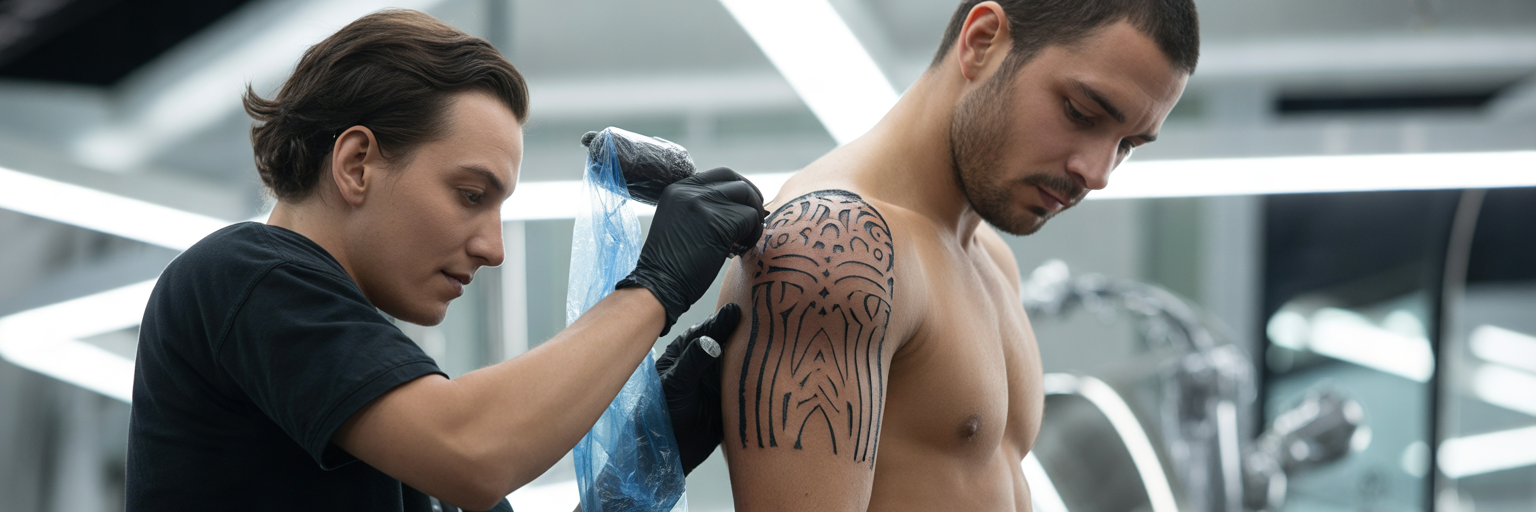
Translating an emotional memory into permanent art works best as an open dialogue between your lived experience and your artist's anatomical eye. You do not need to walk into the studio with a finished drawing in hand; instead, arriving with a clear understanding of your story allows us to tailor the visual language specifically to your silhouette.
Preparing Your Storytelling Design Brief
When preparing for a custom tattoo Singapore consultation, focus your brief on how you want the piece to feel on your body rather than getting locked into rigid dimensions. Whether you are drawn to delicate minimalism, hyper-realism, or choosing tattoo designs that reflect your cultural heritage through Eastern and Western fusion, sharing your anatomical goals gives your artist the creative freedom to make the piece flow naturally.
Bring these four essential details to guide our collaborative consultation:
- The Core Milestone: Share the emotion, person, or turning point behind the piece so the imagery reflects its true spirit.
- Your Preferred Visibility Tier: Let us know whether this chapter is meant for public view, professional adaptability, or private reflection.
- Desired Directional Flow: Indicate whether you want the composition to wrap around a limb, follow a bone axis, or expand across a flat plane.
- Openness to Stylistic Fusion: Note which artistic textures resonate with you, such as pairing realistic focal points with soft watercolor or fine-line geometry.
Testing Movement With Stencil Mock-Ups
The magic of personalized artistry truly comes together during the physical fitting session. Applying a temporary stencil while you stand in a relaxed, neutral posture is only the beginning. In our studio, we encourage you to walk around the room, twist your torso, and observe how the stencil behaves from multiple three-dimensional angles rather than just staring straight ahead into a flat mirror.
Working alongside an experienced artistic director like Apple Qu at our Memory Lane Tattoo Studio in Singapore ensures that over two decades of anatomical intuition guide this crucial step. Often, rotating a stencil by just a few degrees or adjusting a tapered edge to tuck neatly behind a muscle curve transforms how a piece flatters your frame. Through open communication, patient stencil testing, and collaborative care, we turn your most meaningful life milestones into bespoke art that moves effortlessly with you for a lifetime.