

Starting Your Cover Up Journey
Many of us have a tattoo from our younger days that doesn't quite fit our current life, especially in a professional setting like the CBD. What felt right at 19 might feel out of place at 30. The decision to get a cover-up isn't about erasing a mistake; it's about personal evolution. It’s an opportunity for transformation, turning an old chapter into a new piece of art that reflects who you are today.
This process of fixing an old tattoo is a technical puzzle. It requires a delicate balance between your vision for the new piece and the artist's expertise in making it work. The goal is not just to hide the old ink but to create something beautiful and meaningful in its place. For those with very dark or large tattoos, laser lightening can be a useful first step. It doesn't remove the tattoo completely but fades it enough to create a better canvas, opening up a wider range of design possibilities for your new art.
Understanding the difference between tattoo removal vs cover up is the first step. One path leads to a blank slate, while the other leads to a new creation. To help you decide, consider the following:
| Consideration | Choose Laser Lightening If... | Choose Direct Cover-Up If... |
|---|---|---|
| Old Tattoo | It's very dark, black, or heavily saturated. | It's already faded, lightly coloured, or small. |
| New Design Goal | You want a delicate, fine-line, or light-coloured new tattoo. | Your desired new design is bold, dark, and complex. |
| Timeline | You are patient; it requires multiple sessions over months. | You want the transformation completed in fewer sessions. |
| Budget | You can invest more upfront for better final results. | You have a more limited budget for the project. |
This table provides a simplified guide based on common scenarios. A professional consultation is necessary to determine the best approach for your specific tattoo. Transforming a past chapter into a beautiful new one is an artistic evolution, and you can find out more about how we approach this journey.
Key Design Factors for a Flawless Cover Up
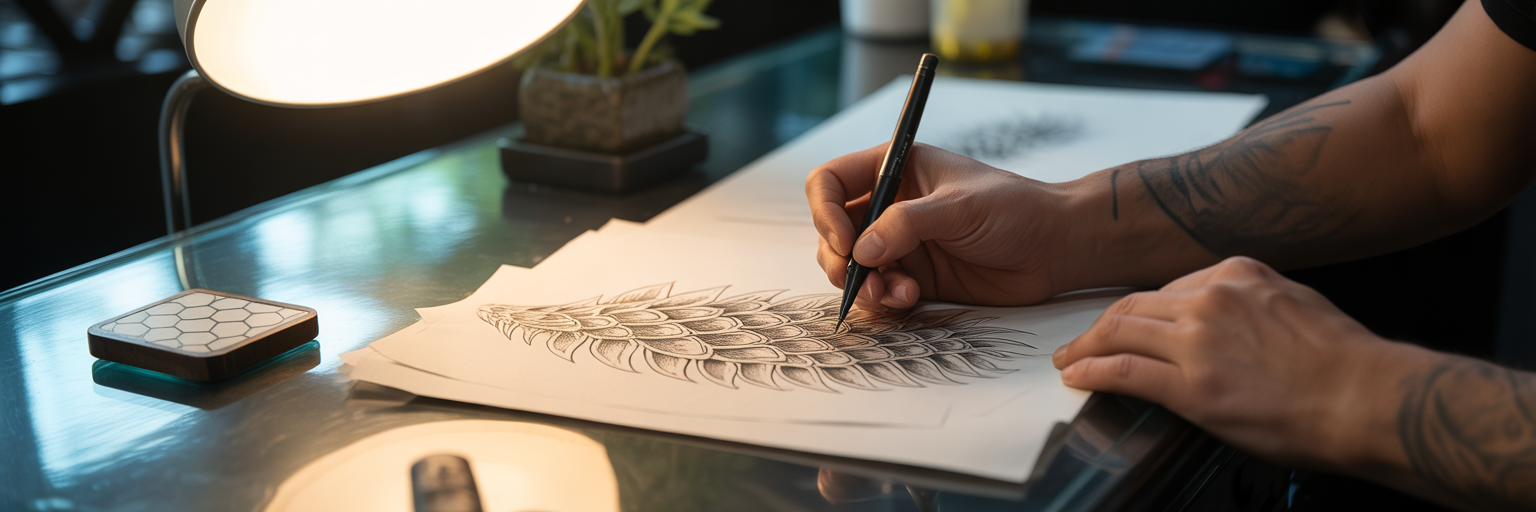
With the initial decision made, the next step is understanding the practical side of how to choose cover up tattoo designs. Think of it like trying to cover a black marker stain on a white wall. You can't just paint over it with a lighter colour and expect it to disappear. The same principle applies to skin. A successful cover-up is a technical execution that follows specific rules of physics and light.
Size and Complexity: Why Bigger is Often Better
The most common misconception is that a cover-up can be the same size as the original tattoo. In reality, the new piece almost always needs to be significantly larger, often two to three times the size. This extra space isn't just for show; it allows the artist to draw the eye away from the old design's core and create a balanced, intentional composition. According to a guide from Wooden Heart Tattoo, this increased size is crucial for creating a composition that effectively hides the old tattoo while looking natural.
Colour and Darkness: The Rules of Concealment
Colour theory is paramount in a cover-up. Darker pigments are needed to obscure the old ink. Think of it this way: you can't cover black ink with yellow ink. Dark blues, deep purples, browns, and especially black are your best friends in a cover-up. These colours have the pigment density to overpower what lies beneath. Lighter and brighter colours like yellows, pinks, and light blues can then be used in the "negative space" of the new design, where there is no old ink to conceal. This contrast is what makes the new tattoo pop and feel vibrant.
Composition: Working With, Not Against, the Old Tattoo
A skilled cover-up artist doesn't fight the old tattoo; they use its shapes and flow to their advantage. The lines and shadows of the old piece can become the foundation for new elements. For example, an old, blocky tribal design could become the shaded underbelly of a dragon's scales or the dark, dense foliage in a floral piece. The artist will strategically place detailed, high-contrast elements over the darkest parts of the old tattoo to distract the eye, making the original design completely disappear into the new artwork.
Finding the Right Artistic Style for Your New Tattoo
Now that you understand the technical constraints, you can explore creative tattoo cover up ideas. Certain artistic styles are naturally better suited for cover-ups because their inherent characteristics align with the rules of concealment. It’s less about limiting your options and more about choosing a style that sets your new tattoo up for success. As noted by industry resources like Wooden Heart Tattoo, styles such as neo-traditional and blackwork are often preferred because they offer strong contrast and flexibility.
Here are some styles that excel at cover-ups:
- Japanese (Irezumi): Uses dense backgrounds, mythological figures, and rich colours that are perfect for covering large areas. The flowing water, clouds, and wind bars can masterfully hide old shapes.
- American/Neo-Traditional: Relies on bold black outlines and a saturated colour palette, making it ideal for overpowering old designs. The solid structure and vibrant colours create a powerful new image.
- Blackwork/Tribal: Utilises large areas of solid black ink, offering the most effective and definitive way to cover an old tattoo completely. It’s a bold statement and a guaranteed solution for difficult cover-ups.
- Floral and Botanical: When designed with heavy shading and overlapping elements like leaves and petals, this style can cleverly disguise old lines and shapes. The organic flow helps to mask what's underneath.
- Realism (with dark elements): While tricky, styles featuring dark subjects like animals with fur, deep space scenes, or dark portraits can work if planned meticulously by an experienced artist.
On the other hand, popular delicate styles like single-needle fine-line or minimalist tattoos are generally not suitable for cover-ups. Their lack of density and dark shading means the old tattoo would likely show through. This is a technical limitation, not a critique of the style's beauty. However, a skilled artist can often create a fusion piece, blending the technical requirements of a cover-up with an aesthetic you love. By exploring our portfolio of custom designs, you can see how different styles can be adapted to create a successful and personal transformation.
Why Your Artist's Expertise is Non-Negotiable

The single most important factor in a successful cover-up is the artist. Not every tattooist is a cover-up specialist. It’s a unique skill that requires deep technical knowledge, creative problem-solving, and an artist's eye for composition. Finding the best tattoo artist for cover ups means looking for someone who sees a challenge, not just a client. As Wooden Heart Tattoo advises, reviewing before-and-after examples is essential to set realistic expectations and build confidence in the process.
When vetting an artist for your cover up tattoo Singapore project, here’s what to look for:
- Look for a dedicated 'Cover-Up' gallery in their portfolio. Don't just look at their best tattoos; look for their best transformations.
- Analyse the 'after' photos. Can you see any trace of the old tattoo? A great cover-up should look like an original piece, not a patch.
- Read reviews specifically mentioning cover-ups. Past clients will often share their experience with the process and the artist's ability to handle the challenge.
- Schedule a consultation. Pay attention to how they listen and the questions they ask. A true expert will be more interested in the technical challenges and your story than in quickly booking an appointment.
The ideal consultation is a collaborative session. The artist should listen to your story, carefully examine the old tattoo in person, and be transparent about what is and isn't possible. This partnership is what turns a technical solution into a piece of art you’ll love forever. Top professionals, whether in art or technology, are committed to continuous learning, often drawing insights from various expert resources like the blog at The Franchise CTO to broaden their perspective. This commitment to expertise is what you should seek. After understanding the importance of this collaboration, the next logical step is to consult with an experienced artist who can provide a personalised assessment and plan for your new beginning.