

The Scholar Who Chose Skin Over Canvas
Before the rhinestones and trucker hats of the 2000s, Don Ed Hardy was an artist with a singular mission: to prove that tattooing was a legitimate fine art. His journey began not in a back-alley parlour, but in academia. With a Bachelor of Fine Arts in printmaking from the San Francisco Art Institute, Hardy possessed a deep understanding of line, form, and composition. This background answers the fundamental question of who is the artist Ed Hardy: he was a trained artist who saw skin as a living canvas.
His commitment was so profound that he turned down a prestigious graduate fellowship at Yale University to dedicate his life to tattooing. At the time, this was a radical choice. Most tattoo shops operated on a "flash" basis, where clients simply picked a pre-drawn design off the wall. Hardy envisioned something different. He believed a tattoo should be a unique, collaborative creation between artist and client, a concept that was almost unheard of.
This shift in thinking laid the groundwork for the modern tattoo experience. The deeply personal, story-driven tattoos sought by clients in Singapore today, from intricate sleeves to minimalist symbols, are a direct inheritance of the artistic revolution he started. He challenged the idea of a tattoo as a simple transaction and reframed it as a personal commission.
Forging a New Style from East and West
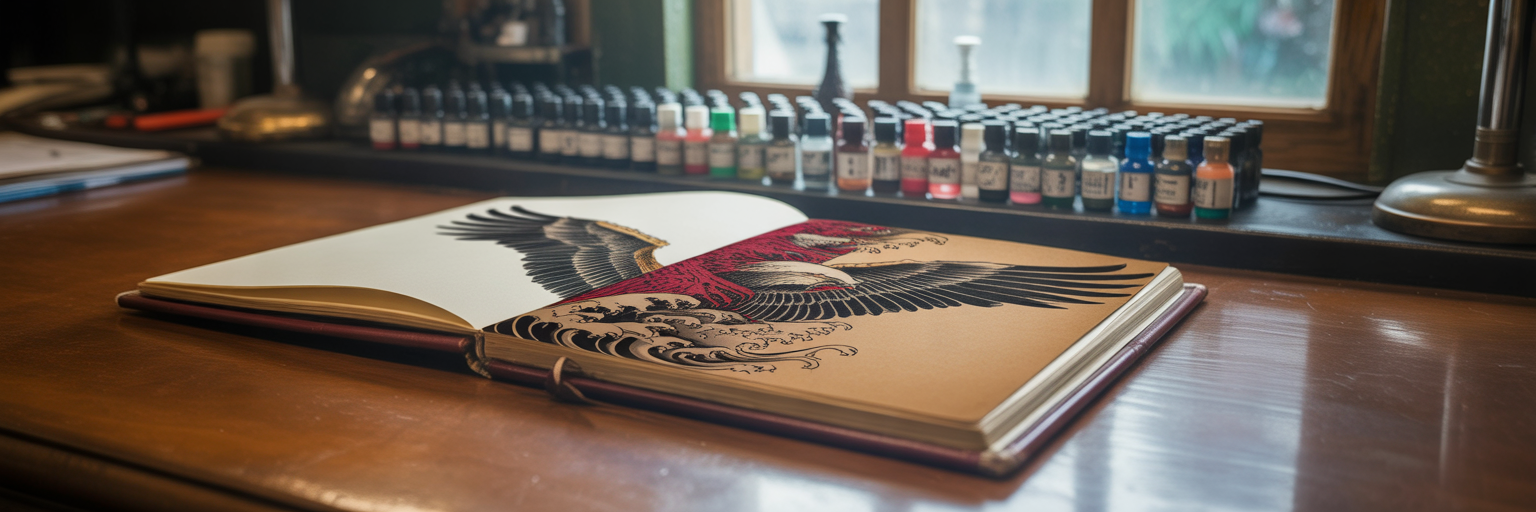
Ed Hardy’s signature style was not born in a vacuum. It was meticulously forged from two powerful, distinct traditions. His journey into the craft began under the mentorship of American tattoo legend Sailor Jerry Collins in Honolulu. There, he mastered the bold outlines, solid colours, and classic motifs of the American traditional style. This gave his work an undeniable strength and readability from a distance.
However, Hardy’s artistic curiosity pushed him further. In 1973, he made an unprecedented move for a Western artist, travelling to Japan to study under the classical tattoo master Horihide. This apprenticeship immersed him in the world of traditional Japanese tattooing, or irezumi. He learned about its narrative depth, its flowing compositions designed to fit the body’s contours, and its subtle shading techniques known as bokashi. As noted by JSTOR Daily, this unique education allowed him to bridge two vastly different artistic worlds.
The result was the iconic Japanese American tattoo style, a seamless fusion of Western boldness and Eastern sophistication. He combined the strong, clean lines of American tattooing with the intricate detail and dynamic storytelling of Japanese art. In 1974, he opened his studio, Realistic Tattoo, the first appointment-only, custom-work studio in the United States. This move transformed the business model from quick, impersonal jobs to thoughtful artistic commissions, a practice that is now the standard for professional studios worldwide.
| Artistic Element | American Traditional | Traditional Japanese (Irezumi) | Ed Hardy's Fusion Style |
|---|---|---|---|
| Linework | Bold, black outlines | Varied line weights, often fine | Bold outlines with fine interior details |
| Shading | Solid, blocky colour and shading | Subtle, smooth gradients (bokashi) | Combines bold colour with soft gradients |
| Composition | Individual, self-contained designs | Large, flowing compositions that fit the body | Dynamic compositions with narrative flow |
| Subject Matter | Eagles, anchors, roses, pin-ups | Dragons, koi, gods, mythological scenes | Mixes motifs, e.g., a skull with Japanese waves |
| Colour Palette | Limited, primary colours | Rich, nuanced colour schemes | Vibrant, expanded palette blending both traditions |
Taking Tattoo Art into the Mainstream
Hardy understood that to change tattooing, he had to educate people. Through his self-published Tattootime book series, he documented the rich Ed Hardy tattoo history and the work of artists from around the world. These publications were crucial, sharing knowledge beyond a small, closed circle and helping to legitimize the craft as a serious art form. He was not just a practitioner but also a historian and a curator of his own field.
Throughout his career, he continued his work as a fine artist, creating paintings, drawings, and prints. His monumental 500-foot-long scroll, "2000 Dragons," is a testament to his dedication to art beyond skin. This constant practice reinforced his core belief: tattooing was simply one medium within a broader artistic spectrum. It was this perspective that helped solidify the idea of tattoo as a fine art form.
Of course, one cannot discuss the influence of Ed Hardy on tattoos without mentioning the fashion brand. The licensing deal in the 2000s gave his art unprecedented global visibility. However, its explosive popularity became a double-edged sword. As reported by Artnet News, the brand's over-commercialization often obscured his more serious artistic contributions. Yet, it undeniably brought tattoo aesthetics into mainstream consciousness. This shift towards tattoos being seen as a professional and creative form of expression is embodied by modern studios that prioritise artistry and client collaboration. Today, studios in Singapore carry on this legacy of bespoke design, where art is paramount.
The Hardy Legacy in Modern Tattooing

Ed Hardy’s influence on the tattoo industry today is undeniable. He didn't just create a new style; he created a new standard for artistry and professionalism. His most significant contributions have shaped the very way we approach getting tattooed.
- The Custom-Only Studio Model: He replaced the 'pick-and-stick' flash model with a collaborative, appointment-based process. This made the artist a partner in creation, not just a technician applying a sticker.
- Artistic Fusion as the Norm: By blending Japanese and American styles, he broke rigid genre rules. He gave future artists the permission to experiment, leading to the incredible diversity of fusion designs we see today.
- Tattooing as Personal Narrative: Perhaps his most profound impact was championing the idea that a tattoo's value lies in its personal meaning. He transformed the act of getting tattooed from a rebellious gesture into a significant, story-driven experience.
This philosophy of turning a client's personal story into a unique piece of art is the guiding principle for dedicated artists who continue his legacy of collaborative creation. The ultimate validation of his life's work came in 2019 with the "Deeper than Skin" retrospective at the de Young Museum in San Francisco. As the museum itself highlighted, this major exhibition was a landmark event that formally recognized his contributions and cemented the artistic legitimacy of tattooing. It was the final confirmation that skin was, indeed, a worthy canvas for fine art.
What His Journey Means for Your Tattoo
Ed Hardy’s greatest contribution was empowering both artists and clients to see tattoos as a collaborative art form. He taught us that a tattoo is more than just an image; it is a story, a milestone, or a personal emblem worn on the skin. This philosophy should guide your own tattoo experience.
Before you decide on a design, ask yourself: What story do I want to tell? What does this moment in my life mean to me? The answers to these questions are the foundation of a truly meaningful tattoo. The relationship with your artist becomes a partnership in bringing that story to life. Finding an artist who shares this commitment to personal storytelling and collaborative design is the most important step in creating a piece of art you will cherish for a lifetime.