
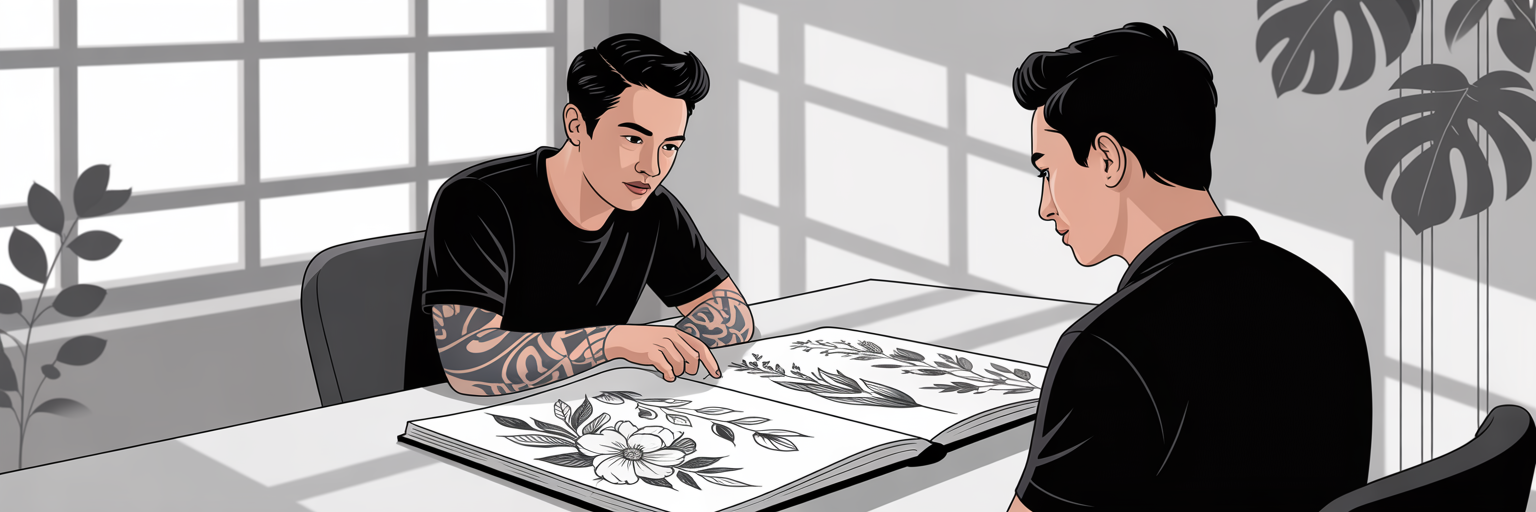
The journey to a meaningful tattoo begins long before the needle touches the skin. To truly collaborate with your tattoo artist is to enter a professional partnership built on a shared vision and mutual respect. This process transforms a simple idea into a piece of personal art that reflects your story with precision and creativity.
How to Collaborate with Your Tattoo Artist
Think of yourself as the art director of your project. You bring the story, the emotion, and the core concept that will serve as the foundation for the artwork. As guides on custom ink from sources like Minh Pham Tattoo often explain, this partnership involves the client providing the conceptual material for the artist to then shape into a viable design. Your artist acts as the creative and technical expert, translating your vision into a piece that is not only beautiful but also technically sound and designed to last.
The initial consultation is a structured dialogue, not a sales meeting. Remembering this is one of the most important tattoo consultation tips. This is a dedicated time for us to align on your story and the artistic direction, ensuring your ideas are understood and can be translated effectively onto skin. This collaborative foundation allows your artist to offer expert guidance on placement, flow, and longevity, ensuring the final piece is a work of art you will cherish for a lifetime.
Preparing Your Concept and Reference Materials
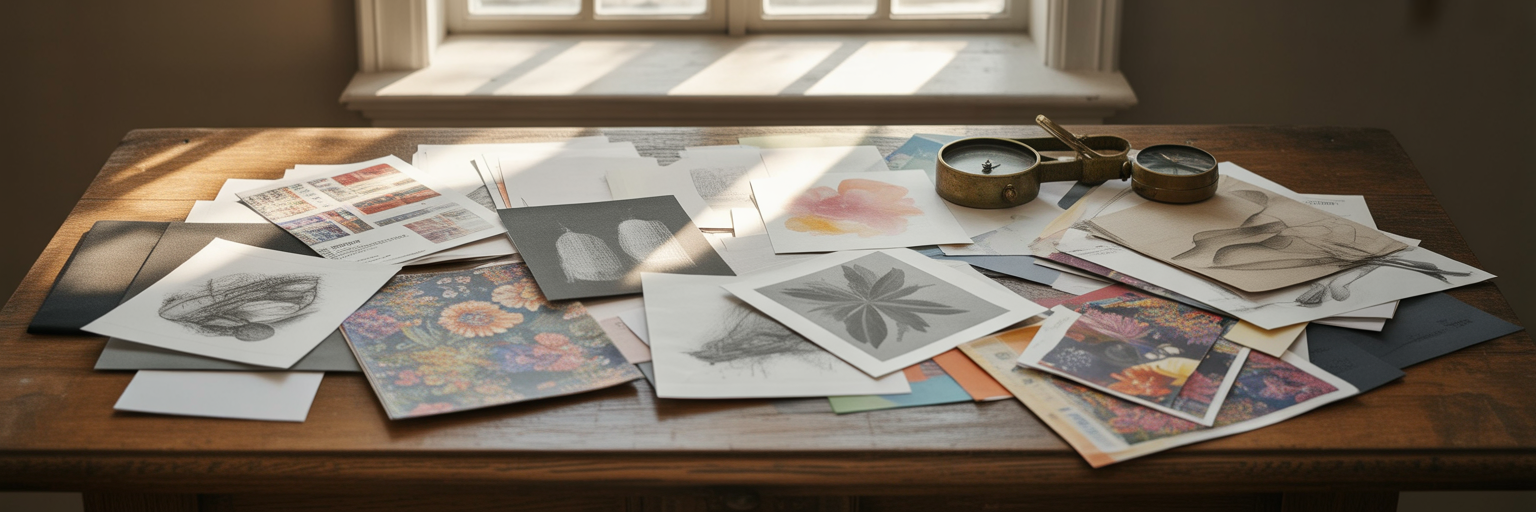
With the collaborative mindset established, the next step is to prepare your ideas with clarity. Knowing how to prepare for a tattoo appointment starts with organizing your thoughts into a simple design brief. This document helps you articulate your vision and gives your artist a clear starting point.
| Component | What to Define | Example |
|---|---|---|
| Subject Matter | The central focus of your tattoo. | 'A barn owl in flight with a key in its talons.' |
| Style | The artistic aesthetic you prefer. | 'Fine-line, with elements of geometric patterns.' |
| Personal Story | The meaning or emotion behind the piece. | 'It represents gaining wisdom and unlocking a new chapter in my life.' |
| Placement | The specific location on your body. | 'On my left inner forearm, starting 3cm below the elbow crease.' |
| Size | The approximate dimensions. | 'Around 12cm tall and 8cm wide.' |
This table provides a framework to help you organize your thoughts and communicate your vision clearly to your artist during the consultation.
Next, curate a small mood board of three to five high-quality images. The goal is inspiration, not imitation. As professional artists, we are committed to creating unique tattoo ideas and will not replicate another artist's work. Your references help us understand the aesthetic you are drawn to. Annotate these images with notes on what you like:
- Line Weight: Do you prefer bold, commanding lines or delicate, fine-line work?
- Shading Style: Are you drawn to soft, stippled shading or rich, saturated blackwork?
- Color Palette: If you want color, which specific hues resonate with your concept?
- Overall Mood: Does the image feel serene, powerful, or whimsical?
As experts at Platinum Ink suggest, arriving at your consultation with a well-organized collection of references allows the artist to grasp your vision more effectively and begin the design process from a place of shared understanding.
Discussing Technical Details with Clarity
Once your creative vision is organized, the conversation can shift to the technical specifics that will bring your tattoo to life. Clarity is essential when discussing size and placement, as vague descriptions can lead to misunderstandings. It is best to be precise in your communication.
- Use Specific Measurements: Instead of saying 'medium-sized', provide dimensions in centimetres.
- Reference Your Anatomy: Use clear landmarks like 'starting two centimetres above my wrist bone' or 'centred on my shoulder blade'.
- Take a Photo: Circle the intended area on a photo of yourself to provide a clear visual guide for the artist.
Listen to your artist’s advice on placement. As tattoo guides from Club Tattoo highlight, an experienced artist considers how a design will flow with the body’s natural contours and how it will age over the years. Their input is vital for ensuring the tattoo complements your form. Discussing your budget is also a practical part of the process. It allows the artist to align the design’s complexity, size, and detail with what is feasible, ensuring there are no surprises. For any project, a professional custom tattoo design Singapore studio like ours will also consider factors like your skin type and tone to ensure the final artwork has optimal contrast and clarity for years to come.
Providing Constructive Feedback on the Design

After your consultation, the artist will create a draft of your design. This is where you truly begin to collaborate with your tattoo artist to refine the concept into its final form. View the first draft as a starting point, a visual translation of your conversation. Feedback is an expected and welcome part of the collaborative process, ensuring the final piece is perfect for you.
To provide helpful feedback, focus on specific and actionable comments:
- Be Specific: Instead of "I don't like the flower," try "Could we make the petals appear more delicate and less rounded?"
- Refer to Your Brief: Connect your feedback to your original goals. "Does this capture the feeling of 'unlocking a new chapter' we discussed?"
- Ask Questions: If something looks different than you imagined, ask why. "I notice the lines here are thicker. Is that for better aging?"
As guides on communicating with artists from Sortra recommend, focusing on specific adjustments rather than broad criticism leads to a better outcome. Trust your artist’s technical suggestions, as their experience informs how ink settles and ages in the skin. Understanding different approaches to creative expression, sometimes influenced by broader cultural contexts, can also enrich this exchange. Your final, enthusiastic approval is essential before the stencil is prepared, ensuring you are completely confident about the artwork you will wear.
Your Role in a Lasting Artistic Partnership
The collaboration extends beyond the design phase and into the day of your appointment and the healing process that follows. On the day of your session, your contribution is to arrive well-rested, hydrated, and having eaten a meal. This prepares your body for the process and helps ensure a smooth experience for both you and your artist.
Proper aftercare is the final, crucial act of this partnership. It protects your investment and honours the artist’s work. Following the aftercare instructions meticulously ensures your tattoo heals perfectly and its colours remain vibrant. Ultimately, finding the right tattoo artist is about discovering a professional you can trust from concept to completion. We invite you to explore the collaborative process and artistry we cherish at Memory Lane Tattoo Studio, where every design is a shared journey.