
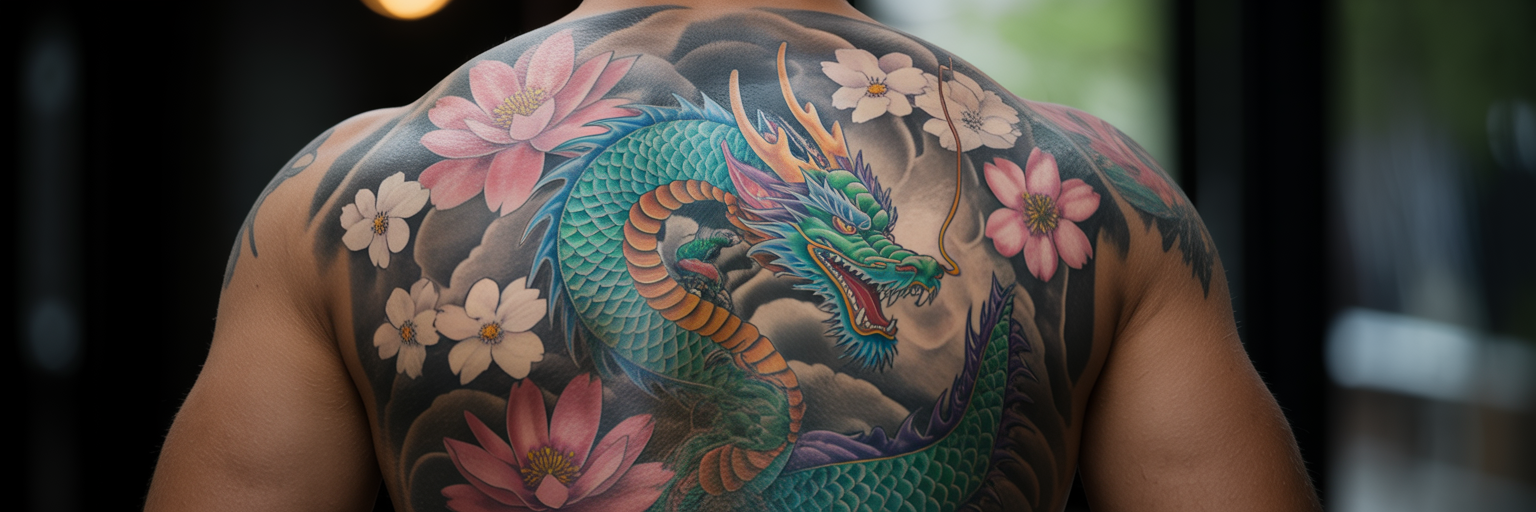
Understanding the Artistry of Fusion Tattoos
In an era where personal expression is paramount, tattoos have become a profound canvas for our life stories. These narratives often cross cultural boundaries, reflecting identities shaped by diverse heritages and experiences. This has given rise to a sophisticated art form known as fusion tattoos, a practice that goes far beyond simply combining different images. It is the art of weaving distinct cultural aesthetics into a single, cohesive design that tells a deeply personal story on the skin.
At its core, a successful fusion piece is built upon a strong design backbone. This is the unifying artistic thread that ensures harmony between seemingly disparate elements, whether it is the bold lines of traditional Japanese art or the soft gradients of Western realism. In a multicultural hub like Singapore, where personal identities are often layered and complex, this modern evolution in tattooing resonates powerfully. It allows individuals to create art that is a true reflection of their unique journey, blending traditions into a singular, meaningful statement.
The Collaborative Journey to a Personal Design

Creating a truly bespoke fusion tattoo is a creative partnership between you and your artist. The process begins not with a needle, but with a conversation. During an initial consultation, we dedicate time to understanding your story, inspirations, and the milestones you wish to commemorate. This dialogue is the foundation upon which we build your design, ensuring the final piece is an authentic extension of your identity.
The artist’s role is that of a professional guide, helping to translate abstract emotions and ideas into a tangible visual concept. Through this tattoo artist collaboration, we explore which Eastern and Western motifs or styles might best represent your narrative. For instance, the strength of a Celtic knot could be intertwined with the delicate beauty of a Chinese peony to symbolize resilient love. We then use modern digital tools to sketch and map the proposed design onto a photograph of your body. This step is crucial for ensuring the artwork flows with your unique anatomy, creating a piece that is not just placed on you, but becomes a part of you.
This collaborative journey is central to our ethos. It guarantees that the final artwork is not only aesthetically beautiful but also imbued with the personal meaning you intended, creating a timeless piece you will cherish for a lifetime.
Achieving Cohesion with Foundational Elements
The design backbone introduced earlier is what transforms a collection of images into a unified work of art. This cohesion is achieved by focusing on foundational artistic elements that bridge different styles. A shared color palette, for example, can instantly connect contrasting imagery. An artist might use a single accent color, like gold or deep blue, to appear in both a traditional Eastern dragon and a Western-style portrait, creating a subtle yet powerful visual link.
Line weight hierarchy is another critical tool. An artist can use consistent or intentionally varied lines to guide the eye and prevent one style from overpowering another. Bold outlines might define a primary subject, while finer lines are used for background elements, establishing a clear visual order. Furthermore, unifying motifs such as geometric patterns, flowing water, or swirling clouds can serve as seamless transitions between different styles. As noted in a piece by AI for Tattoo, successful fusion relies on creating intentional transitions using elements like dotwork gradients or negative space. These foundational choices ensure the final piece feels harmonious and complete.
| Artistic Element | Eastern Style Example | Western Style Example | Unifying 'Backbone' Technique |
|---|---|---|---|
| Color Palette | Vibrant reds and blacks of Irezumi | Soft pastels of watercolor | Select a shared accent color (e.g., gold) to appear in both styles, tying them together. |
| Line Weight | Bold, defined outlines of a Japanese dragon | Delicate, thin lines of a minimalist portrait | Establish a hierarchy where primary subjects have bold lines and background elements have finer lines. |
| Unifying Motif | Traditional Japanese waves (Nami) | Hyper-realistic floral bouquet | Use flowing cloud or smoke patterns to weave between the waves and flowers, creating a seamless transition. |
| Shading | Dense blackwork and block shading | Smooth, soft gradients of realism | Incorporate dotwork (stippling) as a transitional shading method that bridges both techniques. |
Blending Techniques for a Balanced Composition
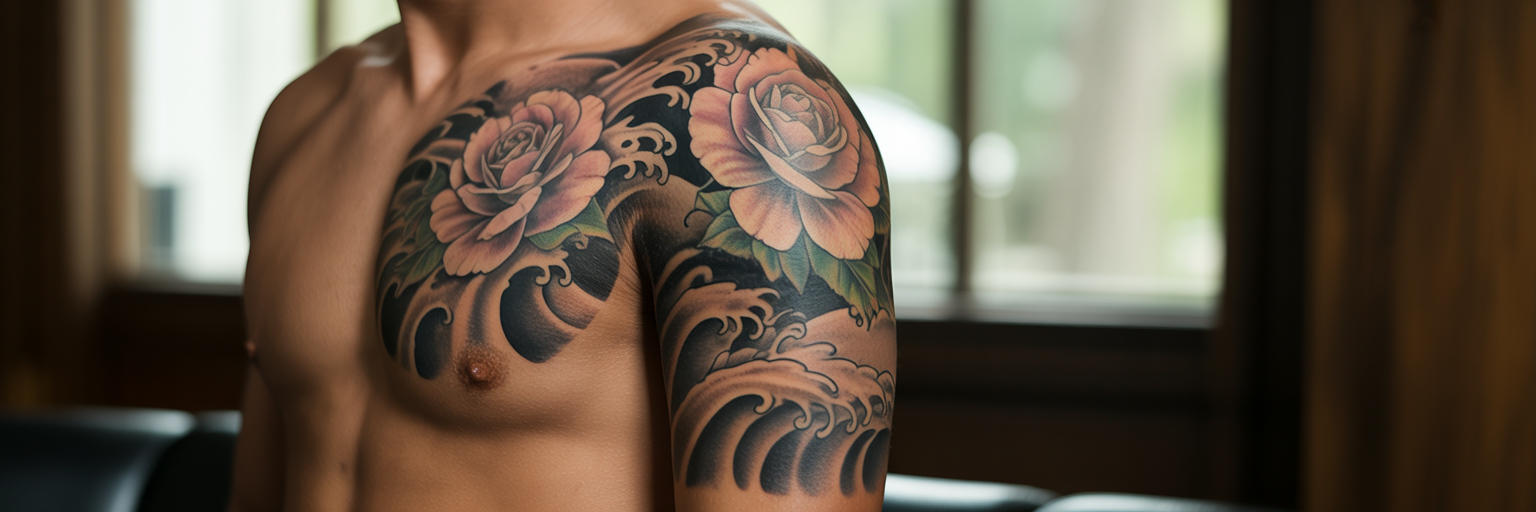
Beyond foundational elements, the masterful blending of eastern and western tattoo styles depends on a thoughtful compositional strategy. It is about how the different parts of the design interact to create a balanced and dynamic whole. An experienced artist employs several techniques to achieve this harmony, ensuring the final piece is greater than the sum of its parts. For those interested in the specifics, resources on tattoo style blending offer deeper insights into how artists create these unique designs.
Key compositional strategies include:
- Primary and Secondary Styles: A common approach is to select one style as the main anchor while the other provides atmospheric support. For example, a large, hyper-realistic portrait (Western) might be framed by intricate, ornamental geometry (Eastern), creating a clear focal point with complementary details.
- Balancing Density and Flow: A skilled artist carefully considers the interplay between dense, heavily saturated areas and lighter, more open spaces. This balance ensures the design can breathe, preventing it from looking cluttered and allowing the eye to move naturally across the skin.
- Technical Consistency: To ensure different techniques coexist without clashing, artists often maintain visual harmony through consistent application. This could mean using similar needle groupings or adhering to a specific value scale across both bold blackwork and soft watercolor sections.
A practical example of tattoo style blending is framing a hyper-realistic animal with traditional Irezumi-style waves. The movement of the waves can complement the animal's posture, creating a dynamic scene that feels both powerful and elegant. As noted by Suryo, an artist featured in Tattoo Magazine, this fusion often involves a careful balance of radiant colors and dynamic movement to bridge aesthetics.
Navigating Cultural Symbolism with Respect
Creating a fusion tattoo carries a responsibility to honor the cultures from which its elements are drawn. A professional artist's role extends beyond aesthetics to include diligent research into the origins and meanings of motifs. This ensures that the final design is not only beautiful but also respectful, avoiding the misrepresentation of culturally significant symbols.
There is a clear distinction between using universally appreciated patterns, like geometric shapes or floral elements, and incorporating sacred or lineage-based symbols that may carry restricted meanings. Respectful fusion celebrates artistic traditions without appropriating them. As discussed in industry publications like Tattoo Magazine, the key is to honor the origins of a style rather than claiming ownership of its cultural significance. The client-artist dialogue is essential here, providing a space to discuss the cultural context of chosen elements and find meaningful tattoo ideas that resonate personally and respectfully.
Partnering with an experienced, culturally aware artist is the best way to navigate this landscape. It ensures your tattoo is a responsible celebration of global art forms, resulting in a piece you can wear with pride and integrity.
Bringing Your Vision to Life
Ultimately, creating a fusion tattoo is a deeply personal and artistic journey that thrives on expertise and collaboration. It is about telling your unique story, not just selecting images from a catalog. The most compelling designs are born from a partnership where your vision is guided by professional artistry to create something truly one of a kind.
If you are considering a fusion tattoo, here are a few steps to begin your journey:
- Start by gathering inspiration from both Eastern and Western art forms that resonate with you personally.
- Reflect on the story, feeling, or milestone you want your tattoo to convey.
- Seek an artist or studio that specializes in custom tattoo design Singapore and demonstrates a strong, collaborative approach in their portfolio.
The right artist will be a partner in creating a piece that is both meaningful and masterfully executed. To begin this collaborative journey, it is best to connect with a studio that values personalized artistry and is dedicated to bringing your unique vision to life.