
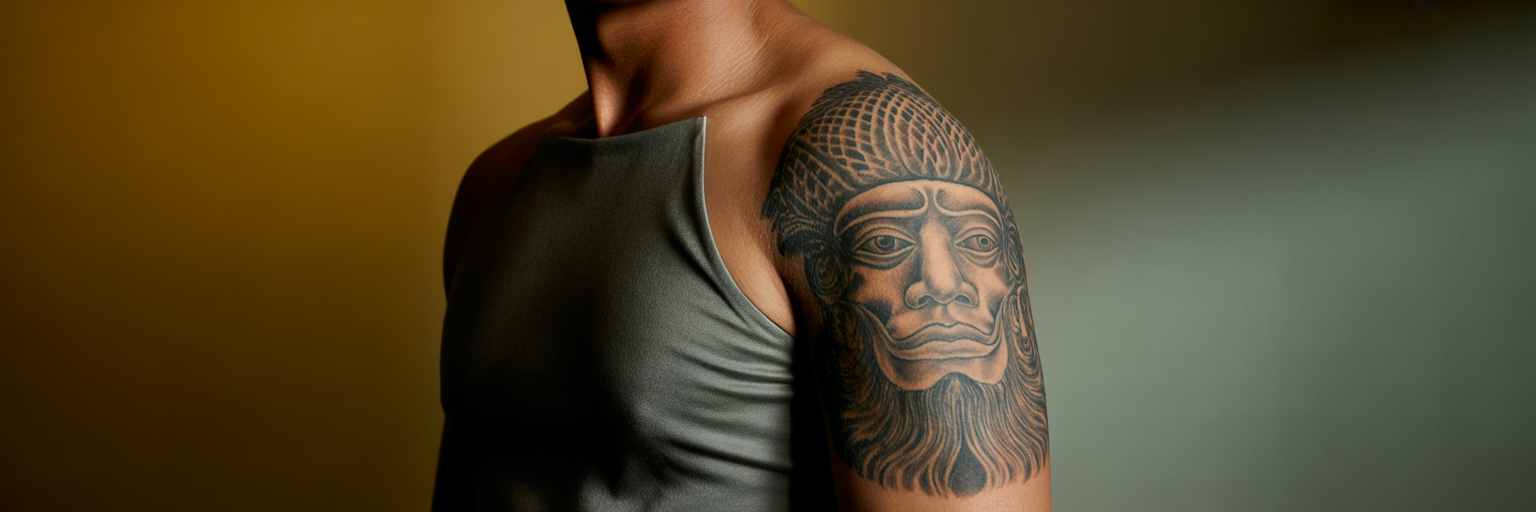
Throughout Southeast Asia, art has always been a vessel for stories, identity, and heritage. In this tradition, Javanese tattoos stand out not as mere decoration, but as a profound form of personal narrative deeply connected to a rich cultural legacy. Each motif is a piece of living philosophy, a visual language that has been spoken for centuries. For us in Singapore, the close historical and cultural ties within the Malay Archipelago make this art form feel both familiar and deeply resonant.
There is a quiet revival of this ancient practice, as contemporary artists and clients alike seek designs with authentic regional roots. We are seeing a renewed appreciation for traditional Javanese tattoo designs, reinterpreted for a new generation that values meaning as much as aesthetics. This art form offers a way to wear your history, your aspirations, and your personal philosophy on your skin.
This exploration will cover the powerful symbolism behind core Javanese motifs, the beautiful precision of its traditional script, and the collaborative process of creating a design that is uniquely yours. It is a journey into an art form that is as personal as it is historical.
The Enduring Spirit of Javanese Ink
In Southeast Asia, art has always been a vessel for stories, identity, and heritage. In this tradition, Javanese tattoos stand out not as mere decoration, but as a profound form of personal narrative deeply connected to a rich cultural legacy. Each motif is a piece of living philosophy, a visual language that has been spoken for centuries. For us in Singapore, the close historical and cultural ties within the Malay Archipelago make this art form feel both familiar and deeply resonant.
There is a quiet revival of this ancient practice, as contemporary artists and clients alike seek designs with authentic regional roots. We are seeing a renewed appreciation for traditional Javanese tattoo designs, reinterpreted for a new generation that values meaning as much as aesthetics. This art form offers a way to wear your history, your aspirations, and your personal philosophy on your skin.
This exploration will cover the powerful symbolism behind core Javanese motifs, the beautiful precision of its traditional script, and the collaborative process of creating a design that is uniquely yours. It is a journey into an art form that is as personal as it is historical.
Core Symbols and Their Deep Meanings
Understanding Javanese tattoo meanings is the first step to choosing a design that truly connects with your personal story. These symbols are not just patterns; they are visual representations of philosophical concepts, chosen to channel specific energies or reflect personal values. They act as personal amulets for protection, strength, or spiritual alignment.
The Parang motif is one of the most powerful. Recognisable by its diagonal, blade-like pattern of interlocking ‘S’ shapes, it symbolises resilience and a continuous struggle for self-improvement. Historically associated with Javanese nobility, it represents power, determination, and the unwavering will to overcome obstacles. Choosing a Parang design is a statement of inner strength and ambition.
In contrast, the Kawung motif offers a sense of harmony. Its design, resembling the cross-section of a palm fruit or a four-lobed flower, speaks of spiritual purity and balance. The four symmetrical lobes represent a structured and harmonious universe, reminding the wearer of their place within a balanced cosmos. It is a symbol for those seeking inner peace and a connection to a greater order.
Mythological figures also play a significant role. The Barong, a protective, lion-like spirit, is a guardian figure that wards off negative energy and evil. Its fierce expression is not one of aggression but of powerful protection. Similarly, the Garuda, a majestic eagle-like creature, is a potent symbol of freedom, virtue, and national pride in Indonesia. As cultural guides on Indonesian symbolism explain, choosing a figure like the Garuda is an assertion of personal power and freedom. These figures become powerful emblems of the wearer's character and beliefs.
| Symbol | Visual Description | Core Philosophical Meaning |
|---|---|---|
| Parang | Diagonal, interlocking S-shaped pattern resembling a knife | Resilience, determination, power, and continuous improvement |
| Kawung | Four symmetrical oval lobes arranged like a flower | Spiritual balance, purity, and a harmonious universe |
| Barong | Mythical lion-like creature with a fierce expression | Protection, guardianship, and warding off evil spirits |
| Garuda | Majestic eagle-like bird, often with a human torso | Freedom, virtue, power, and divine protection |
This table summarises the core meanings of prominent Javanese motifs. These interpretations are rooted in centuries of Javanese philosophy and textile art traditions.
The Art and Precision of Hanacaraka Script Tattoos
Beyond symbolic motifs, the traditional Javanese script, Hanacaraka, offers a deeply personal way to wear your story. Its elegant, flowing characters are visually stunning and lend themselves beautifully to body art. However, creating an accurate script tattoo requires more than just aesthetic appreciation; it demands deep technical and cultural knowledge. This is a Javanese script tattoo guide to ensure respect and accuracy.
Hanacaraka is not a simple alphabet where one letter equals one sound. It is an abugida, a complex system where each base character has an inherent vowel sound. This sound is then modified using diacritics called sandhangan, and consonants can be stacked using special forms called pasangan. Composing a word correctly is like solving a puzzle, where each piece must fit perfectly to create a meaningful whole.
This complexity is why you should never rely on online translators for a script tattoo. These tools are notoriously inaccurate, often failing to apply the intricate grammatical rules. As detailed in resources like Kaweruh Jawi's 'Javanese Script Tattoo Spell-Check', such mistakes can result in permanent, nonsensical, or even culturally disrespectful text on your skin. This practice of marking identity aligns with findings from a Sheffield Hallam University study on Indonesian subcultures, where tattoos are seen as profound expressions of personal journeys, making accuracy paramount.
To ensure your script tattoo is both beautiful and correct, collaboration with a knowledgeable artist or a cultural expert is non-negotiable. It is a mark of respect for the culture and for yourself.
Creating Your Personal Javanese-Inspired Tattoo
Transforming these ancient symbols and scripts into a personal piece of art is a deeply collaborative process. It is about weaving your own narrative into a rich cultural tapestry. The goal is to create a design that is not only visually striking but also resonates with your life story, making it a true custom cultural tattoo in Singapore.
The Collaborative Design Journey
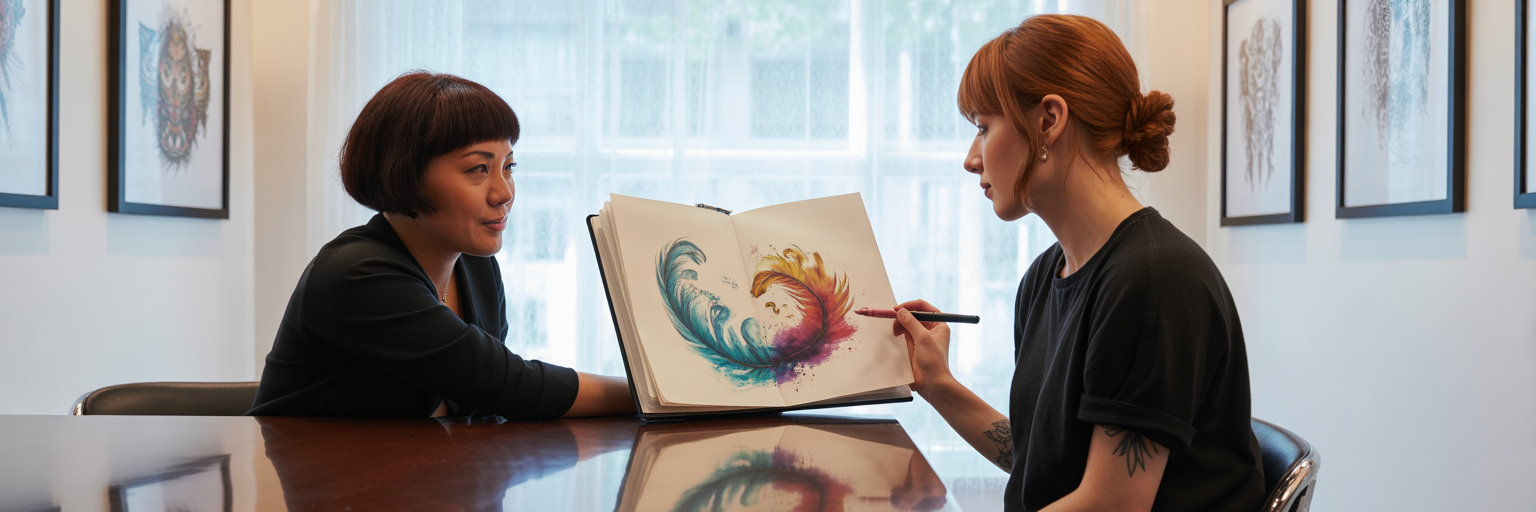
The journey begins with a conversation. An artist who respects the tradition will want to understand the story you want to tell. The process typically follows these steps:
- Initial consultation to share your story, inspirations, and the feelings you want the tattoo to evoke.
- Symbol selection based on the meanings that align with your personal journey.
- Conceptual sketching where the artist integrates your personal elements with the traditional motifs.
- Final design refinement and approval, ensuring every detail is perfect before it becomes a permanent part of you.
Fusing Tradition with Modern Styles
Honouring tradition does not mean you are limited to historical replication. Some of the most compelling modern Javanese tattoo ideas come from blending classic motifs with contemporary artistry. Imagine a Parang motif rendered with the subtle shading of hyper-realism, or a Garuda taking flight in the fluid, vibrant hues of a watercolour tattoo. A minimalist, fine-line Kawung pattern can be a discreet yet powerful symbol of balance. This fusion creates a piece that is both timeless and uniquely current.
Placement and Anatomical Flow
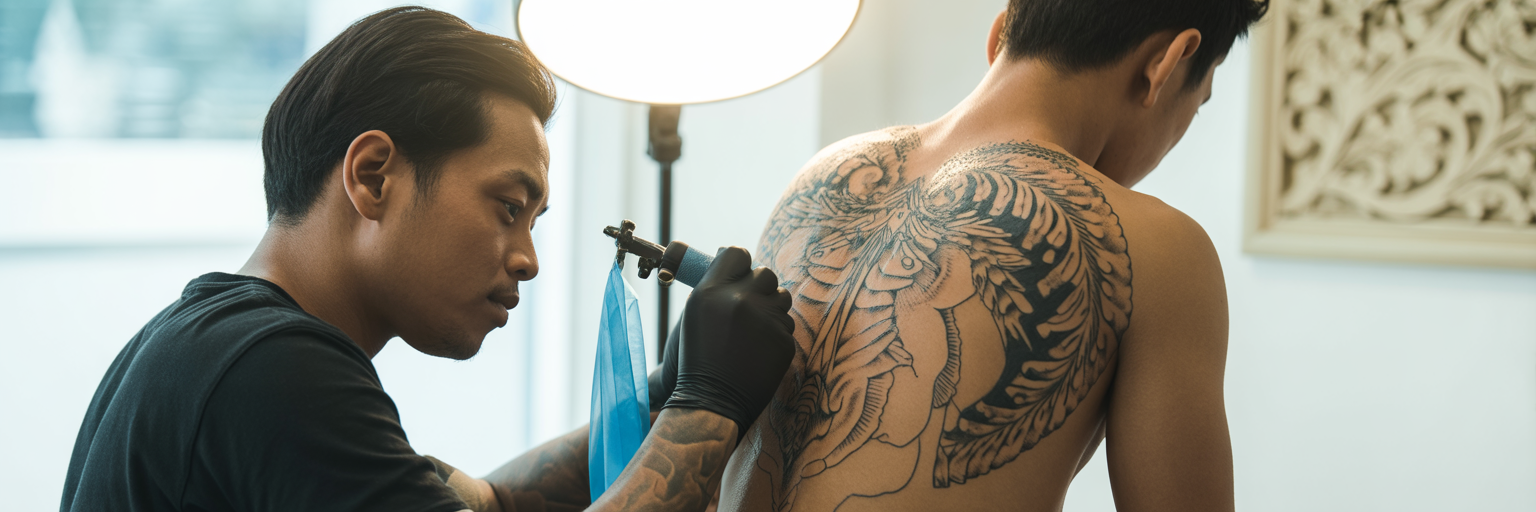
Where you place your tattoo is as important as the design itself. An experienced artist considers the body's natural curves and musculature to ensure the design has movement and impact. A winding Naga serpent can flow beautifully down the spine, while a protective Barong is often placed on the back or shoulder, as if guarding the wearer. The placement can amplify the symbol’s meaning, making the tattoo feel like a natural extension of your body.
Ultimately, a Javanese-inspired tattoo is a modern heirloom, a celebration of personal identity that honours a profound cultural legacy. This collaborative journey is central to creating a piece that is both beautiful and meaningful, a philosophy we champion at Memory Lane Tattoo Studio to ensure your story is told with artistry and respect.