
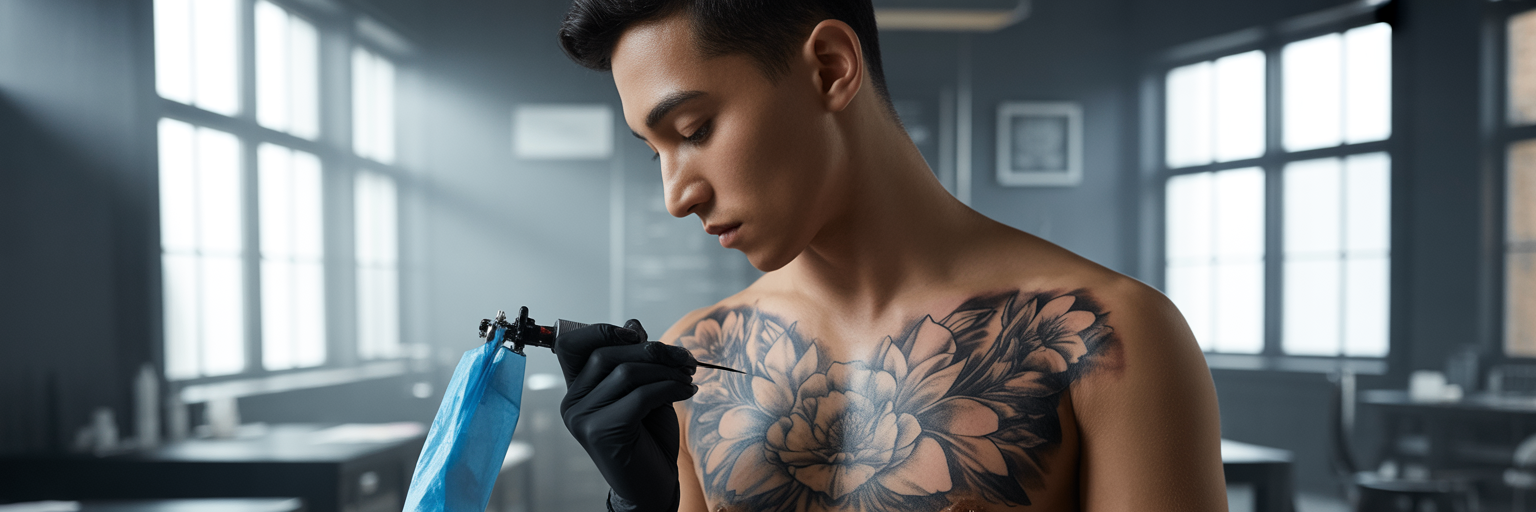
A tattoo is a permanent chapter in your personal story, but sometimes, stories evolve and we seek a new narrative. Transforming an existing tattoo, especially in a prominent area like the chest or ribs, is an art form that blends technical skill with deep personal meaning. For those considering a cover-up tattoo in Singapore, this journey is a collaboration between your vision and an artist's expertise, resulting in a piece you can wear with renewed confidence.
Why a Chest or Rib Cover-Up Tattoo is Unique
Embarking on a chest or rib cover-up is different from getting a tattoo on fresh skin. These areas present unique anatomical challenges that require a specialist's touch. The skin on the ribcage, for instance, is thin and stretches with every breath. As noted in a guide by FemShades, this constant movement is a primary factor artists must consider to ensure the design maintains its integrity over time. The proximity to bone also makes a rib tattoo cover-up a more sensitive process, demanding a gentle and experienced hand.
The chest presents its own set of considerations. It is not a flat canvas. The natural contours of the collarbones, pectoral muscles, and the sternum's centerline demand a design that flows harmoniously with the body's symmetry. A successful piece works with your anatomy, not against it.
A common misconception is that a cover-up simply hides old ink. In reality, a masterful cover-up absorbs and integrates the old design into a new, more compelling composition. This process requires more artistry than a fresh tattoo. It’s important to have realistic expectations. These complex projects often need multiple sessions for careful layering and healing, but this patience ensures a seamless and beautiful result that truly transforms the old into the new.
Design Strategies for a Flawless Finish

The key to a successful cover-up is a design strategy that is both technically sound and artistically inspired. The first principle is often counterintuitive: think bigger. A larger design is a technical necessity, not an aesthetic preference. It allows the artist to create new focal points and use negative space to draw the eye away from the ghost of the old tattoo. This approach provides the room needed to build a new, cohesive story on your skin.
Certain styles are more effective for this purpose. When considering chest tattoo cover-up ideas, we often guide clients toward designs with density and flow. Botanical elements like flowers and leaves, or organic shapes like waves and smoke, can cleverly wrap around and obscure old lines. Dense black-and-grey work is also highly effective, using strategic shading to create depth and bury underlying ink in shadow. Similarly, Japanese and Neo-Traditional styles, with their solid fields of colour and bold black outlines, provide excellent coverage.
Conversely, styles like fine-line or minimalist designs lack the pigment density to effectively hide dark ink. The old tattoo would likely show through, compromising the new artwork. For larger areas like the chest, we sometimes employ a 'panel rebuild' concept. As mentioned by InkForge, this approach treats the entire chest as a single canvas, creating a new composition where the old tattoo becomes a subtle texture within a grander narrative. The goal is to create a piece of art that feels intentional and whole, a principle that guides every custom tattoo design we create at our studio.
| Design Style | Effectiveness for Cover-Ups | Why It Works (or Doesn't) |
|---|---|---|
| Botanical / Organic Flow | Highly Effective | Natural, flowing lines and dense details easily absorb and camouflage old shapes. |
| Black-and-Grey Realism | Highly Effective | Uses heavy shading and contrast to create new focal points and bury old ink in shadows. |
| Japanese / Neo-Traditional | Effective | Bold lines and solid colour packing provide excellent coverage for old, faded tattoos. |
| Fine-Line / Minimalism | Less Effective | Lacks the density and dark pigments needed to obscure underlying ink, which may show through. |
| Watercolour | Challenging | Translucent colours can become muddy when layered over existing dark ink. Best used with partial laser fading. |
The Role of Colour and Shading
Understanding how colour and shading work in a cover-up is crucial. Think of it less like an eraser and more like using a dark marker over a lighter one. The new ink doesn't remove the old; it sits on top of it within the dermis. As Logan Square Tattoo's guide on cover-ups explains, the new ink physically layers over the old pigment.
An artist strategically maps the new design, placing the darkest parts, such as deep blues, purples, and heavy blacks, directly over the darkest areas of the old tattoo. This ensures complete camouflage. Lighter colours like yellows, pinks, and light blues have limited covering power and are best used in areas of open skin within the new design.
This is why styles like watercolour can be challenging for a direct cover-up over dark ink. The translucent new pigments can become muddy when mixed with the old, compromising the design's vibrancy. In these situations, we may suggest partial laser fading. This isn't a failure but a strategic preparatory step that expands your creative possibilities. Lightening the old tattoo can make lighter colours and more delicate designs achievable. The best tattoo artist for cover-ups knows when to recommend this step to ensure the final artwork meets your vision without compromise. This strategic preparation is key to achieving the best outcome, a principle that applies across creative fields. For instance, a comprehensive guide to advertising also highlights how foundational planning is everything.
Collaborating with Your Tattoo Artist

A cover-up is a partnership. The consultation is the beginning of this creative collaboration, where your story and our artistry come together. To make this session as productive as possible, we encourage you to come prepared. As a practical guide from Sortra suggests, being prepared with photos and ideas is crucial for a productive session. This is the foundation of our collaborative process, where we work together to create something truly unique.
Here is a simple checklist to help you prepare:
- Bring clear, well-lit photos of your old tattoo from multiple angles.
- Gather inspiration images for the new design, focusing on the mood and elements you love.
- Be ready to discuss the story you want your new tattoo to tell. What does this new chapter represent for you?
- Keep an open mind. The artist's role is to merge your vision with what is technically and artistically feasible.
Trusting your artist's expertise is paramount, especially on matters of size, placement, and flow. An experienced artist understands how a custom tattoo design will settle and age on the body's unique contours. They will guide you toward a solution that not only covers the old tattoo but also results in a beautiful, flattering piece of art that you will be proud to wear for years to come.
Post-Cover-Up Aftercare Essentials
The final step in ensuring your new tattoo is perfect is diligent aftercare. The healing process for a cover-up can be more intense than for a standard tattoo. Because the skin is worked more heavily to pack in enough ink for full coverage, you can expect more swelling, redness, and a longer peeling phase. This is a normal part of the process.
Following a strict aftercare routine is critical. Here are the essentials:
- Clean gently: Wash the area with lukewarm water and a mild, unscented soap as instructed.
- Moisturise lightly: Apply a thin layer of the recommended aftercare product to keep the skin hydrated without suffocating it.
- Avoid soaking: Do not submerge your new tattoo in pools, hot tubs, or baths until it is fully healed.
- Protect from the sun: UV rays can fade new ink and damage healing skin. Keep the tattoo covered from direct sunlight.
The most important rule is to be patient and let your skin heal naturally. Do not pick at scabs or peeling skin, as this can pull out ink and lead to scarring. Always follow the specific tattoo aftercare Singapore instructions provided by our studio to ensure your artwork heals perfectly and remains vibrant for a lifetime.