
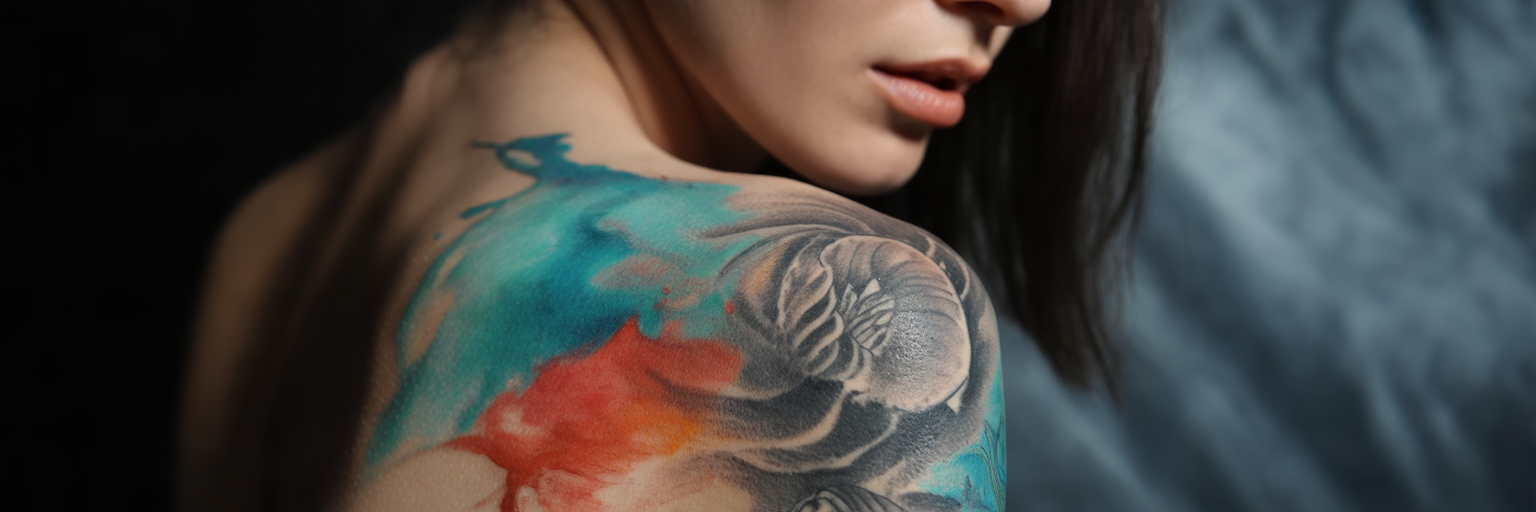
Traditional Japanese woodblock prints from the Edo period relied on dark sumi ink outlines to contain layered, translucent water-based woodblock pigments. Modern tattoo artistry applies this exact structural principle to human skin, pairing crisp linework with fluid color washes so hybrid body art holds its shape for decades. When we design fusion tattoos in 2026, our focus centers on uniting structured foundations like hyper-realism, fine-line geometry, or traditional Eastern motifs with expressive watercolor elements. As explored in our guide to blending Eastern and Western styles, this dialogue between discipline and fluidity turns personal milestones into cohesive, wearable art.
Establishing a Structural Backbone for Fusion Tattoos
Defining Visual Hierarchy in Hybrid Designs
Combining two distinct artistic movements requires a clear visual hierarchy so the composition feels intentional rather than chaotic. In any successful hybrid piece, one style must serve as the primary anchor while the second acts as an atmospheric accent. If a client requests a hyper-realistic portrait or a traditional guardian motif, that structured element commands the center of attention. The watercolor washes then weave around the subject to introduce movement and emotional resonance without creating competing visual noise. By assigning a dominant role to crisp linework or tonal shading, the eye immediately understands how to read the story on your skin.
Collaborative Longevity Planning
Designing with hierarchy in mind naturally leads to our collaborative consultation process at Memory Lane Tattoo Studio. Artistic director Apple Qu and our team sit down with every client to map out how solid structural linework will hold the composition together as your skin naturally matures. Clients frequently ask how watercolor tattoos age over ten or twenty years. Without a dark foundation, uncontained pastel pigments can gently soften and lose definition. Anchoring those fluid splashes against crisp black lines or high-contrast shading prevents natural dermal pigment dispersion from compromising readability. This thoughtful planning allows individuals to use bespoke body art as an authentic vehicle for personal identity and self-expression, knowing their story will remain legible for life. Pairing a strong structural anchor with supportive fluid elements ultimately ensures your custom artwork stays balanced, meaningful, and enduring.
Mapping Fluid Gradients and Bounded Stencil Zones
Containing Fluidity with Anatomical Stencils
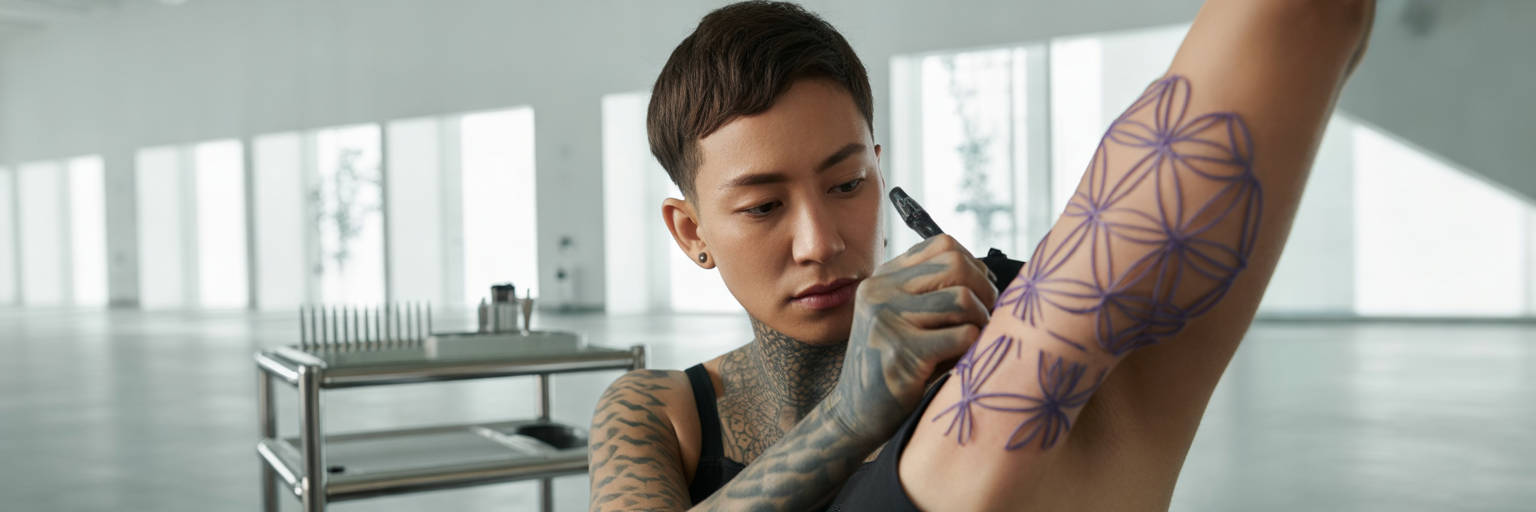
Once the structural hierarchy is established on paper, translating that vision onto three-dimensional muscle and bone requires spatial precision. Spontaneous, painterly brushstrokes on skin are never the result of random improvisation during the tattoo session. Instead, we create a detailed internal map during the stencil preparation phase. By marking bounded stencil zones for every color gradient, we contain fluid shapes so they complement your natural curves and joint mobility. You can review our strategic tattoo placement insights to see how aligning bounded zones with muscle contours keeps dynamic washes from distorting when your body moves.
Bridging Styles Through Unifying Motifs and Negative Space
Containing those fluid washes also requires visual bridges that connect contrasting aesthetics into a single narrative. Unifying motifs such as fine-line botanical stems, shared geometric frames, or classic Eastern wave patterns link heavy realistic shading with airy color transitions. Equally important is the strategic allocation of negative space. Leaving deliberate pockets of uninked skin allows dark structural anchors and translucent color washes to breathe side by side without muddying the composition. During our collaborative fitting session, we map your stencil through four focused steps:
- Anatomical flow assessment: Observing how your muscles expand and twist in relaxed and active postures.
- Primary anchor placement: Securing the core realistic or fine-line motif onto the most stable planar surface.
- Boundary zone marking: Outlining exact perimeter guides where watercolor gradients will fade out.
- Negative space allocation: Reserving open skin channels to preserve high contrast between dark ink and soft washes.
What looks like an effortless, free-flowing splash of paint on healed skin is always the result of meticulous stencil mapping and anatomical collaboration.
Selecting a Harmonious Color Key and Eastern-Western Motifs
Curating Anchor Hues for Skin Undertones
With the spatial boundaries and open skin channels mapped out, our focus shifts to pigment chemistry and chromatic harmony. Working with a strict color key means limiting the palette to two or three anchor hues so vivid watercolor accents do not overpower delicate fine-line or black-and-grey foundations. Because every client brings a unique canvas, we tailor pigment selections to your natural skin tone and undertone. Warm golden undertones illuminate rich crimson, ochre, and emerald washes, whereas cooler or deeper complexions pair remarkably well with high-contrast jewel tones like indigo and magenta. Selecting hues that harmonize with your epidermis guarantees that translucent washes heal true to color.
Harmonizing Cultural Motifs Through Color Theory
Thoughtful color curation becomes especially rewarding when blending Eastern and Western tattoo styles into one cohesive piece. Pairing Western micro-realism with delicate Asian brush-stroke washes allows clients to celebrate multifaceted personal histories, a concept we explore further in our reflections on cultural heritage tattoos. However, color theory operates differently inside the human dermis than it does on paper. Complementary colors placed directly together without a barrier can heal into muted, muddy brown tones over time. We prevent this by separating opposing hues with crisp structural lines or clean negative space.
| Structural Foundation | Recommended Watercolor Key | Unifying Bridge Motif | Primary Longevity Benefit |
|---|---|---|---|
| Western Black-and-Grey Realism | Cool jewel tones (teal, indigo, magenta) | Fine-line geometric framing | High contrast keeps realistic shading crisp |
| Fine-Line Botanical Work | Soft botanical washes (sage, coral, ochre) | Negative space leaves and stems | Prevents delicate lines from drowning in pigment |
| Traditional Eastern Motifs | Sumi-inspired gradients (crimson, amber, Prussian blue) | Repeating wind bars or water waves | Bold outlines lock expansive color zones in place |
| Micro-Realism Portraits | Monochromatic atmospheric washes | Subtle dotwork transitions | Directs visual focus strictly to facial details |
Curating a disciplined color key alongside culturally resonant bridging motifs transforms distinct artistic traditions into a unified, personalized masterpiece.
Technical Execution with Layered Pigments and Needle Configurations
High-Saturation Layering and Rotary Precision
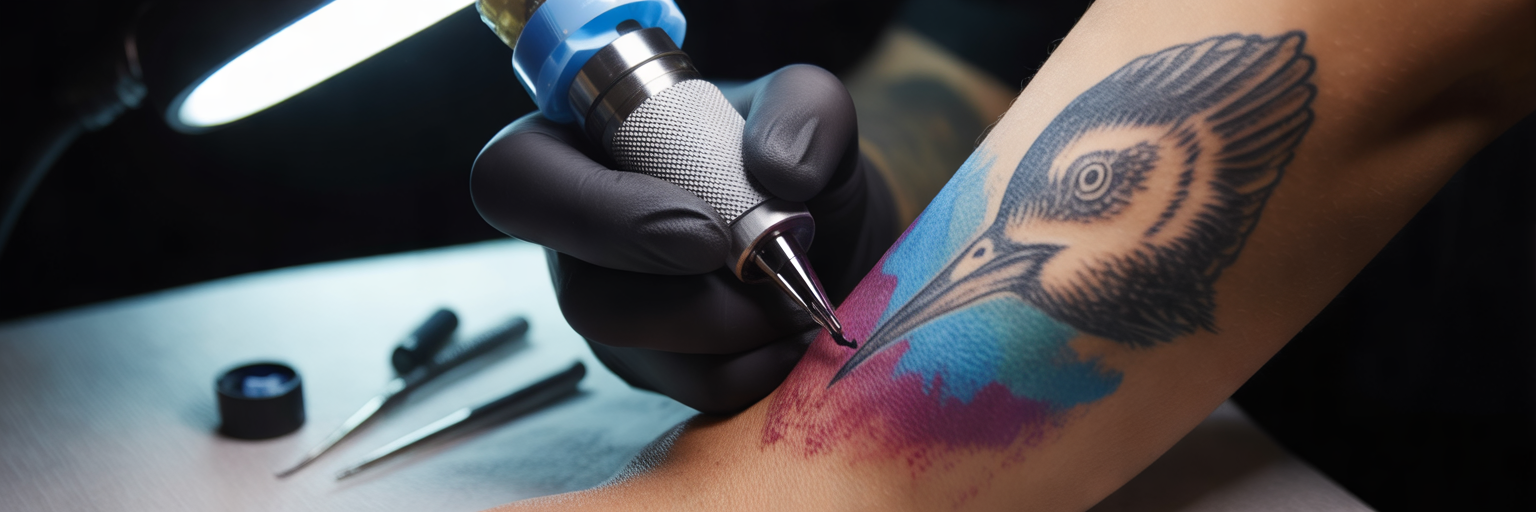
Bringing a curated color key to life on the skin demands a thorough understanding of dermal mechanics. A common misconception is that artists dilute standard inks heavily with water to create translucent effects. Authentic watercolor tattoo techniques actually rely on packing standard, high-saturation pigments in stepped tonal gradients to mimic the luminosity and organic staining of wet paint. If pigment is merely watered down, macrophages in the immune system quickly clear the sparse particles away. Instead, we use precision rotary machines and varied needle configurations, switching from tight round liners for crisp structural anchors to curved magnum groupings that whip-shade smooth, seamless color transitions directly into the dermis.
Transforming Old Ink with Strategic Cover-Ups
This multi-layered saturation method is remarkably effective when developing custom cover up tattoo ideas or camouflaging textured skin. Dense pigment saturation in deep anchor tones like Prussian blue, plum, or charcoal black conceals faded or unwanted old ink, while lighter atmospheric washes draw the viewer's eye outward toward fresh, undamaged skin. We apply these same structural distraction principles in our approach to transforming scars into meaningful art, giving clients renewed confidence in their skin. Because hybrid layering involves multiple passes, our team strictly enforces clinical hygiene and skin trauma protocols:
- Single-use cartridge verification: Opening sterilized, membrane-sealed needle modules in front of you prior to every session.
- Directional wipe control: Cleansing the skin away from lighter pigment zones so dark structural ink never smudges into pastel washes.
- Progressive saturation pacing: Building color gradients gradually to avoid overworking the delicate dermal papillae.
- Barrier film protection: Wrapping all machine cords, clip cords, and workstation surfaces in medical-grade barriers.
Achieving soft, effortless painterly washes on the surface requires disciplined mechanical control and uncompromising clinical care beneath the needle.
Preserving Vibrancy Through Tropical Aftercare and Sun Protection
Managing Multi-Layered Healing in Humid Climates
Once your session concludes and the final barrier dressing is applied, preserving those layered gradients becomes a shared partnership. During the first two weeks of dermal recovery, multi-layered fusion pieces experience varied flaking patterns. High-saturation watercolor zones and solid blackwork naturally shed slightly thicker scabs than delicate fine-line connectors. Navigating this recovery phase in equatorial heat requires tailored habits. Whether you are a local resident or an international guest visiting a custom tattoo studio Singapore collectors trust, managing heat and moisture prevents trapped perspiration from irritating fresh ink. As detailed in our tropical aftercare guide, three daily habits protect healing hybrid work:
- Wash with mild, fragrance-free cleanser: Gently rinse away sweat and urban pollutants twice daily using cool water.
- Apply thin, breathable ointment layers: Use a minimal amount of recovery balm so pores remain unclogged in high humidity.
- Wear loose, natural fabrics: Choose soft cotton garments that allow air circulation without rubbing against flaking pigment edges.
Long-Term UV Defense and Studio Follow-Ups
After the epidermis fully regenerates, long-term ultraviolet defense becomes your primary tool for preserving crisp contrast. Lighter watercolor washes lack a heavy black perimeter outline to shield delicate pigment edges from solar radiation. Applying broad-spectrum sunscreen daily prevents UV rays from breaking down vibrant hues prematurely. We view every piece as an ongoing relationship, so we always invite clients back to Memory Lane Tattoo Studio for a healed check-up with Apple Qu and our team to evaluate how the layers have settled. Lasting vibrancy is ultimately a collaborative commitment between our studio craftsmanship and your daily skin care.