
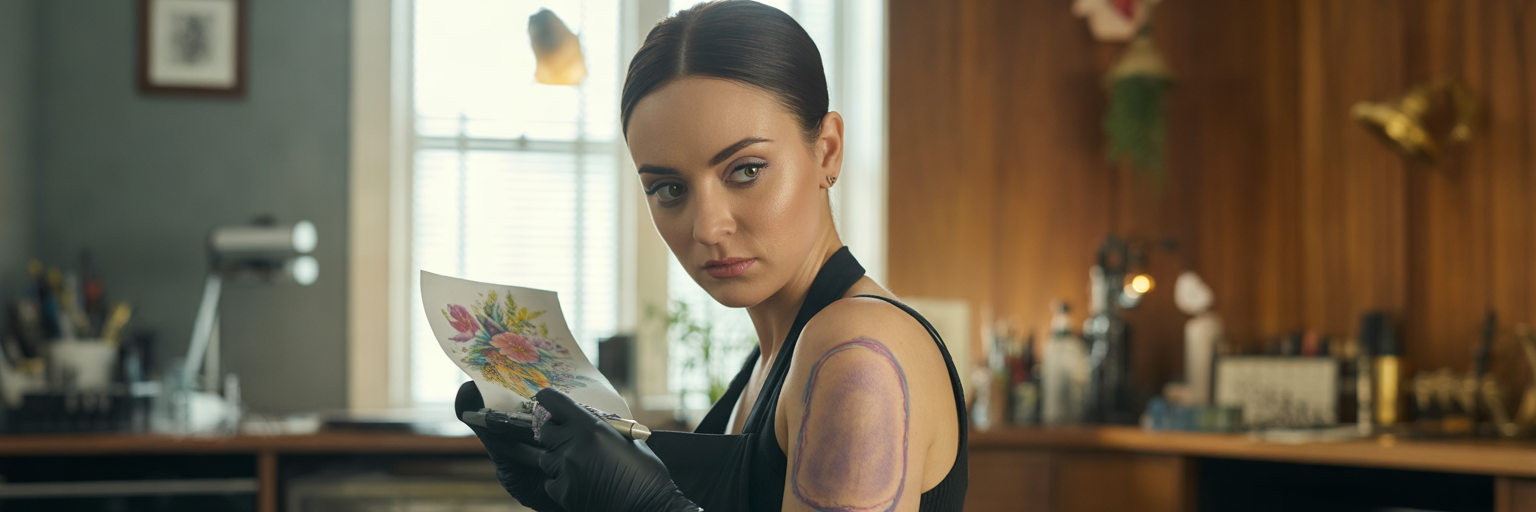
When skin heals from an injury or surgery, it replaces the original basket weave dermis with dense, parallel collagen fibers that interact with tattoo pigment in uniquely challenging ways. Understanding how to work in harmony with this altered tissue is the foundation of turning a past mark into a piece of deeply personal body art. Selecting the right tattoo styles for covering up scars allows us to honor both your skin sensitivity and your personal narrative through collaborative artistry.
Understanding Tattoo Styles for Covering Up Scars on Reactive Skin
Healthy, untouched dermis resembles a finely woven linen canvas where fibers interlock with uniform elasticity. Healed scar tissue behaves much more like handmade textured paper. Because the body rebuilds damaged areas rapidly, those new collagen bundles align in dense, rigid rows that alter needle penetration and ink absorption. Nerves trapped or regenerating within these tight fibers often create heightened physical sensitivity, while thinner epidermal layers can make pigment settle unevenly if approached without a gentle hand.
Successfully tattooing over sensitive scar tissue requires pairing gentle technical precision with thoughtful artistic direction. Rather than forcing a rigid stencil over altered skin, our artists design compositions that flow naturally with raised edges, small indentations, or pale contours. When the artwork moves alongside the natural topography of your body, the underlying mark softens visually without requiring aggressive needle work.
Every successful piece begins long before the needle touches your skin. During an intimate consultation, we sit down together to discuss your comfort threshold, assess how your dermis reacts to light touch, and listen to the story you wish to tell. As we explore in our foundational guide on transforming scars into meaningful art, turning a past physical reminder into a cherished milestone is a deeply collaborative process. By evaluating your skin reactivity alongside your aesthetic vision, we curate custom tattoo styles for covering up scars that feel gentle during the session and settle beautifully over time.
Top Artistic Approaches for Seamless Scar Camouflage
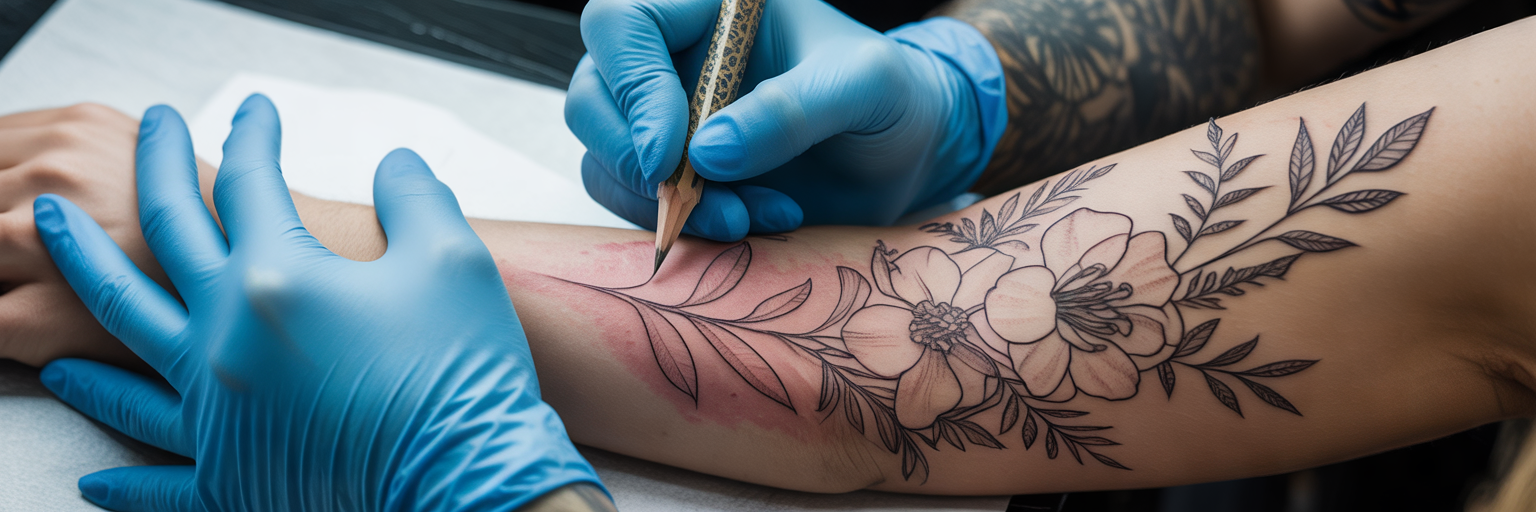
Once we understand the unique texture of your skin, we can select visual movements that disguise surface irregularities while keeping needle trauma low. Exploring the best tattoos to hide scars involves choosing organic forms and soft transitions that trick the eye and protect delicate tissue.
Botanical and Organic Floral Designs
Nature rarely produces straight lines, which makes botanical art ideal for uneven skin. Curving stems, overlapping petals, and unfurling leaves naturally mirror the contours of the human body. By placing the natural shadow of a leaf along the raised edge of a surgical mark, we disguise height variations through varied tonal shading rather than heavy ink saturation.
Black and Grey Realism and Neo-Traditional Depth
When working across wider or flatter marks, depth becomes our strongest ally. Black and grey realism alongside neo-traditional artistry utilizes layered contrast, varied line weights, and smooth gradients to build three dimensional volume. As highlighted in a comprehensive guide from TryTattoo, high performing styles like botanicals and realism use layered shading to create an optical distraction that draws the viewer eye away from surface texture and toward the focal point of the artwork.
Watercolor and Eastern-Western Fusion Techniques
For skin that remains thin, reactive, or hypopigmented, heavy lining directly over the area can feel overwhelming. Watercolor washes and painterly brush strokes gently blend discolored patches into the surrounding dermis using diffused pigment. You can explore how we adapt this soft technique in our resource on selecting the right watercolor approach for different skin types. Furthermore, as detailed in our article on blending Eastern and Western tattoo styles, combining traditional ink wash movement with structured Western focal points creates a gentle visual flow that minimizes direct needle passes over fragile spots.
Beyond choosing a style, we also decide whether to cover the tissue directly or frame it creatively when designing a custom scar camouflage tattoo:
- Negative Space Integration: Leaving the delicate scar tissue completely untouched while building intricate shading around it turns the pale mark into a natural highlight, such as a beam of light or the center of a blossom.
- Directional Flow Alignment: Aligning the primary movement of feathers, waves, or calligraphy strokes directly over the linear path of the mark conceals its outline within the rhythm of the drawing.
- Peripheral Focal Anchoring: Placing high detail elements like a bird eye or a vibrant bloom on the healthy skin just centimetres away pulls visual attention away from the textured center.
- Feathered Edge Blending: Using whisper soft stipple shading across the boundary where scarred dermis meets untouched skin softens abrupt transitions in skin tone.
Design Choices to Avoid on Compromised Tissue
Part of our collaborative responsibility involves guiding you away from aesthetics that might irritate your skin or highlight the very texture you wish to soften. While every client preference is valid, certain technical approaches clash with the biology of compromised dermis.
Rigid geometric patterns, mandalas with strict symmetry, and micro minimalism rely entirely on flawless, uninterrupted lines to look convincing. When placed directly over raised or indented collagen fibers, straight lines naturally warp as the skin moves. Instead of hiding the mark, an unbroken fine line passing over a bump acts like a contour map that draws immediate attention to the uneven surface.
At the opposite end of the spectrum, applying solid, heavy blackwork directly over thin or reactive tissue carries physiological risks. Packing dense black pigment requires repeated needle passes with tight groupings. On fragile skin, this concentrated trauma can trigger localized inflammation, subdermal ink blowout, or unpredictable pigment rejection during the healing phase.
Fortunately, honoring your safety does not mean abandoning delicate aesthetics. An experienced artist can preserve your love for subtle elegance by placing crisp geometric accents and fine line elements on the stable, healthy skin framing the scar, while using softer shading across the center. We share more ways to balance subtle detail with skin anatomy in our guide on designing meaningful minimalist tattoos.
Artistic Approaches and Tissue Compatibility for Scar Camouflage
| Artistic Style | Visual Camouflage Mechanism | Needle Trauma Level | Ideal Scar Compatibility |
|---|---|---|---|
| Botanical and Organic Florals | Curving stems and petal shading disguise raised edges | Low to Moderate | Hypertrophic and linear surgical scars |
| Black and Grey Realism | High contrast gradients distract the eye from texture | Moderate | Flat atrophic scars and wide surface marks |
| Watercolor and Fusion Washes | Soft color transitions blend hypopigmentation | Low | Thin, reactive, or discolored tissue |
| Rigid Geometry and Micro Fine Line | Exposes surface bumps through warped straight lines | Low | Healthy surrounding skin only |
| Solid Heavy Blackwork | Complete pigment saturation with zero negative space | High | Not recommended for fragile or reactive scars |
This table compares tattoo styles based on dermatological needle impact and optical illusion principles, helping clients and artists collaboratively select designs that respect tissue sensitivity while achieving visual harmony.
Medical Readiness and Pre-Session Screening
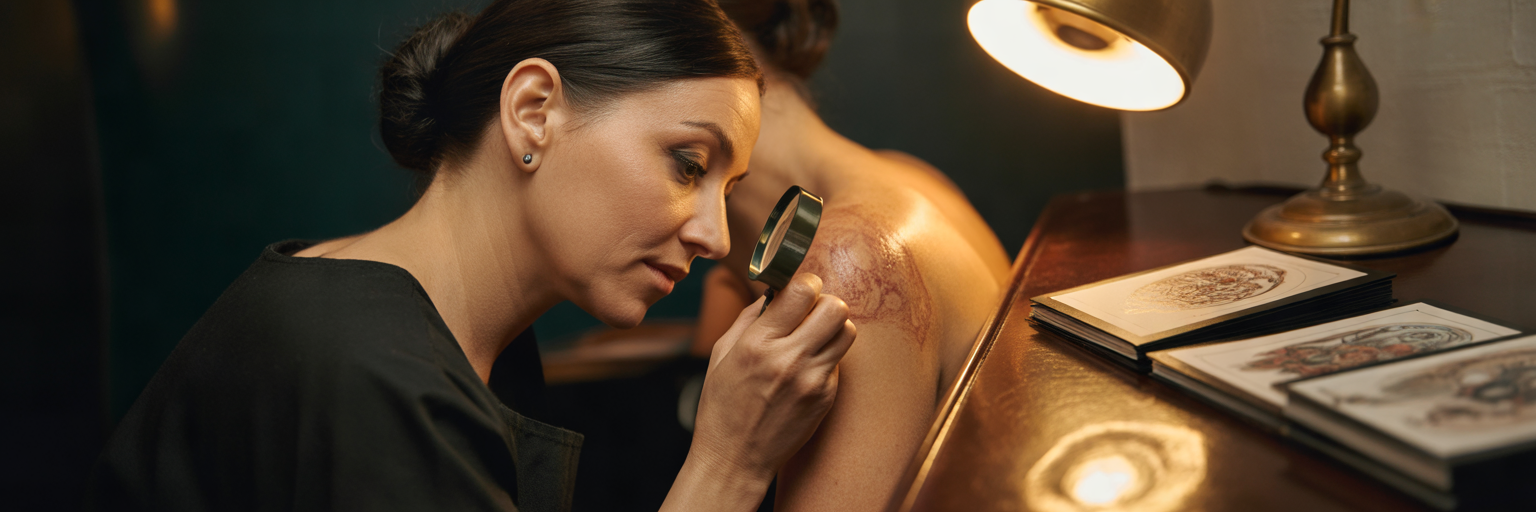
True artistry always places your physical wellbeing first. Before we finalize any sketch, we must confirm that your skin has completed its internal remodeling phase. Recovering tissue typically requires 18 to 24 months to fully mature. If a mark still appears pink, red, or warm to the touch, active blood vessels and shifting collagen are still working beneath the surface. Tattooing prematurely can disrupt healing and cause pigment to blur.
As highlighted in expert dermatological insights featured in Byrdie, waiting until the tissue turns pale and stable is essential, and individuals with keloid prone skin must obtain strict dermatologist clearance prior to booking. During our pre session screening, we evaluate four primary tissue categories:
- Flat Atrophic Scars: Commonly resulting from superficial injuries or acne, these slightly recessed marks sit below the surrounding skin and generally accept soft shading and realism smoothly once pale.
- Raised Hypertrophic Scars: These firm, elevated marks stay within the boundaries of the original incision or injury and respond well to organic botanical framing that works around their firm ridges.
- Deep Burn Grafts: Characterized by tight elasticity and altered sensation, grafted tissue requires ultra light needle pressure and gradual pacing across multiple short sessions.
- True Keloids: Unlike hypertrophic marks, keloids grow continuously beyond the original wound border. Because needle stimulation can trigger new keloid growth, we require written medical approval and often recommend framing the area without touching the keloid itself.
Because every body heals differently, an in person studio evaluation is invaluable. As specialist Kseniia Oliinyk notes in an interview with Things and Ink, assessing tissue elasticity by touch helps artists plan for unpredictable healing responses. For highly reactive clients, we also offer a gentle ink patch test, placing a tiny dot of pigment near the area to observe how your dermis settles before committing to a full session.
Collaborative Care and Healing in a Tropical Climate
Stepping into the studio for your session should feel calm, unhurried, and supportive. During your appointment, we tailor our pacing entirely to your comfort, scheduling frequent breaks and using specialized needle groupings with hypoallergenic vegan pigments that glide smoothly into sensitive skin. When planning a scar cover up tattoo Singapore clients also benefit from aftercare guidance adapted specifically to our warm, humid weather.
High humidity and tropical heat require mindful recovery habits so altered tissue can settle without irritation. For a deeper look at long term care, read our dedicated article on maintaining tattoo vibrancy in the tropics. During the initial weeks, follow these four essential tropical healing practices:
- Breathable Barrier Protection: Use medical grade breathable second skin wraps during the first few days to shield fragile tissue from airborne bacteria and clothing friction while allowing excess moisture to evaporate.
- Gentle Antimicrobial Cleansing: Wash the area twice daily with cool water and a fragrance free cleanser, patting dry with a clean paper towel rather than rubbing delicate skin.
- Managing Sweat and Heat: Remain in air conditioned environments when possible and pause outdoor workouts for two weeks, as trapped sweat can macerate healing scabs over scarred dermis.
- Strict UV Shielding: Once the peeling phase finishes completely, apply broad spectrum mineral sunscreen daily, since scarred skin lacks normal melanin distribution and fades rapidly under equatorial sun.
Because dense collagen absorbs pigment differently than untouched skin, we always set realistic expectations by normalizing a planned follow up touch up session once the dermis settles. Partnering with artistic director Apple Qu and our dedicated team at Memory Lane Tattoo Studio ensures a hygienic, collaborative, and deeply personal transformation from your very first sketch to your fully healed artwork.