

Tattoo ink resides permanently within the dermis, where dermal macrophages continually hold pigment particles in place over decades. Transforming an unwanted dark piece therefore requires strategic pigment integration rather than simple surface erasure.
Core Principles of Tattoo Styles for Covering Up Dark Ink
The Biology of Dermal Pigment Integration
Many clients walk into our studio hoping that fresh ink acts like opaque acrylic paint on a physical canvas. In reality, new pigment sits directly alongside existing ink within the dermis. Because both old and new pigments share the same cellular layer, choosing the right tattoo styles for covering up dark ink requires strategic integration rather than simple erasure. When we evaluate an older piece together, we look closely at how to blend new tones with the existing base. High saturation, dense ink packing, and structural complexity are essential for disguising stubborn outlines without creating a muddy or blotchy appearance.
Scale and Color Theory in Cover-Up Artistry
Achieving a clean visual reset also depends on the rule of scale. A bespoke cover-up typically needs to be two to three times larger than the original tattoo. Expanding the footprint allows your artist to establish fresh negative space and redirect the viewer's eye away from the dense center. Rethinking how this expanded artwork sits on your body is a collaborative process, and our strategic placement guide explains how we tailor larger compositions to flatter your natural anatomy.
Color theory plays an equally vital role during this expansion. Cool, dark tones such as deep blues, rich purples, forest greens, and carbon blacks effectively absorb underlying black pigment where lighter, warmer shades like yellow or soft pink would simply turn murky. Ultimately, successful dark ink transformations rely on smart composition, strategic sizing, and high-contrast shading working in harmony.
High-Saturation Aesthetics That Mask Heavy Pigment
Blackwork and Geometric Ornamental Patterns
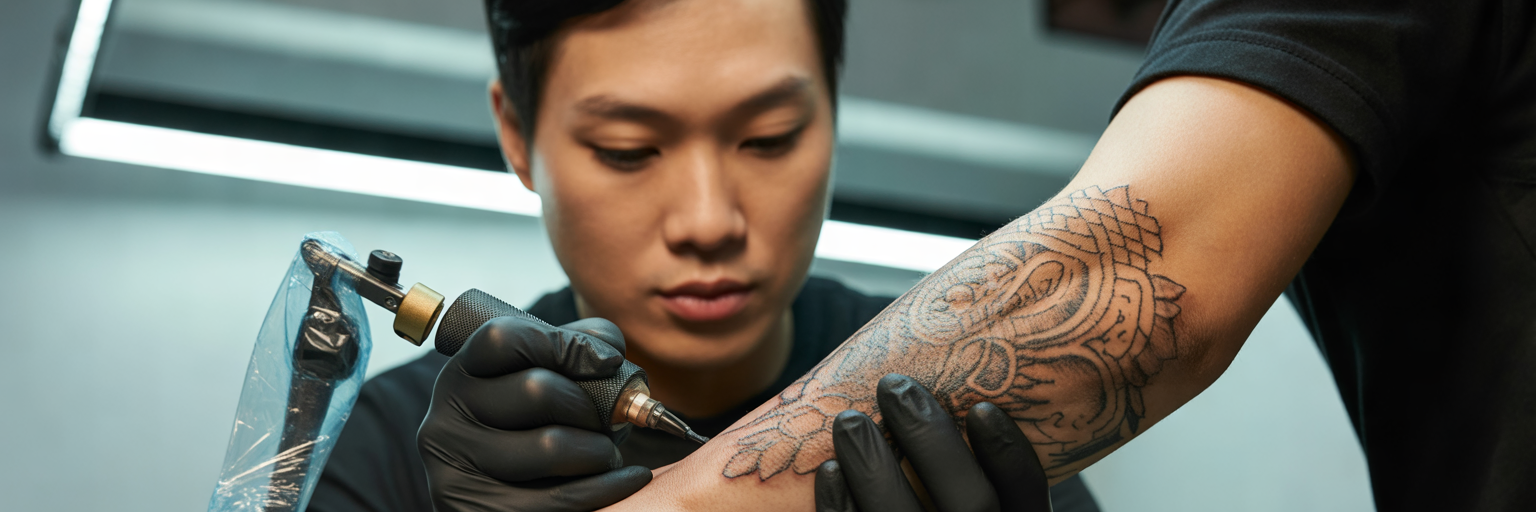
When dealing with unforgiving, thick outlines, high-density aesthetics provide the most reliable camouflage. A blackwork cover up tattoo or neo-tribal design serves as the premier choice for masking heavy black ink. By utilizing solid black fills and bold architectural shapes, we can completely absorb old silhouettes while framing them with striking negative space. Alongside solid fills, Ornamental and Mandala patterns offer a sophisticated alternative. These styles rely on intricate dotwork, heavy linework, and repetitive geometric symmetry to confuse the eye, breaking up the recognizable contours of an underlying tattoo so the brain only registers the new pattern.
Hyper-Realism and East-West Fusion Techniques
For clients who prefer pictorial depth over geometry, a hyper realism cover up or Dark Illustrative piece works wonders. As we explore in our dedicated article on hyper-realistic transformations, an experienced artist uses dramatic shadows, complex surface textures, and three-dimensional depth to hide heavy scarring or thick lines seamlessly. At our studio, Artistic Director Apple Qu also specializes in pairing these realistic foreground motifs with traditional Japanese background shading, such as heavy wind bars or swirling dark water. You can see how this signature approach creates dynamic movement in our exploration of Eastern and Western fusion artistry.
During the design phase, we often combine specific visual textures to break up stubborn geometric silhouettes:
- Velvety black fills that create a uniform, light-absorbing backdrop over dense lettering or tribal bands.
- Heavy wind bars inspired by Eastern traditions that sweep across the anatomy to conceal sprawling old shapes.
- Charcoal shading that mimics soft, smoky gradients to blur harsh transitions between old ink and fresh skin.
- Stippled dotwork that introduces granular texture over uneven or slightly scarred linework.
- Layered cross-hatching that builds dense tonal value while disguising rigid vertical or horizontal lines.
Choosing between these dense styles always comes down to a collaborative conversation about your personal aesthetic and the exact density of your existing tattoo.
| Tattoo Style | Primary Masking Mechanism | Ideal Underlying Tattoo Type | Required Scale Increase |
|---|---|---|---|
| Solid Blackwork | Complete pigment absorption via dense black saturation | Thick tribal lines, solid black silhouettes, heavy lettering | 1.5x to 2x original size |
| Ornamental and Mandala | Visual distraction through geometric symmetry and dotwork | Asymmetrical shapes, blown-out outlines, small symbols | 2x to 3x original size |
| Dark Hyper-Realism | Multi-tonal depth, deep shadows, and complex surface textures | Faded portraits, patchy shading, raised textured linework | 2.5x to 3x original size |
| East-West Fusion | Heavy background wind bars paired with vibrant foreground subjects | Large multi-element tattoos, dated arm bands, sprawling script | 3x original size or sleeve integration |
Organic Motifs and Bold Traditional Compositions
Layered Botanicals and Neo-Traditional Subjects
While geometric precision and photo-realism offer powerful coverage, natural forms provide a uniquely forgiving approach to concealing unwanted art. Some of the best cover up tattoo designs rely on layered botanical and floral motifs. Dark peonies, lush roses, and dense tropical foliage use organic curves, deep leaf shadows, and rich petals to disguise stiff or rigid old linework. Because nature rarely follows straight lines, your artist can curve a stem or deepen a petal's shadow right where the old ink is darkest.
Classic traditional and neo-traditional subjects like panthers, ravens, skulls, and mythical creatures also remain timeless solutions. Their bold outlines, heavy black shading, and high-contrast color palettes naturally command attention. Organic shapes flow effortlessly with the body's contours, allowing us to collaborate on a custom composition that flatters your physique while positioning the darkest illustrative elements directly over the old pigment.
Preserving Cover-Up Vibrancy in Tropical Climates
Once those rich tones settle into the skin, long-term care becomes essential. Maintaining deep color saturation is a specific challenge when getting a cover up tattoo Singapore residents and tropical visitors must consider. Intense equatorial UV exposure breaks down lighter colored pigments faster than carbon black. If the new jewel tones fade prematurely from sun damage, the old dark tattoo underneath can slowly peek back through over the years. Protecting your investment with diligent sun care, as detailed in our guide on tropical tattoo care, keeps those layered pigments vibrant and opaque. Organic and traditional subjects ultimately offer unmatched flexibility, letting us bend leaves, feathers, or shadows around the most stubborn areas of an old piece.
Why Delicate Styles Struggle With Dark Cover-Ups and How to Adapt
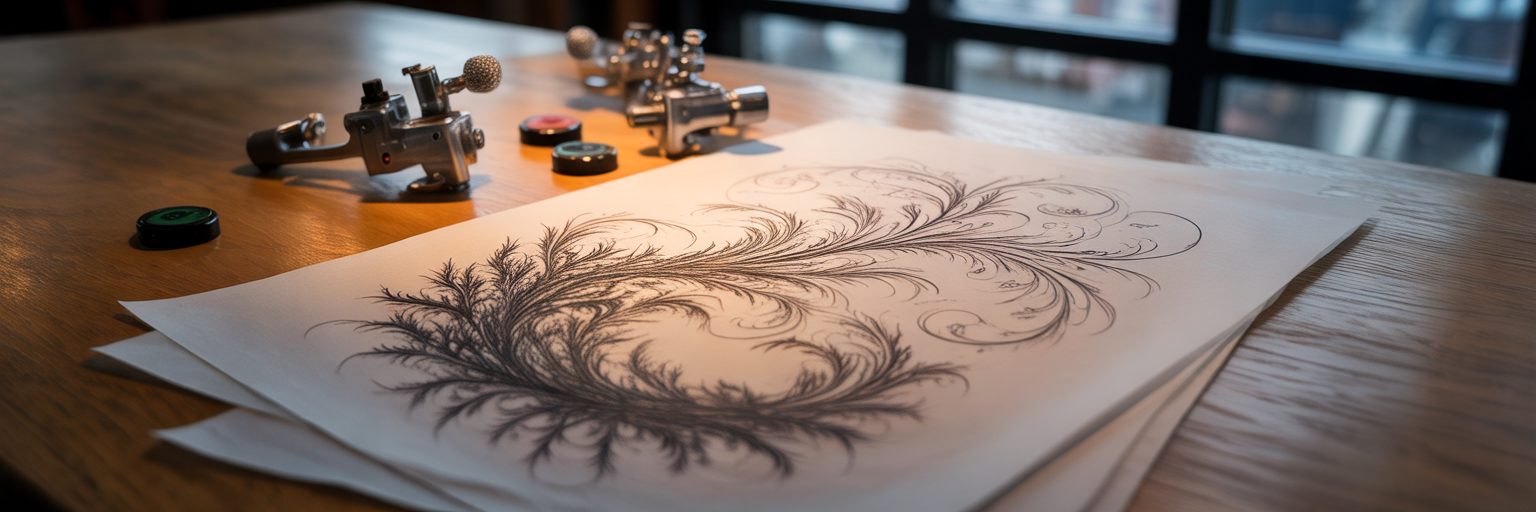
Clients frequently ask if a delicate minimalist symbol or a soft, open watercolor splash can hide a heavy black tattoo. Being completely honest and consultative is part of our process: pure fine-line and open watercolor styles cannot cover dark, heavy ink on their own. These delicate aesthetics rely on open skin breaks, negative space, and translucent pigments that simply allow dark underlying ink to show right through.
When your heart is set on a lighter, airier look, we still have wonderful collaborative options. Preliminary laser tattoo fading can lighten the dark base significantly before we begin tattooing, provided we give your skin adequate healing intervals between laser sessions and new ink application. Alternatively, we can design creative hybrid solutions that pair a solid, dark anchor element directly over the old tattoo with delicate accents extending outward into clean skin, an approach we highlight in our resource on watercolor fusion techniques.
Here are four practical ways we incorporate delicate elements into a dark cover-up:
- Framing a dense floral core with delicate fine-line botanical stems and micro-leaves on the surrounding uninked skin.
- Concentrating deep indigo or plum watercolor splashes over the old ink that gradually fade into soft pastel washes outward.
- Pairing a solid blackwork geometric center with whisper-thin ornamental filigree and micro-realism outer details.
- Completing two to three laser fading sessions first to break up heavy black pigment and open up lighter shading possibilities.
Combining partial laser lightening or hybrid fusion techniques opens the door to softer, more varied artistic results without compromising coverage.
Collaborating With Your Artist for a Bespoke Transformation
Every successful cover-up begins long before the needle touches your skin. Booking an in-person consultation with a custom cover up tattoo artist is essential to evaluate your existing tattoo's ink depth, potential raised scarring, skin elasticity, and exact placement. Reading through our article on preparing for a consultation will help you know what to expect during this initial visit. Our collaborative mindset focuses on balancing your personal story and aesthetic goals with the technical realities of what your skin and the old pigment will allow.
Our bespoke cover-up consultation follows four essential steps:
- In-person dermal and scar tissue assessment under bright studio lighting to check how raised or densely packed the old ink is.
- Open exploration of personal milestones and preferred visual motifs so the new piece carries genuine meaning for you.
- Custom tracing and digital layering to map the darkest zones of the new design directly over the old outlines.
- Selecting specialized needle groupings and high-pigment inks to saturate the skin safely without overworking the tissue.
Approaching a cover-up with openness and trusting our experienced team at Memory Lane Tattoo Studio turns a source of past regret into a meaningful, timeless piece of bespoke art.