

Archaeological discoveries of the 5,300 year old Iceman Otzi prove that humanity has used permanent ink to mark lineage and identity for millennia. Today, that ancient tradition continues through bespoke cultural fusion tattoo designs that unite diverse ancestral histories into a single piece of wearable art.
Honoring Lineage Through Fusion Tattoo Designs
Discerning collectors in 2026 increasingly seek body art that honors their multicultural roots, ancestral stories, and personal milestones. Rather than choosing a single discipline, many clients request custom fusion tattoo designs that weave together different facets of their identity. When we craft an East meets West tattoo, we might pair classical European fine line realism with fluid Asian ink brushwork or ancestral textile patterns. You can explore how we approach these stylistic combinations in our guide on blending Eastern and Western styles to see how contrasting traditions harmonize on the skin.
Have you ever scrolled through social media and noticed how many tattoos repeat the exact same visual tropes? Moving away from those generic, mass produced motifs requires a dedicated partnership between you and your artist. We sit down together to unpack family histories, migration journeys, and quiet triumphs, translating those memories into intentional, story driven imagery.
A Scottish botanical specimen rendered in micro realism might rest beside Chinese calligraphic strokes, reflecting a dual heritage or a cross cultural marriage. Every curve and shadow serves a narrative purpose. True artistic harmony begins with your personal authenticity and a shared commitment to honoring the genuine origins of every visual element we bring to life.
Ethical Frameworks and Cultural Provenance
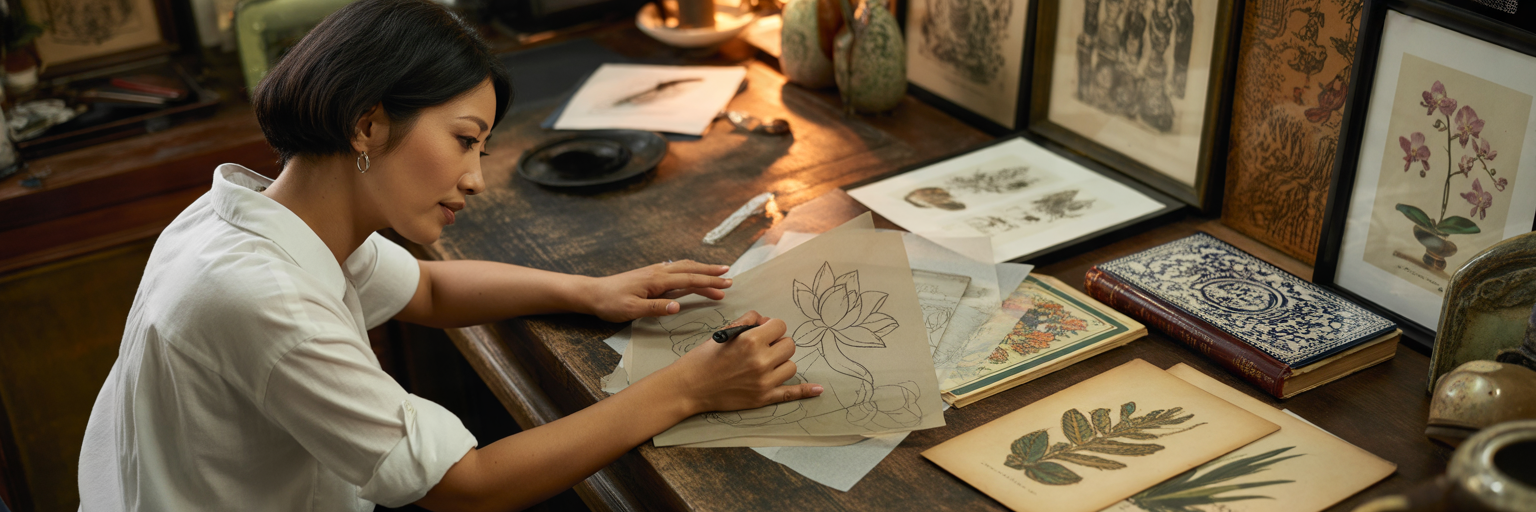
Translating ancestral history into permanent art calls for thoughtfulness and historical curiosity. When we collaborate on cultural heritage tattoos, our studio acts as your artistic partner, guiding you through the origins of regional motifs so your piece carries both beauty and historical integrity.
Separating Appreciation from Restricted Symbolism
Admiring the visual power of a traditional pattern is natural, yet we must separate aesthetic appreciation from the misappropriation of sacred, earned, or restricted ceremonial symbols. Even an artist with decades of technical mastery does not hold the cultural authority to grant permission for closed tribal insignia or sacred religious scripts.
For diaspora and multicultural clients reconnecting with their lineage, this distinction is especially meaningful. We encourage you to consult museum archives, verified historical records, or community elders when researching family motifs. Reviewing our resource on honoring your roots through heritage designs can also help you prepare your historical references before we begin sketching.
Culturally Respectful Alternatives in Southeast Asia
When a traditional symbol is restricted to specific initiates, we can pivot toward regional markers that celebrate your connection to a place without crossing ethical boundaries. Consider these four practical ways to substitute restricted symbols using Southeast Asian heritage elements:
- Endemic Botanicals: Replace spiritually restricted totems with native flora like the Vanda Miss Joaquim orchid, capturing local resilience through botanical realism.
- Shophouse Architectural Geometry: Substitute closed tribal borders with the intricate fretwork, ventilation panels, and colonial plaster motifs found on historic Singaporean shophouses.
- Heirloom Peranakan Porcelain Tiles: Draw from the vibrant floral and phoenix motifs of Nyonya ceramics rather than sacred temple engravings.
- Nusantara Batik Patterns: Utilize everyday coastal batik patterns instead of forbidden royal court weaves like Parang Rusak, preserving textile heritage respectfully.
| Visual Category | Restricted or Sacred Elements | Respectful Heritage Alternatives | Verification Source |
|---|---|---|---|
| Ceremonial Insignia | Earned tribal ranks or sacred religious scripts | Historical architectural geometry from ancestral regions | Museum archives and cultural liaisons |
| Traditional Textiles | Royal or ceremonial funerary weave patterns | Everyday heirloom batik motifs or Peranakan tile geometry | Verified textile history records |
| Natural Motifs | Deity specific totems with closed spiritual rules | Endemic regional flora like native Southeast Asian orchids | Botanical archives and family history |
Taking the time to verify cultural provenance protects the dignity of the traditions you wish to celebrate. Your tattoo becomes a conversation starter rooted in genuine respect and accurate history.
Structuring Visual Hierarchy with the 70/30 Rule
Once we establish the ethical foundation of your motifs, our focus shifts to visual composition. The most common pitfall in fusion tattooing happens when two competing artistic styles are given equal weight, resulting in a cluttered piece where neither tradition can breathe.
Applying the Dominant to Accent Ratio
To prevent visual competition, we structure our custom layouts around the 70/30 dominant to accent ratio. One primary artistic style comprises 70 percent of the composition to anchor the eye, while a secondary cultural or stylistic element forms the remaining 30 percent as a deliberate accent. Just as restrained minimalist design principles improve visual clarity in digital composition, establishing a clear focal hierarchy on the skin ensures your primary subject commands immediate attention without visual noise.
Imagine a Western hyper realistic portrait of a guardian lion occupying 70 percent of the canvas. We can then frame that solid focal point with a 30 percent accent of soft Eastern sumi ink washes or delicate heritage latticework. To see how fluid backgrounds elevate structured realism, read our article on blending watercolor techniques into fusion pieces.
Aligning Styles with Anatomical Contours
A balanced ratio on paper must also adapt to the three dimensional movement of your body. Selecting the right canvas ensures your artwork flatters your natural contours and remains legible over decades, a topic we explore deeply in our guide on choosing the best placement for storytelling designs. Here is how we adapt the 70/30 hierarchy across four distinct anatomical zones:
- The Forearm: The central muscle belly supports a 70 percent vertical realistic motif, while 30 percent geometric textile bands wrap naturally around the wrist or elbow crease.
- The Shoulder Blade: This broad, flat plane anchors a 70 percent classical focal image, allowing 30 percent fluid brushstroke accents to sweep gracefully toward the collarbone.
- The Outer Thigh: Ideal for expansive narratives, the quadriceps hold dense 70 percent illustrative realism while 30 percent botanical filigree follows the hip line.
- The Ribcage: Because the torso stretches with every breath, we place the 70 percent structured core over the stable upper ribs and let 30 percent airy watercolor washes taper toward the waist.
Technical Bridges That Unite Disparate Styles
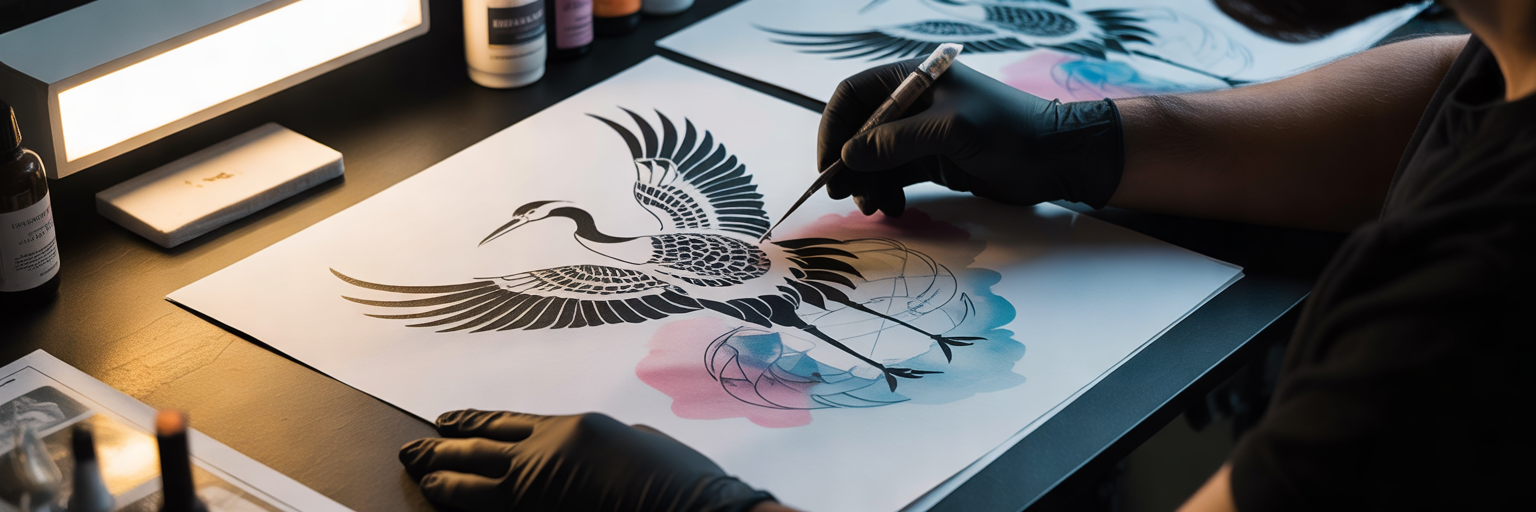
A harmonious layout relies on precise needle mechanics to bind two different artistic eras together. When executing a bespoke cover up tattoo or a fresh cultural piece, the physical application of pigment determines whether the result looks like a unified masterpiece or a disjointed collage.
Linework, Contrast, and Cover Up Mastery
Master tattooists build technical bridges where contrasting styles meet. By utilizing standardized needle groupings across transition zones, we avoid jarring jumps between delicate fine line realism and bold traditional borders. We also calibrate uniform black and grey contrast ratios so soft watercolor washes feel anchored to solid realist shading, using graduated stippling to blend the intersection of two techniques.
These bridging methods prove invaluable when transforming unwanted or faded ink. If you carry an old tattoo that no longer reflects who you are, we can utilize dense ancestral geometry or rich botanical shadows to neutralize dark underlying pigment, redirecting the viewer's eye toward bright, realistic focal points.
| Technical Bridge | Application Method | Visual Impact on Fusion Art | Benefit for Cover Up Work |
|---|---|---|---|
| Standardized Needle Groupings | Using matching liner calibers across transition zones | Prevents jarring jumps between fine line and traditional borders | Redirects the eye away from underlying scar tissue or old edges |
| Uniform Contrast Ratios | Balancing black saturation across both Eastern and Western motifs | Anchors soft watercolor or brush accents to solid realism | Neutralizes dark faded ink beneath dense heritage geometry |
| Graduated Stipple Shading | Blending dotwork density at the intersection of two styles | Creates a soft gradient bridge rather than a hard dividing line | Diffuses the boundary between old pigment and fresh skin |
Tattoo Longevity in a Tropical Climate
Living in or visiting Singapore means your skin experiences intense equatorial UV exposure and year round humidity. High moisture and heat affect how the dermis heals during the first few weeks, while sunlight gradually breaks down lighter pigments over time.
To ensure delicate fine line and watercolor fusion elements age gracefully in this environment, we adjust our ink saturation depth and leave slightly wider negative space buffers between intricate heritage lines. This deliberate spacing prevents fine details from blurring together as the skin naturally matures. You can protect your investment further by following our advice on maintaining tattoo vibrancy in the tropics once your session is complete.
Preparing for a Collaborative Design Consultation
Commissioning a custom tattoo Singapore collectors can wear with pride starts long before the machine touches your skin. At our Memory Lane Tattoo Studio, artistic director Apple Qu brings over 20 years of experience to every consultation, pairing your personal history with our team's anatomical and stylistic curation.
To make our initial conversation as productive and inspiring as possible, we invite you to prepare four key elements before sitting down with your artist:
- Verified Archival Visuals: Photographs of family heirlooms, regional textiles, or museum verified patterns that represent your lineage accurately.
- Placement Preferences: Thoughts on which part of your body feels most meaningful for this story, along with any wardrobe or professional visibility considerations.
- Cover Up History: Clear details on the age, color, and scarring of any existing ink you wish to transform into a new narrative.
- Personal Narrative Notes: A brief summary of the emotional milestone, family connection, or life chapter you want the artwork to commemorate.
During the refinement phase, we review custom drafts together, adjusting proportions and stencil flow until the composition feels unmistakably yours. Supported by strict medical grade hygiene and attentive aftercare guidance, this collaborative partnership transforms your ancestral story into enduring, wearable fine art.