

Historically, cultures from ancient Polynesia to traditional Japan viewed skin markings as ways to honor survival and physical resilience. Today, thoughtfully planned tattoo placement for scar cover-ups continues that tradition by turning healed tissue into balanced, custom artwork.
Understanding Tattoo Placement for Scar Cover-Ups and Skin Anatomy
The Philosophy of Redirection Over Erasure
Approaching a scar with ink requires a shift in perspective. Our objective during a collaborative consultation is never to physically erase the underlying tissue, because tattoo needles cannot flatten a raised ridge or fill an indentation. Instead, we design custom artwork to redirect the viewer's eye and integrate your mark into a harmonious composition. When mapping out ideas, we look closely at how skin stability, muscle movement, and natural body contours interact. A design that follows the curve of a resting muscle will naturally flatter your silhouette, turning an area you once hid into a deliberate focal point. You can explore how we map designs around healed tissue in our comprehensive guide on planning tattoo placement for scars.
Skin Stability and the Healing Timeline
Achieving that visual harmony depends entirely on the biological readiness of your skin. Fibrous scar tissue has a different collagen structure and blood supply compared to uninjured dermis. Because of these structural differences, our artists require scars to be at least 12 to 18 months old, completely pale or silvery, and soft to the touch before we begin tattooing. As highlighted in dermatological insights reported by Byrdie, tattooing over pink, active, or remodeling tissue increases the risk of ink blowouts, pigment displacement, and further tissue trauma. Waiting until the collagen matrix settles ensures that the ink remains crisp and predictable. Respecting your body's natural healing timeline and anatomical mechanics sets the essential foundation for a safe, lasting transformation.
Premier Body Zones for Seamless Scar Integration
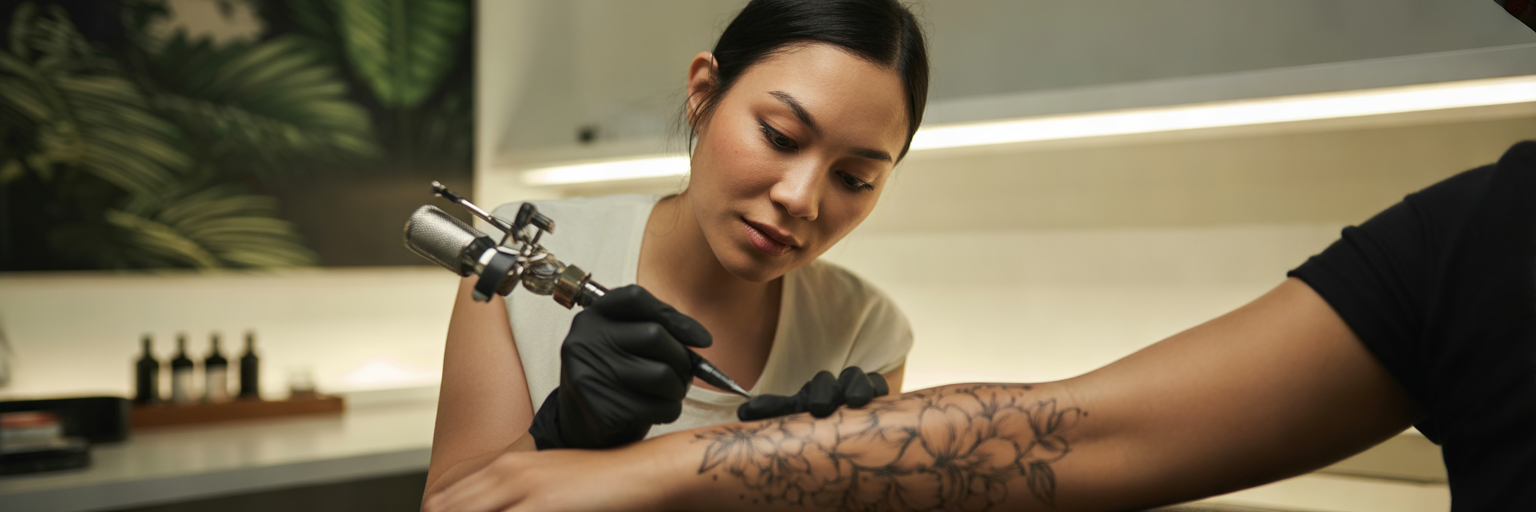
The Forearm as a Flowing Canvas
Once your skin is fully matured, evaluating the specific anatomy of the area helps us determine the most flattering layout. The forearm stands out as one of the most reliable canvases for scar integration. Its predictable healing properties and cylindrical shape allow us to create wrap-around botanical or aquatic motifs that flow with the twist of your radius and ulna. When a leafy vine or koi fish curves around the arm, the continuous movement naturally distracts the eye from any raised or indented texture underneath.
Expansive Framing on the Outer Thigh and Upper Back
For larger surgical marks or injury histories, the outer thigh and upper back offer exceptional stability. These zones experience low daily friction and feature expansive surface areas, allowing us to build cohesive compositions that absorb the scar completely. Here, we rely heavily on visual framing, a technique where we extend the design well beyond the immediate boundary of the scar onto surrounding healthy skin. Packing ink solely inside the borders of a scar acts like a highlighter, creating an isolated, heavy patch. To see how we turn surgical or injury marks into cohesive compositions, read our resource on turning scars into meaningful tattoo art. When we evaluate how much healthy skin should surround your scar for optimal visual framing, we look at four specific criteria:
- Tapering shading gradients that feather softly into uninjured skin to blur the physical edges of the tissue.
- Balancing negative space around the mark so the overall piece feels airy rather than dense or overworked.
- Aligning compositional flow with your major muscle groups to enhance your natural posture and movement.
- Anchoring primary focal points like detailed flower blooms or animal eyes on smooth skin just a few centimeters away from the scar ridge.
Choosing stable, expansive zones gives your artist the ideal canvas to construct balanced, dimensional artwork.
High-Movement Areas and Challenging Skin Textures
Navigating High-Tension Joints and Torso Zones
While the forearm and thigh offer smooth sailing, scars rarely choose convenient locations. Many clients come to us with marks across high-tension and high-flexion zones such as the ribs, abdomen, elbows, and knees. Constant skin stretching during breathing or joint bending can distort rigid linework and place extra stress on delicate scar tissue. If you have an abdominal surgical scar or a scraped knee from years ago, you do not need to abandon your tattoo plans. It simply means we adjust our structural approach to accommodate the elasticity of the skin.
Strategic Workarounds for High-Friction Extremities
A similar strategic pivot applies to high-friction extremities like the hands, wrists, and feet. Frequent hand washing, footwear rubbing, and thinner epidermal layers make ink retention over scarred areas much less predictable. In these tricky spots, a skilled custom cover up tattoo artist avoids heavy saturation directly over the compromised tissue. Instead, we place the dense focal point of the tattoo on adjacent stable skin, letting lighter, organic shading or delicate dotwork stippling gently cross over the scar itself. You can learn more about how we use adjacent stable skin to overcome tricky spots in our strategic guide on choosing the right tattoo placement.
To help set clear expectations for your consultation, the comparison below outlines how different body zones respond to scar camouflage:
| Anatomical Zone | Skin Tension and Friction | Ink Retention Over Scar Tissue | Recommended Compositional Approach |
|---|---|---|---|
| Outer Forearm | Low friction, moderate rotational movement | High predictability and crisp healing | Wrap-around botanical flows or directional panels |
| Upper Back and Outer Thigh | Low tension, minimal daily clothing abrasion | Consistent saturation across wide areas | Expansive visual framing with multi-tonal depth |
| Ribs and Abdomen | High elasticity and constant breathing or torso flexion | Moderate risk of line spreading if overworked | Anchor dense focal points on stable adjacent skin |
| Elbows, Knees, Hands, and Feet | High joint flexion and frequent surface abrasion | Unpredictable retention, prone to fading | Use light stippling or soft shading over the scar itself |
Clever compositional placement around a scar ensures flattering, durable results even in your body's highest movement areas.
Artistic Styles That Flatter and Disguise Uneven Tissue
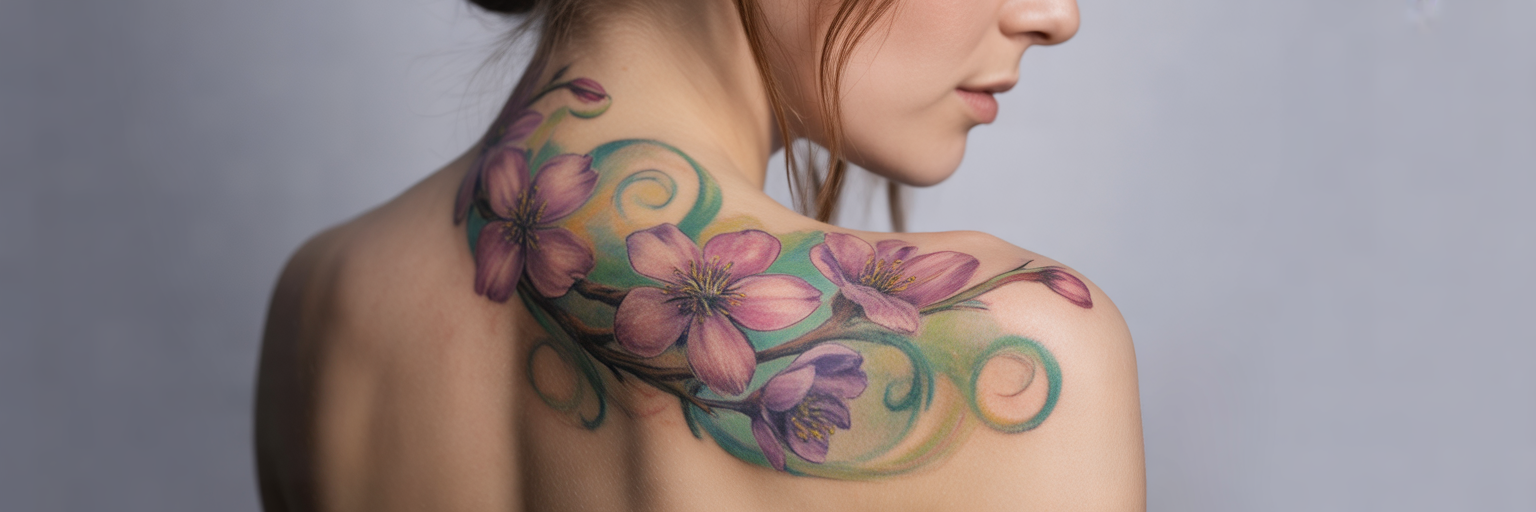
Organic Flows: Watercolor, Floral, and Eastern Waves
Selecting an adaptable visual style is just as vital as understanding your anatomy. Organic, free-flowing aesthetics consistently rank among the best tattoo styles for scars because they do not rely on rigid symmetry. Lush floral arrangements, traditional Eastern waves, and fluid watercolor splashes excel at camouflaging raised hypertrophic or indented atrophic tissue by mimicking natural movement. For more inspiration on approaches that disguise uneven tissue with minimal trauma, browse our guide on gentle tattoo styles for covering scars. Furthermore, using multi-tonal color washes and texture play draws the human eye to the vibrancy of the pigment rather than the physical relief of the skin, a concept we detail in our article on modern cover-up tattoos using watercolor techniques.
Adapting Fine-Line and Fusion Techniques Safely
Clients who prefer minimalist aesthetics often ask if fine-line or geometric work can hide a mark. We always give an honest assessment: strict, straight geometric lines will visibly warp when crossing over an uneven ridge. However, subtle fine-line shading combined with our signature Eastern and Western fusion techniques can work beautifully when mapped carefully around the tissue. By blending fine botanical outlines with soft micro-realism shading, we adapt the needle pressure to match the exact texture of your mark:
- Flat hypopigmented scars respond well to soft whip-shading and translucent color gradients that restore warmth without heavy outlining.
- Raised hypertrophic ridges benefit from dark-to-light tonal contrasts placed right beside the bump, creating an optical illusion of flatness.
- Pitted atrophic indentations are best disguised using organic stippling, berry clusters, or water droplets that turn the dip into a natural shadow.
- Stretched surgical lines integrate seamlessly into curving stems, bird feathers, or flowing calligraphy strokes that cross the line at diagonal angles.
Pairing adaptable, organic art styles with tailored shading techniques turns uneven skin texture into a dynamic visual asset.
Curating Your Bespoke Cover-Up in Singapore
The Collaborative In-Person Assessment
Photographs rarely capture the true three-dimensional contour or softness of healed tissue. Booking an in-person consultation for a scar cover up tattoo Singapore residents and international visitors can rely on is the safest way to start your project. Visiting a dedicated bespoke tattoo studio Singapore like Memory Lane Tattoo Studio allows our artistic director Apple Qu, who brings over 20 years of international experience, to physically examine your skin's pliability, depth, and surrounding anatomy. Together, we discuss your recovery story and personal milestones, translating your ideas into custom stencils that move naturally with your body. To know what to expect during your initial evaluation and design session, review our guide on preparing for a cover-up consultation.
Tropical Aftercare for Newly Tattooed Scar Tissue
Once your artwork is complete, caring for newly tattooed scar tissue requires mindful attention, especially in Singapore's warm, equatorial climate. Scarred dermis can stay sensitive slightly longer than standard skin, and high humidity combined with sudden transitions into cold, air-conditioned rooms can challenge the healing barrier. We guide every client through four essential tropical aftercare steps:
- Cleanse gently after perspiring using lukewarm water and a mild, fragrance-free wash to prevent trapped sweat from irritating the healing pores.
- Wear loose, breathable cotton or linen clothing over the area so fabric seams never rub against the freshly inked scar ridge.
- Manage air-conditioned skin dryness by applying thin, breathable layers of specialized aftercare balm rather than heavy petroleum ointments that clog tissue in the heat.
- Commit to strict UV protection by keeping fresh art covered outdoors and applying broad-spectrum sunscreen once healed, which we explain further in our resource on maintaining tattoo vibrancy in the tropics.
Partnering closely with an experienced cover-up specialist ensures a safe, rewarding experience from your initial physical scar assessment to timeless healed art.