
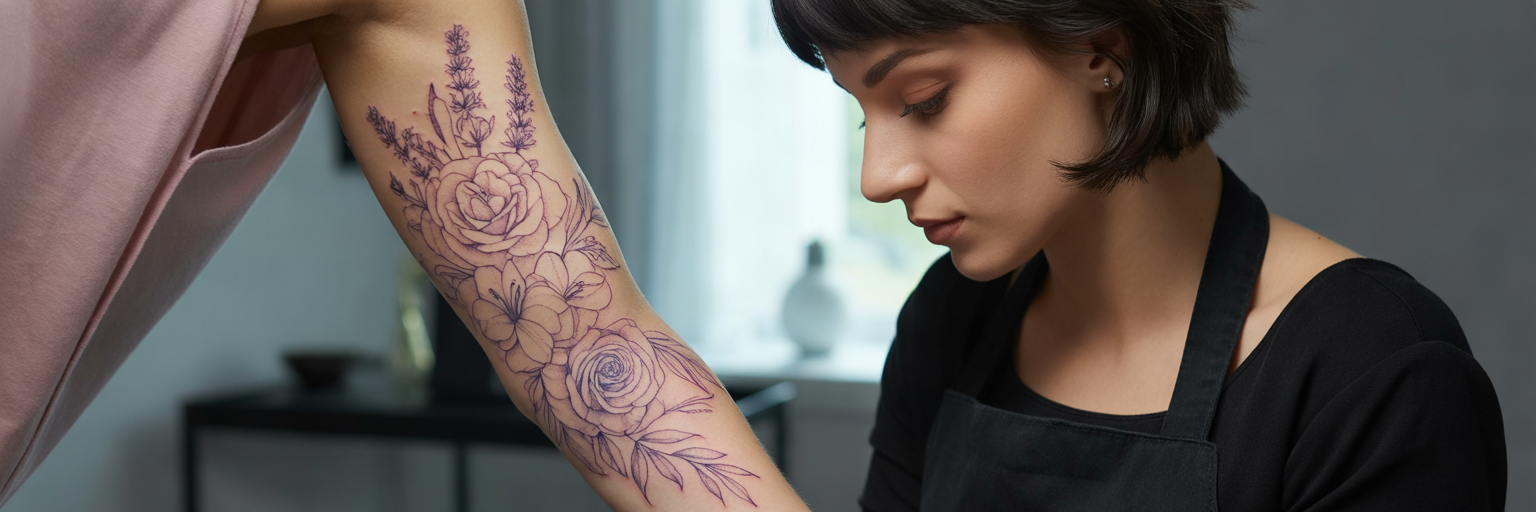
Singapore experiences relative humidity levels averaging between 70% and 90% year-round alongside an extreme equatorial UV index. When preserving delicate micro-tattoos, this constant tropical moisture requires a specialized approach to healing fine-line tattoos in Singapore so your bespoke artwork remains crisp for years to come.
Why Fine-Line Tattoos in Singapore Need Specialized Care
Understanding how delicate ink interacts with equatorial weather forms the scientific and artistic foundation of your healing journey. Before exploring daily washing or lotion routines, it helps to examine why micro-tattoos behave differently in our tropical environment compared to traditional, heavy linework.
The Anatomy of Single-Needle Artistry
Creating fine-line tattoos in Singapore requires extraordinary control. Using single-needle configurations or tight micro-groupings, an artist deposits far less pigment into the upper dermis than standard bold styles require. Clients frequently request this whisper-thin aesthetic to honor intimate milestones, much like the concepts explored in our guide on designing minimalist tattoos with deep meaning. Because those delicate pigment deposits sit closer to the skin surface with minimal saturation buffers, keeping them sharp requires a true partnership. The technical precision applied in our studio must meet a climate-adapted routine once you step outside.
The Threat of Tropical Maceration
Our local weather directly challenges shallow pigment. Year-round 70% to 90% humidity paired with intense equatorial heat means your skin rarely experiences dry air. When fresh ink is exposed to constant ambient moisture, sweat, and heavy ointments, the healing epidermis faces the threat of skin maceration. This condition occurs when trapped moisture over-softens the regenerating tissue, turning crisp micro-scabs soggy. Macerated skin struggles to lock single-needle ink in place, often resulting in pigment migration, blurry edges, or patchy dropouts.
Key Takeaway: Standard aftercare advice originating from cooler, drier Western climates relies on heavy moisture retention, which suffocates healing skin in the tropics and compromises delicate linework.
Mastering the Less-Is-More Moisturizing Technique
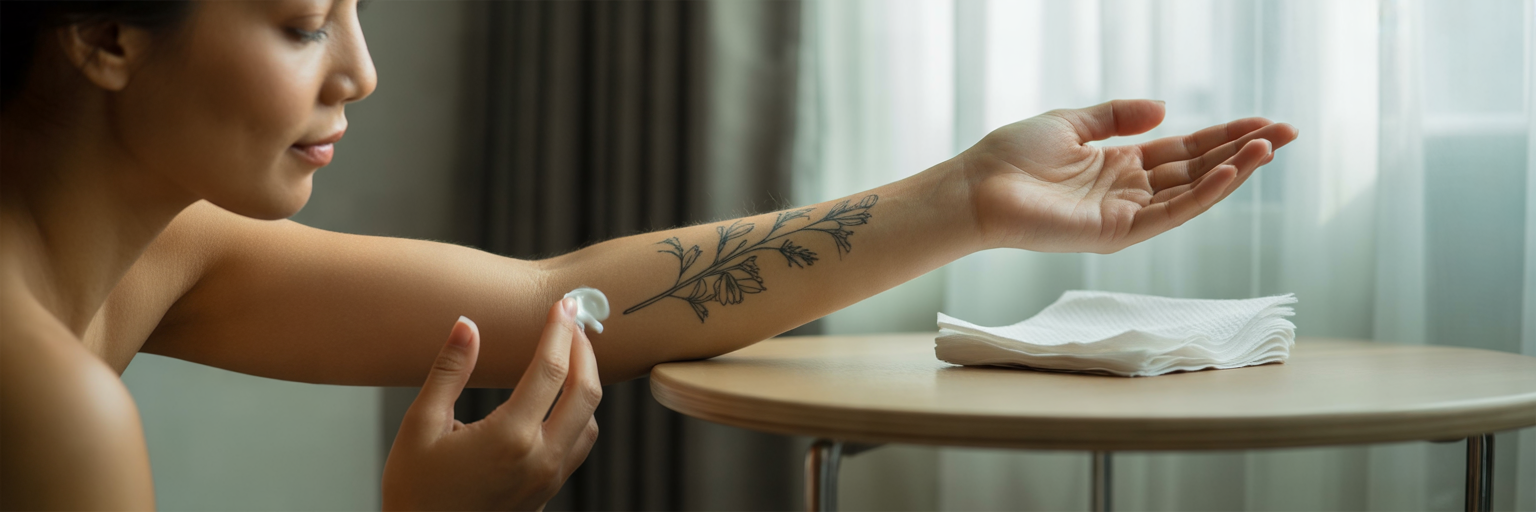
Protecting your new artwork from moisture overload starts with rethinking how you hydrate the skin. While managing perspiration is vital, your primary defense against maceration lies in selecting the right recovery product and controlling its application volume.
An effective tattoo aftercare humid climate routine follows a strict under-moisturizing philosophy. Heavy petrolatum-based balms or thick butters act like plastic wrap in Singapore, trapping heat and suffocating the fragile skin barrier. Instead, support your skin by applying a pea-sized amount of lightweight, water-based, fragrance-free lotion just two to three times a day. Selecting gentle formulations prevents clogged pores and dermal stress, a principle we detail further in our resource on preventing allergic reactions to tattoo ink and aftercare products.
The Shine Test and Indoor-Outdoor Transitions
After massaging a tiny drop of lotion into your skin, perform the shine test aftercare check. Look closely at the tattooed area under good lighting. If the skin appears glossy or feels slick to the touch, you have applied too much product. Immediately blot the surface gently with a clean disposable paper towel until the finish looks completely matte. Daily life here also involves rapid environmental shifts, such as walking through the damp heat of Tanjong Pagar or Orchard Road straight into heavily air-conditioned offices and malls. Even if twenty minutes in strong air-conditioning makes your skin feel slightly tight, resist the urge to layer on heavy cream. Stick to ultra-thin applications only when the skin looks visibly dry.
| Care Factor | Standard Temperate Advice | Singapore Tropical Protocol |
|---|---|---|
| Product Type | Thick petrolatum ointments or heavy balms | Lightweight, water-based, non-comedogenic lotion |
| Application Volume | Generous layer covering the entire design | Strictly a pea-sized drop spread ultra-thin |
| Visual Check | Slightly dewy or protective barrier finish | Matte finish; blot immediately if glossy or slick |
| Skin Risk if Overdone | Minor clogged pores | Epidermal maceration, ink migration, and blurred lines |
Key Takeaway: Keeping your healing skin breathable and barely moisturized prevents pore congestion and ensures ultra-thin lines settle sharply into the dermis.
Managing Tropical Sweat, Hygiene, and Wardrobe Choices
Beyond controlling lotion volume, your daily routine must account for the natural perspiration that accompanies life near the equator. High ambient humidity prevents sweat from evaporating efficiently during outdoor walks or crowded MRT commutes, leaving warm moisture sitting directly on your fresh tattoo.
Without prompt removal, trapped perspiration mixes with city dust to create an ideal breeding ground for bacteria. Maintaining sterile habits at home honors the clinical hygiene we practice during your session, as highlighted in our article on why single-use needles are essential for safe tattoos. Mastering how to heal fine line tattoos cleanly requires pairing strict post-sweat hygiene with smart wardrobe adjustments that eliminate physical friction. When planning your design, considering how garments rub against different body parts is just as helpful as reviewing our strategic guide on choosing the perfect tattoo placement.
- Rinse immediately after perspiring: Gently wash the tattooed area with lukewarm water and a mild, fragrance-free antibacterial liquid soap the moment you return indoors from the heat.
- Pat dry with disposable paper towels: Lightly press the skin using a fresh kitchen paper towel rather than a reusable fabric bath towel, which harbors thriving bacteria in damp bathrooms.
- Observe a 10 to 15 minute air-drying window: Leave the clean skin completely uncovered in a cool room for up to 15 minutes so every trace of residual moisture evaporates before you apply lotion or get dressed.
- Wear loose, breathable natural fabrics: Choose relaxed 100% cotton or linen clothing for the first two weeks so tight waistbands, straps, or synthetic activewear do not rub away delicate micro-scabs and pull pigment from the skin.
Key Takeaway: Unwashed sweat and tight clothing friction are the leading causes of patchy pigment loss during the critical first 14 days of recovery.
Protecting Delicate Ink from Equatorial UV Rays

While moisture and friction pose the greatest threats during the initial fortnight, Singapore's extreme ultraviolet index presents a lifelong challenge to bespoke body art. Addressing photodegradation requires a targeted strategy that separates fresh wound care from long-term preservation.
Ultraviolet radiation penetrates the dermis and shatters pigment molecules into tiny fragments that your immune system gradually clears away. Because fine-line artwork relies on low-density ink placed relatively close to the surface, sun exposure breaks down these delicate details much faster than heavy traditional shading. Taking proactive steps to prevent fine line tattoo fading ensures your meaningful artwork retains its contrast against your skin tone.
Phase One: Physical Barriers During Initial Healing
During the first three to four weeks of healing, your skin barrier remains open and vulnerable. Never apply chemical or mineral sunscreens to a fresh tattoo. Active UV filters and thick carrier oils easily irritate regenerating tissue, clog pores, and trigger localized rashes that ruin fine details. Instead, rely exclusively on physical sun barriers whenever you step outside. Plan your commute along sheltered walkways, carry an umbrella under the midday sun, and drape loose, UPF-rated breathable clothing over the tattooed area.
Phase Two: Long-Term SPF Maintenance
Once your epidermis has fully regenerated around the four-week mark, your strategy shifts toward active daily defense. Make broad-spectrum, high-SPF mineral sunscreen containing zinc oxide or titanium dioxide a permanent part of your morning routine before heading outdoors. Consistent UV protection is the foundation of our broader guide on maintaining tattoo vibrancy in the tropics, keeping delicate greywash shading and micro-lines distinct against premature blurring.
Key Takeaway: Protect fresh ink strictly with clothing and shade for the first month, then transition to daily high-SPF mineral sunscreen once the skin barrier is completely sealed.
Long-Term Preservation and Collaborative Artist Touch-Ups
Caring for bespoke body art extends well beyond the first month of recovery. As your skin naturally ages and completes multiple cellular turnover cycles over the years, even the most diligently protected micro-tattoo will subtly soften and settle into your dermis.
Approaching minimalist tattoo care Singapore as an ongoing lifestyle habit keeps your lines looking crisp across decades. Long-term preservation starts in the tattoo chair. At Memory Lane Tattoo Studio, artistic director Apple Qu draws on over 20 years of specialized experience to calibrate exact needle depth for every client's unique skin elasticity, preventing premature blowouts while ensuring lasting retention. When older pieces eventually need a refresh, or if you have existing ink from elsewhere that has blurred over time, our team can restore clarity using techniques shared in our article on transforming faded tattoos into hyper-realistic art.
- Wait six weeks to evaluate settled ink: Allow a full six-week cellular turnover cycle to finish before judging line crispness, as thin milky skin often masks true pigment clarity right after peeling.
- Incorporate gentle periodic exfoliation: Beginning two months post-session, lightly exfoliate the area once a week with a mild washcloth to clear dead skin buildup that makes fine lines appear dull.
- Prioritize daily internal hydration: Drink plenty of water throughout the day to maintain dermal plumpness and elasticity, which keeps intricate micro-details sitting evenly.
- Schedule collaborative artist evaluations: Book a quick check-in with your artist a few months after healing so any tiny spots affected by tropical humidity can be seamlessly perfected.
Key Takeaway: Viewing tattoo maintenance as a lifelong partnership between your daily climate habits and your artist's technical guidance guarantees your personal story remains timeless. Whether you are planning a new bespoke piece or seeking an expert touch-up consultation, connect with our team at Memory Lane Tattoo Studio to keep your body art looking extraordinary.