
For decades, hiding unwanted ink meant settling for a heavy, dark design twice the size of the original piece. Advances in pigment chemistry and layering techniques now allow artists to transform old tattoos into intricate, personalized artworks through staged sessions. Planning a multi-session cover-up tattoo requires a shift from rigid design expectations to an open partnership with your artist. Much like restoring an antique oil painting rather than working on a blank canvas, covering existing body art relies on understanding how underlying pigments interact with new tones settled into the dermis.
Understanding a Multi-Session Cover-Up Tattoo and Design Flexibility
Working With the Technical Realities of Existing Pigment
Every successful bespoke cover-up tattoo begins with an honest evaluation of the ink already living in your skin. The age, depth, saturation, and anatomical placement of your original piece directly dictate how new compositions are structured. Because tattoo ink sits permanently within the dermis, applying fresh pigment over old work creates an optical blending effect rather than a simple opaque layer. Dense black linework or heavily scarred areas require strategic organic shapes and clever contrast to draw the eye away from the underlying structure. You can explore our guide on the best tattoo styles for covering dark ink to see how directional flow and tonal value neutralize stubborn silhouettes.
Expanding Possibilities With Preliminary Laser Lightening
When an existing piece is heavily saturated, a few targeted laser sessions before tattooing can expand your design flexibility significantly. Lightening the dominant dark zones lifts the visual weight from the skin, opening the door to refined techniques cultivated by our artistic director Apple Qu over her two decades of experience. With a softened canvas, we can move beyond dense coverage to execute delicate watercolor washes, intricate hyper-realistic transformations over faded tattoos, or bespoke compositions blending Eastern and Western artistic traditions. Embracing an artist-guided approach ensures your cover-up becomes an intentional piece of personal artistry rather than a dark, heavy compromise.
Assembling a Comprehensive Digital Brief for Your Consultation
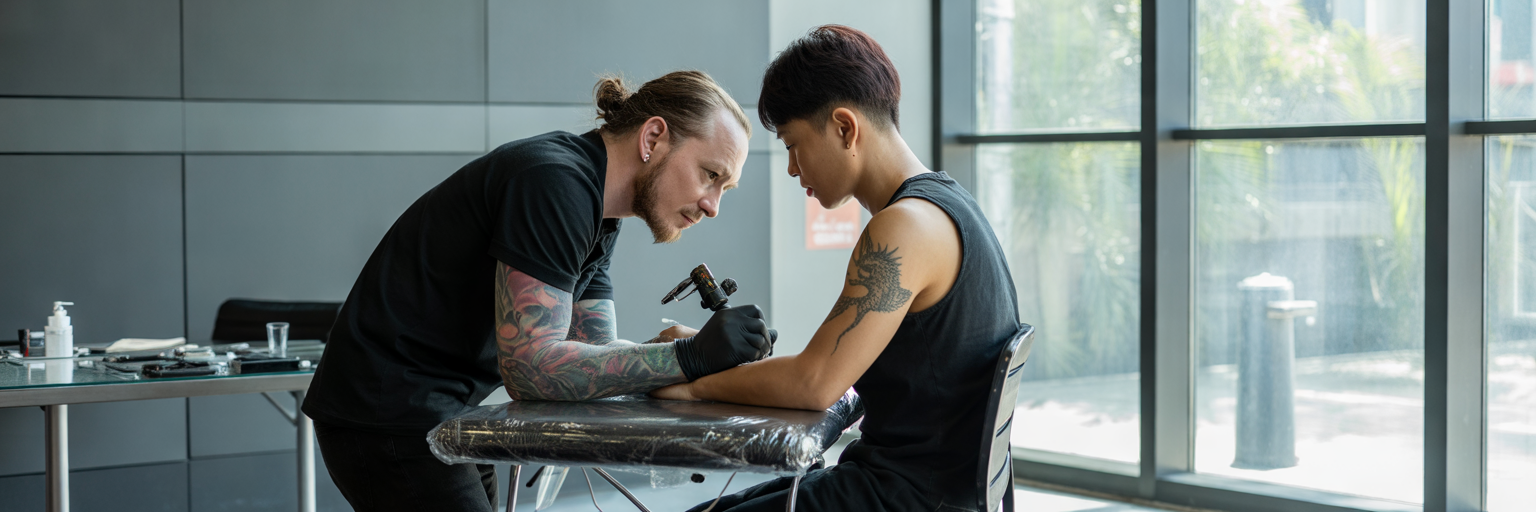
Transitioning from artistic concepts to concrete studio planning begins well before your first appointment. Preparing a thorough digital brief ahead of your custom tattoo consultation gives your artist the exact visual and historical context needed to map out session density and realistic layering strategies. Rather than bringing a single rigid template to copy, sharing a complete overview of your skin and personal milestones allows us to tailor the anatomy of the design. When reviewing our step-by-step recommendations for consultation preparation, we encourage clients to compile five essential elements in their initial inquiry package:
- Clear, unedited photographs: Capture your existing tattoo in natural, indirect daylight from multiple angles to reveal true skin texture, underlying undertones, and actual ink density without camera filters.
- Accurate scale measurements: Note the exact height and width of the current piece alongside the broader anatomical area you are comfortable dedicating to the new composition.
- A complete tattoo history: Detail the age of the ink, how the skin originally healed, and whether the area features any raised scarring or textural changes that affect needle depth.
- Documentation of prior modifications: Share transparent notes on any previous touch-ups, amateur reworks, or partial laser lightening sessions completed on the site.
- A curated mood board: Gather visual references of textures, lighting moods, floral elements, and personal symbols that reflect your story while leaving structural composition in your artist's hands.
Structuring Flexible Timelines Around Dermal Recovery
Once your design direction is established, the focus shifts to aligning your calendar with your body's natural regenerative pace. Because cover-up artistry requires building opaque foundation layers before refining surface details, prospective clients should approach scheduling with broad availability windows rather than fixed completion dates.
The Biology of Staged Skin Healing
Respecting biological tattoo healing intervals of six to twelve weeks between sittings is essential for long-term clarity. While the outer epidermis often feels smooth within a fortnight, the deeper dermal layers require months to rebuild collagen networks and stabilize heavy pigment loads. Rushing into a subsequent session over immature tissue severely compromises ink retention and increases the risk of permanent scarring or muddy hyperpigmentation.
| Recovery Phase | Timeline Post-Session | Dermal Activity | Readiness for Next Tattoo Layer |
|---|---|---|---|
| Surface Closure | Weeks 1 to 2 | Epidermis seals, flaking subsides, and initial redness fades | Not ready, high risk of tissue trauma and ink rejection |
| Pigment Stabilization | Weeks 3 to 5 | Macrophages settle new ink particles over old pigment in the dermis | Not ready, deeper collagen remodeling is still active |
| Full Dermal Maturation | Weeks 6 to 12 | Skin elasticity returns and true settled tone becomes visible | Optimal window for layering opaque tones and fine details |
Coordinating Sessions for Local and International Clients
Managing a multi-stage cover-up tattoo Singapore schedule requires adapting to both climate and travel logistics. Local residents must factor in year-round equatorial humidity and intense UV exposure between appointments, following our specialized advice on maintaining tattoo vibrancy in the tropics to prevent premature fading before the next layer is applied. Meanwhile, international clients, diplomats, and collectors flying in to work with our studio need to coordinate flights and hotel stays around eight-week intervals. Those traveling with family or companions often reference resources like When In Your City and their practical blueprint for group travel planning to structure relaxing itineraries that protect fresh ink from prolonged sun exposure and strenuous activity.
Conditioning Your Skin and Managing Pre-Session Logistics
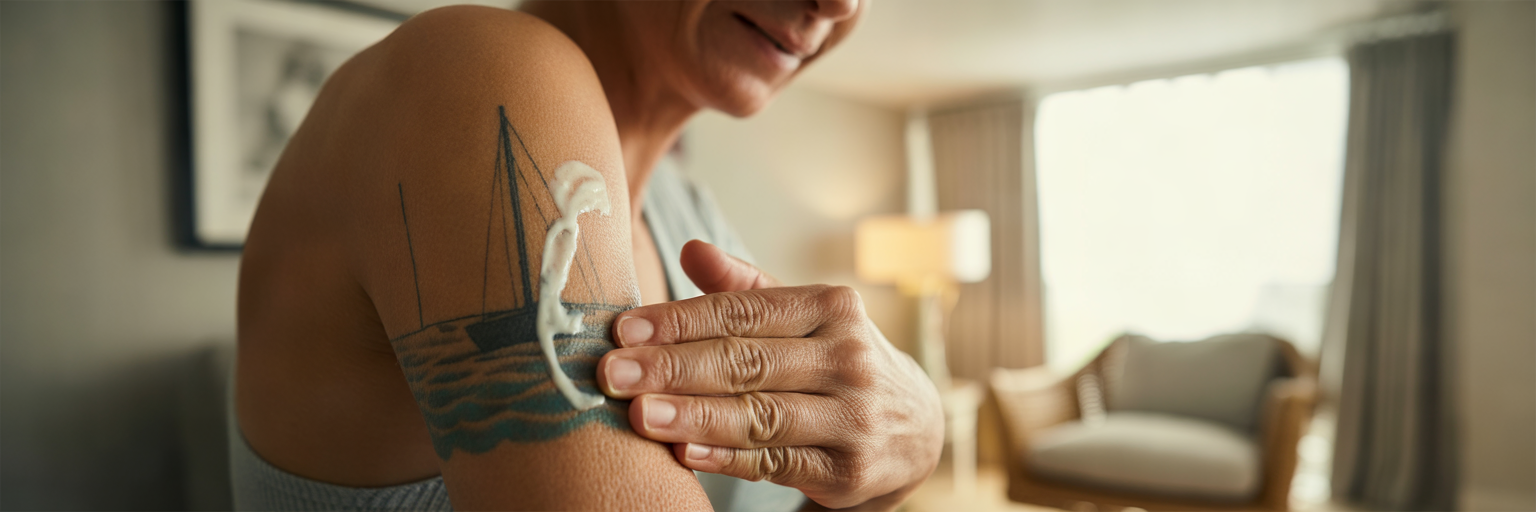
With your multi-month calendar locked in, your attention can turn to the immediate weeks preceding each sitting. Separating practical booking logistics from physical preparation keeps the experience calm and enjoyable. Finalizing staged budgets and clearing your work schedule for forty-eight hours of post-session rest removes mental friction, allowing you to focus entirely on preparing for tattoo session days through dedicated dermal conditioning.
Well-nourished skin accepts dense cover-up pigment far more efficiently than dry, stressed tissue. Starting four weeks before each scheduled appointment, follow this targeted conditioning regimen:
- Elevate internal hydration: Increase your daily water intake consistently to plump the dermal layer and improve overall skin suppleness.
- Reinforce the moisture barrier: Apply a gentle, fragrance-free lotion daily to keep the epidermis elastic without clogging pores.
- Prevent ultraviolet and chemical stress: Strictly avoid sunburns, tanning beds, and self-tanning lotions on the target anatomy, as compromised skin cannot be safely tattooed.
- Pause harsh topicals: Discontinue abrasive physical scrubs, retinoids, and chemical exfoliants on the area at least two weeks prior to prevent thinning the epidermis.
- Screen for dermal sensitivities: Inspect the canvas for eczema flare-ups, localized rashes, or irritation, consulting a board-certified dermatologist and reviewing our protocols for preventing allergic reactions to tattoo ink if you have a history of skin reactivity.
- Support physical stamina: Prioritize eight hours of restful sleep and eat a balanced, nutrient-dense meal before arriving at the studio to keep blood sugar stable during extended layering sessions.
Arriving in the studio chair with calm, hydrated skin allows the needles to glide smoothly, directly improving pigment saturation, reducing localized swelling, and making longer sittings noticeably more comfortable.
Partnering with Your Artist Through Staged Healing and Reviews
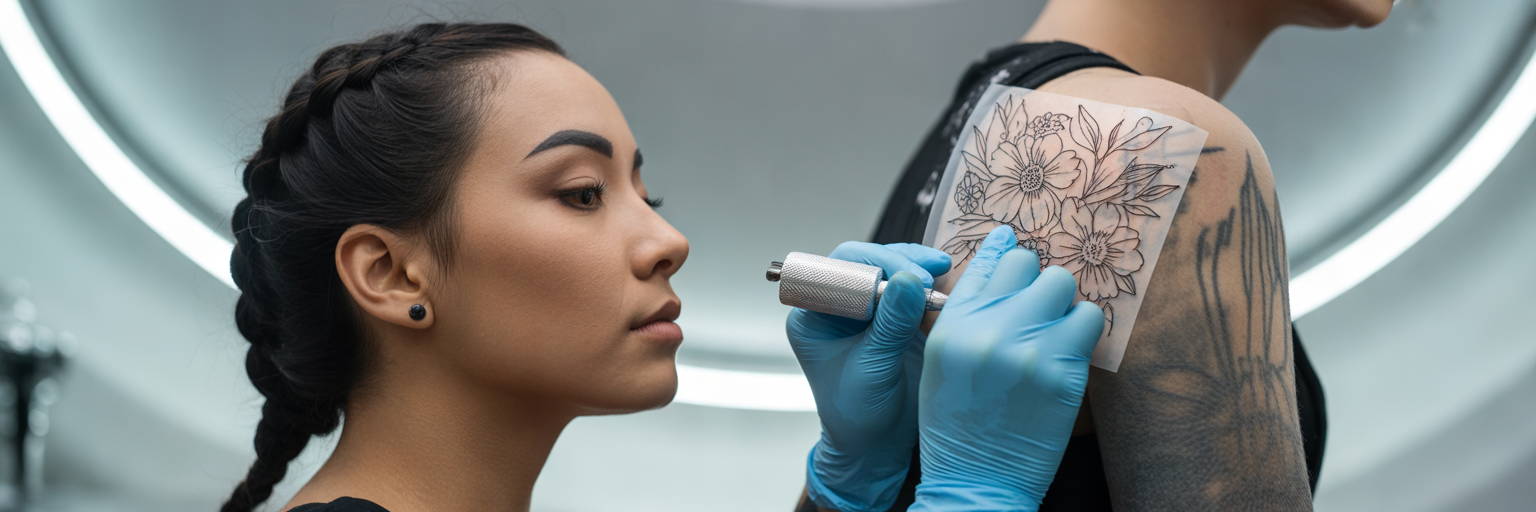
When your first appointment arrives, the preparation transforms into active collaboration. Each staged project begins with refining and approving the custom stencil directly on your body to ensure the design flows naturally with your musculature while concealing the old work. From there, your artist systematically lays down opaque foundation tones and structural linework designed to neutralize the underlying ink.
Navigating the Mid-Project Gray Areas
Once your initial session heals, documenting the settled ink with high-resolution, unedited photographs in natural light allows your artist to assess exactly how the new pigment has interacted with the old tattoo underneath. It is completely natural to experience a transitional phase between appointments where old shadows faintly peek through or colors appear muted. Cover-up artistry is built in deliberate strata. Those mid-project gray areas are necessary stepping stones before final highlights, rich color washes, and crisp fine-line textures are applied in subsequent sittings to lock in visual depth.
Trusting Technical Execution for a Timeless Finish
Achieving a seamless transformation relies on trusting your artist's technical choices at every stage. Selecting specific needle groupings, adjusting machine voltage for previously tattooed skin, and custom-mixing pigment opacities are delicate adjustments made in real time as your skin responds. By approaching each sitting with patience and open communication, you allow the artwork to mature organically. If you are ready to replace unwanted ink with a meaningful piece of bespoke artistry, we invite you to connect with Apple Qu and our dedicated team at Memory Lane Tattoo Studio to begin planning your collaborative transformation.