
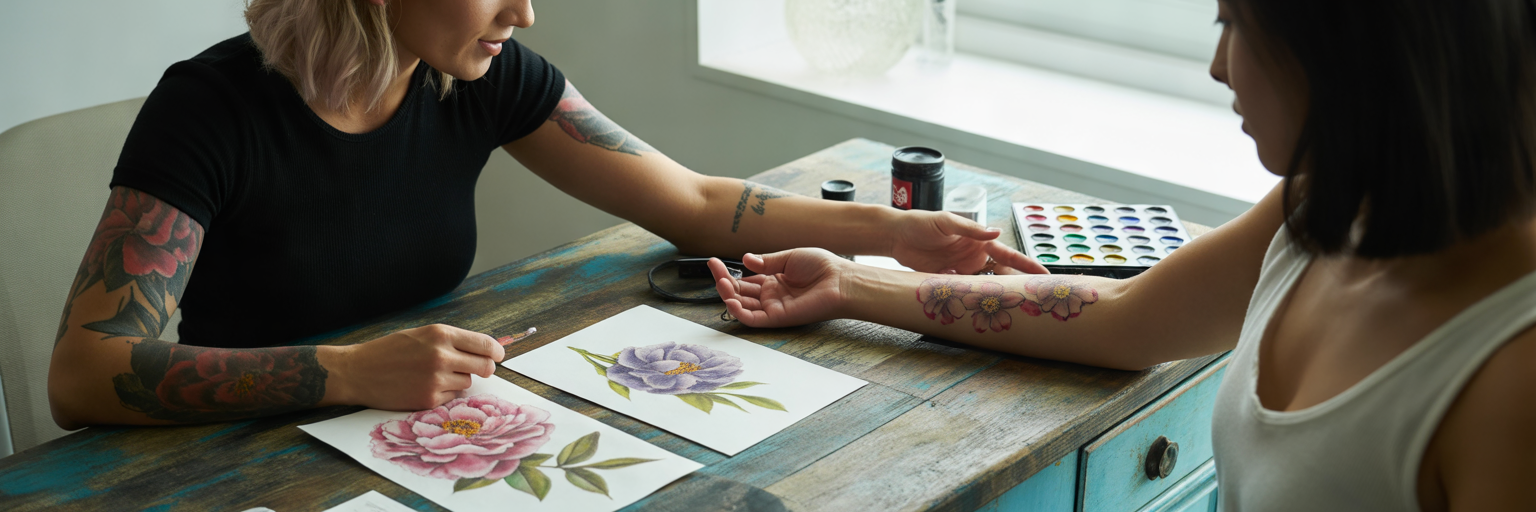
Tattoo pigments do not sit on the surface of the body like paint on heavy cotton paper. They rest permanently inside the dermis beneath a translucent layer of melanin. Understanding how this natural filter interacts with fluid ink washes allows artists and clients to select watercolor tattoo colors that remain vibrant and expressive for decades.
How Skin Undertones and Watercolor Tattoo Colors Interact
The Optical Filter Principle in Dermal Artistry
Every piece of body art is viewed through a living window. When an artist applies ink, the pigment settles into the stable dermal layer while the epidermis regenerates right over the top. You can think of this healed upper layer of skin as a softly tinted glass lens resting permanently over the artwork. Because watercolor techniques rely on luminous transitions and translucent washes rather than solid blocks of opaque ink, the tint of that natural lens directly shapes how every hue appears to the naked eye. Exploring the insights we shared on selecting watercolor styles suited to your skin helps clarify how dermal biology and fluid pigment washes work together.
Surface Complexion Versus Underlying Hues
During a bespoke design consultation, we always look at two distinct biological traits: surface complexion and natural undertone. Your surface tone may be fair, medium, or deep, and it can fluctuate with seasonal sun exposure. Your undertone, however, remains constant throughout your life, falling into cool pink or blue, warm golden, peach, or olive, or balanced neutral categories. Both factors guide how we formulate custom watercolor tattoo colors for your piece. Once the epidermis heals over a fresh tattoo, a warm golden or olive base can shift a sheer cool blue wash toward seafoam green. Conversely, cool pink undertones naturally warm up delicate violet hues, giving them a softer berry cast. Treating your skin as an active, living canvas rather than a blank sheet of paper forms the foundation of a genuine collaborative design process between client and artist.
Identifying Your Natural Complexion Profile

At-Home Assessments and Studio Evaluations
Understanding how your skin filters light begins long before the needle touches your arm. While a trained eye will always spot subtle chromatic nuances in person, you can begin observing your own undertone at home to spark ideas for your consultation. Try these four practical observations before visiting the studio:
- Check wrist veins in natural daylight: Veins that appear distinctly blue or purple usually point to a cool undertone, whereas greenish veins indicate a warm base.
- Compare gold and silver jewelry: Notice which metal makes your skin look radiant and awake rather than washed out or sallow.
- Hold unbleached white fabric near your bare skin: In indirect window light, cool skin shows a rosy cast against pure white, while warm skin reveals golden or honeyed hues.
- Observe your reaction to tropical sun exposure: Skin that turns golden brown easily without burning typically holds warm or olive undertones, while skin that flushes pink first often carries a cool base.
Navigating Complexion Diversity in Singapore
Working with clients from around the globe has shown us that standard color charts rarely tell the whole story. Planning a custom watercolor tattoo Singapore collectors will cherish requires appreciating the rich spectrum of warm olive, golden, and deep neutral complexions prevalent across our cosmopolitan island. These complexions deserve tailored pigment ratios rather than standard out-of-the-bottle mixes. Clients often misread their own profile when temporary surface redness, sensitivity, or a fresh weekend tan masks their true dermal hue. Sitting down together for a face-to-face skin evaluation allows your artist to look past temporary surface traits and build a palette that truly flatters your natural tone.
Selecting Pigments for Cool, Warm, and Neutral Complexions
Harmonizing Palettes for Cool and Warm Bases
Once we map out your complexion profile, the conversation shifts to custom color chemistry. Selecting tattoo colors for skin undertones involves balancing the pigment inside the bottle with the natural hue of your epidermis. Cool undertones with pink or blue bases harmonize effortlessly with jewel tones, rich berry shades, and true blues. Yellow-based washes, on the other hand, require careful formulation on cool skin so they do not appear dull or slightly greenish once healed. When curating the best tattoo colors warm skin embraces, we gravitate toward rich corals, magentas, teals, and warm ambers. If your heart is set on an icy blue wash over a golden or olive base, an experienced artist will custom-balance that cool pigment with a subtle drop of complementary warmth to prevent unwanted color shifts. This level of pigment customization is especially striking when blending our fluid watercolor washes into Eastern and Western fusion designs for a wholly original piece.
Adapting Saturation for Light to Melanin-Rich Skin
Beyond warm and cool temperature, the concentration of melanin in your epidermis dictates how saturated your ink needs to be. Delicate, white-diluted pastel washes read clearly on fairer skin yet can look cloudy or fade quickly on deeper complexions. On melanin-rich skin, high-chroma jewel tones like deep crimson, emerald, and royal blue deliver lasting clarity and striking saturation. This reference chart is based on dermal color theory and professional pigment formulation standards, illustrating how the upper layer of skin filters translucent ink washes once fully healed.
| Undertone Profile | Naturally Harmonious Pigments | Pigments Requiring Custom Balancing | Healed Optical Effect Without Adjustment |
|---|---|---|---|
| Cool (Pink or Blue Base) | Sapphire blue, plum, emerald, cool magenta | Pale lemon yellow, muted ochre, light peach | Warm yellows can appear slightly greenish or washed out beneath cool epidermis |
| Warm (Golden or Peach Base) | Coral, ruby red, warm teal, amber, vibrant violet | Ice blue, pastel lavender, cool mint | Uncorrected cool blues absorb yellow light and shift toward seafoam green |
| Olive (Warm Neutral with Green Cast) | Deep crimson, burnt orange, rich turquoise, magenta | Sheer sky blue, pale lilac, soft canary yellow | Light cool washes lose vibrancy and take on a muted, earthy cast |
| Deep Melanin-Rich (Warm or Neutral) | High-chroma royal blue, deep berry, emerald, saturated gold | Diluted white-based pastels, pale baby pink | Chalky pastel bases look cloudy behind dark melanin filters |
We firmly believe that no hue is strictly off-limits for any client when a seasoned artist customizes pigment chemistry and saturation specifically for your skin.
Techniques That Ensure Longevity in Watercolor Artistry
Tonal Contrast, Color Packing, and Negative Space
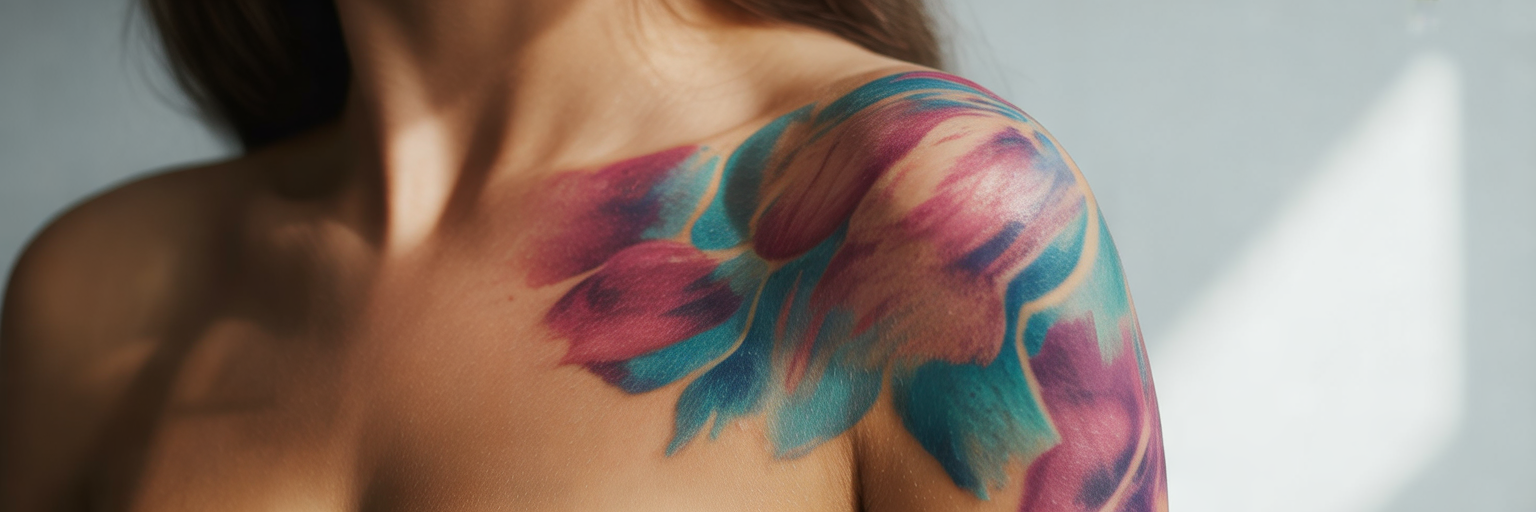
Many first-time collectors worry that painterly tattoos are made with heavily watered-down ink that inevitably vanishes within a few years. In reality, exceptional watercolor tattoo longevity relies on deliberate tonal contrast rather than sheer water dilution. To make a borderless wash hold its shape over time, we pack rich, undiluted pigment at the core of the motif and transition outward using smooth gradient whip-shading. Pairing those saturated focal points with generous pockets of un-inked negative space gives the eye a clear visual anchor. The surrounding skin allows the artwork to breathe, creating the fluid illusion of a spontaneous paint splash while locking the pigment firmly into the dermis for decades.
Structural Framing and Tropical Aftercare
Depending on the story your tattoo tells, adding fine-line black work or dark-toned structural boundaries can frame fluid washes with crisp definition. Combining rich botanical or calligraphic linework with dense color saturation also makes watercolor fusion one of our most effective styles for covering up dark tattoos, turning faded older ink into vibrant new art. Once your piece heals, your daily environment plays an equally vital role in keeping those gradients sharp. Living in Singapore means exposing your skin to an intense equatorial UV index twelve months a year. Because ultraviolet rays break down lighter pigment molecules first, applying broad-spectrum high-SPF sunscreen whenever you step outdoors is essential, a habit we detail further in our guide on maintaining tattoo vibrancy in the tropics. Precision needle technique and disciplined sun care work hand in hand with color theory to preserve your wearable art.
The Collaborative Consultation and Color Patch Testing
Why a Tattoo Color Patch Test Beats Filtered Photos
Scrolling through social media feeds filled with glowing watercolor tattoos can set unrealistic expectations. Many online portfolio photos are captured under polarized studio ring lights while the ink is still fresh and sitting in the raw upper skin layers, long before the epidermis has regenerated over the pigment. Rather than guessing how a shade will heal from an edited photo, we recommend the gold-standard practice of a tattoo color patch test. During this quick preliminary visit, your artist places tiny, discreet dots of candidate pigments into your skin four to six weeks prior to your main session. Watching those micro-dots settle reveals exactly how each hue interacts with your melanin and undertone, while also verifying biocompatibility as explained in our resource on preventing ink sensitivities and allergic reactions.
Preparing for Your Bespoke Studio Journey
When you sit down with artistic director Apple Qu and our team at Memory Lane Tattoo Studio, technical skin analysis becomes a relaxed, collaborative conversation centered around your personal milestone. To get the most out of your bespoke consultation, follow these five preparation steps:
- Gather emotional and visual inspiration: Bring photographs, fabrics, or personal stories that capture the mood you want rather than rigid copies of existing tattoos.
- Protect the target area from harsh sunlight: Keep the placement spot untanned and free from sunburn for at least four weeks so we can read your true baseline undertone.
- Schedule a consultation and patch test window: Plan your calendar to allow four to six weeks of healing time between testing candidate pigments and starting your full piece.
- Share your skin history openly: Let your artist know about any past sensitivities to cosmetics, metals, or previous tattoo pigments.
- Arrive ready to co-create on the skin: Keep an open mind as we swatch custom pigment blends directly against your complexion to find the most flattering harmony.