
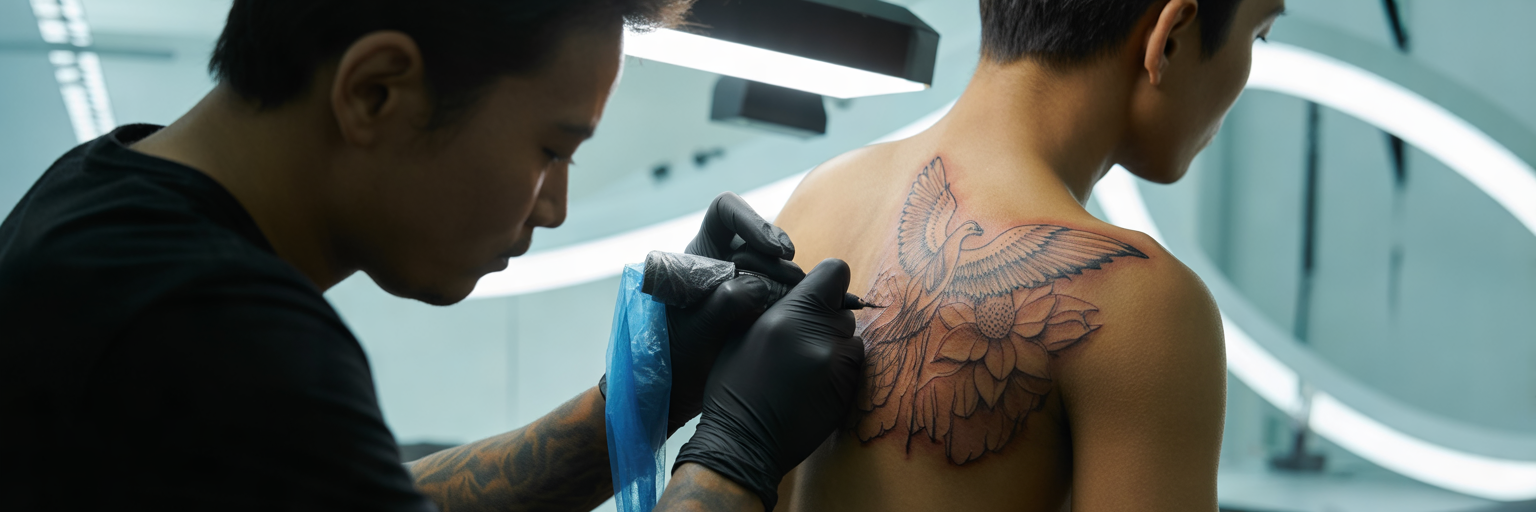
For decades, concealing unwanted body art meant saturating the skin with heavy black blocks that offered little room for personal expression. Today, advancements in pigment chemistry and needle precision allow experienced artists to treat old ink as an underpainting for intricate, lifelike portraits and organic motifs. Collectors seeking hyper-realistic cover-up tattoos in Singapore are discovering that faded, blown-out, or outdated ink is no longer a permanent flaw requiring heavy blackout work. Instead, seasoned custom studios view existing pigment as a foundational sketch waiting to be reshaped through thoughtful artistic partnership.
Rethinking Old Ink with Hyper-Realistic Cover-Up Tattoos in Singapore
This collaborative shift in local tattoo culture focuses on working with your skin rather than fighting against it. As we explain in our guide on turning older ink into realistic art, modern realism relies on optical depth rather than sheer ink density to give your canvas a second life.
The Mechanics of Structural Misdirection
To understand how an artist conceals dark shapes without creating a heavy patch, consider the process of restoring a classic oil canvas. Rather than scraping away the original paint, a master restorer purposefully absorbs older brush strokes into the deep background shadows and three-dimensional contours of a brand new subject. This technique is known as structural misdirection. Heavy, stubborn lines are tucked directly inside the natural folds, cast shadows, or dark tonal contrasts of a fresh composition. By placing bright highlights right next to these deep pockets of shadow, the artist tricks the human eye into seeing volume and lifelike depth instead of the old outline underneath.
Reclaiming Personal Narratives Through Art
Beyond the technical execution, carrying outgrown symbols often brings a quiet emotional weight. A tattoo chosen at twenty rarely reflects the person you are a decade later. Working closely with an empathetic artist turns those past regrets into bespoke tributes, much like the stories shared in our feature on commemorating major life milestones. Ultimately, a successful cover-up is never about hiding a mistake. It represents a shared creative process that reimagines your canvas through dedicated collaboration.
Why Hyper-Realism and Organic Textures Excel at Camouflage
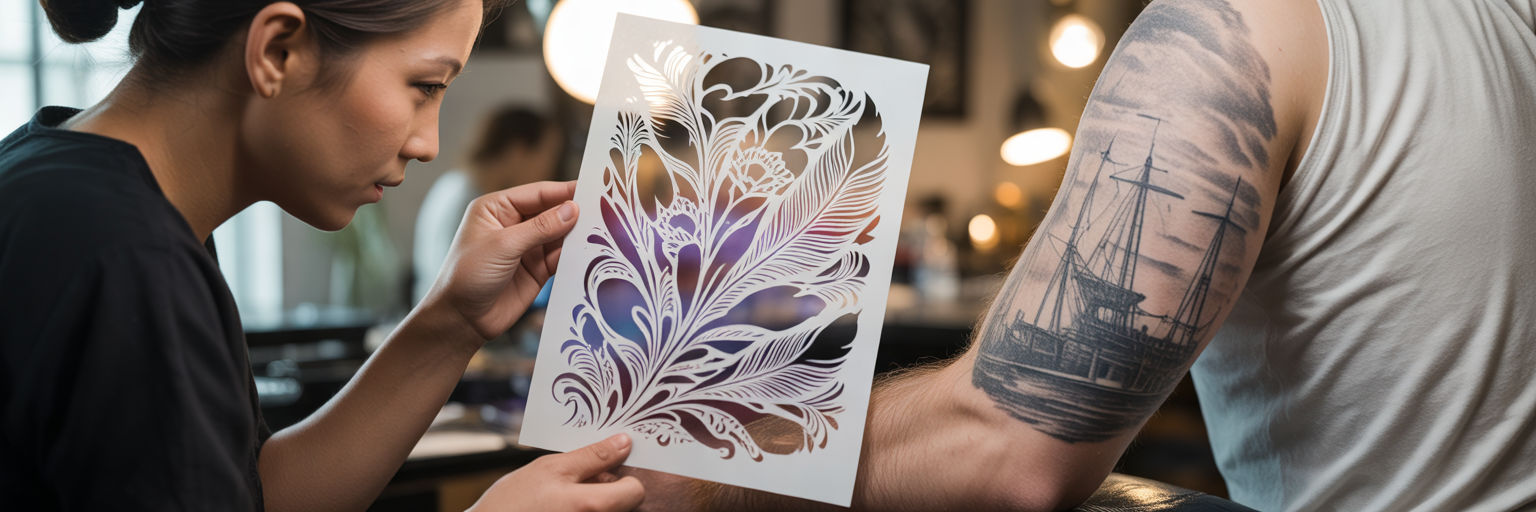
While emotional resonance guides the theme of your new piece, the visual success of hiding old tattoos with realism depends entirely on surface mechanics and compositional flow. Geometric shapes or rigid minimalist lines rarely forgive underlying shadows because any dark spot peeking through breaks the clean illusion. Realism thrives on natural imperfection and varied tonal values.
Creating Visual Noise with Nature and Fusion Motifs
Layered botanical patterns, wildlife portraits, and fine illustrative realism are the preferred vehicles for complex transformations. Intricate organic details such as overlapping bird feathers, velvet flower petals, shifting water ripples, and dense animal fur generate rich visual texture. This natural complexity breaks up the rigid silhouette of stubborn underlying lines, a technique we explore further in our resource on the top tattoo styles for concealing dark ink. Furthermore, blending Eastern brushwork sensibilities with Western realism offers dynamic compositional movement. As highlighted in our exploration of fusion tattoo artistry, soft shading gradients and sweeping background elements effortlessly pull the viewer's gaze away from the original tattoo footprint.
The Scale and Footprint Rule
Achieving this level of optical distraction requires adequate room on the body. Technically, a successful custom cover-up tattoo design needs to be two to three times larger than the original piece. Expanding the footprint provides fresh, uninked skin around the old work to build smooth tonal transitions, breathing room, and proper negative space that flatters your natural anatomy. Many clients initially hope to keep a cover-up small, which is a completely understandable instinct when you already dislike an existing tattoo. However, squeezing a new design strictly over the old borders only creates a denser, darker spot that draws more unwanted attention.
| Existing Tattoo Condition | Recommended Realism Motif | Primary Camouflage Mechanism | Expected Footprint Expansion |
|---|---|---|---|
| Thick, dark tribal or heavy black linework | Dense botanical layers, dark roses, or textured plumage | Deep tonal shadows and multi-directional petal or feather textures absorb rigid edges | 3x original size to establish balanced light contrast |
| Faded, blurry grey wash or aged portraiture | Wildlife portraits or Eastern-Western fusion landscapes | Fine fur gradients and atmospheric mist repurpose faded grey ink as mid-tone shading | 2x original size to refine anatomical flow |
| Discolored blue, green, or red old-school pigment | Vibrant tropical flora or aquatic realism | Complementary high-opacity color packing neutralizes muddy underlying hues | 2x to 2.5x original size for clean color transitions |
This comparison reflects standard technical assessments used by experienced custom tattoo artists to pair existing pigment density with appropriate realistic textures and sizing requirements. Reviewing these pairings during your planning phase helps clarify how scale and texture work together to deliver an undetectable finish.
Evaluating Skin Integrity, Scar Tissue, and Laser Fading Options
Selecting the right scale and texture sets the visual blueprint, yet the biological reality of your dermis dictates what is clinically safe and achievable. Skin is a living organ with finite capacity, not an endlessly reusable sheet of paper.
Working Around Raised Scars and Dense Saturation
Overworked tattoos frequently leave behind raised scar tissue, compromised skin elasticity, or heavy pigment congestion trapped deep within the dermis. When you run your fingertips over an older tattoo and feel distinct ridges, that elevated tissue absorbs and refracts new pigment differently than healthy skin. A responsible studio prioritizes rigorous hygiene protocols and thorough physical assessments before a needle ever touches your arm or back. As we detail in our guide to gentler styles for covering scar tissue, careful evaluation ensures the dermis can hold new ink without causing further trauma or muddying the delicate micro-details of the artwork.
When to Consider Preliminary Laser Fading
While many aged pieces can be tattooed over directly, choosing between an immediate cover-up and a hybrid approach requires honest guidance. Extremely dense or pitch-black tattoos often benefit from two or three preliminary laser fading sessions spaced several months apart. Laser treatment does not need to erase the tattoo completely. Instead, it breaks down tightly packed ink particles just enough to lighten the canvas, opening up vastly more versatile design choices and brighter highlights.
During an in-person clinical evaluation, a seasoned artist examines four key biological indicators:
- Palpable scar elevation: Checking whether previous needle trauma has created raised keloid or hypertrophic ridges that could distort fine lines.
- Dermal ink congestion: Assessing how deeply saturated the existing carbon or color pigments sit beneath the epidermis.
- Skin elasticity and hydration: Evaluating the suppleness of the surrounding tissue to ensure smooth needle penetration and crisp shading gradients.
- Prior healing history: Reviewing how your body historically recovers from wounds, hyperpigmentation, or ink rejection.
Respecting your skin's health and biological limits remains the true foundation of lasting body art.
How to Prepare for a Collaborative Cover-Up Consultation

Once you understand how your skin condition influences the technical possibilities, the next step is partnering with a dedicated tattoo cover-up specialist Singapore collectors trust to bring their vision to life. Modern consultations actually begin well before you step into the studio. Artists typically request high-resolution, unedited photographs of your existing tattoo taken in natural daylight, paired with reference images that capture your personal aesthetic. Approaching this dialogue with an open mind makes all the difference. You bring the personal story, emotional meaning, and thematic inspiration, while your artist provides the technical blueprint required to conceal the old structure seamlessly.
At Memory Lane Tattoo Studio, artistic director Apple Qu draws on over 20 years of experience to guide clients through this intimate, collaborative design curation. Catering to discerning local residents as well as international visitors, royalty, and diplomats requires tailoring every custom sketch so it flatters the individual's posture while fully disguising past work. To make the most of your initial meeting, you can review our dedicated consultation preparation guide and complete these five practical steps:
- Capture clear daylight photos: Have a friend take unedited, straight-on photographs of the existing tattoo in bright indoor daylight without harsh flash or heavy shadows.
- Note accurate measurements: Measure the exact height and width of the current ink in centimeters, along with the maximum surrounding area you are comfortable allocating for the new piece.
- Gather thematic inspirations: Collect three to five visual references of realistic subjects, lighting moods, or fusion elements that resonate with your current life chapter.
- Maintain flexibility on placement and scale: Prepare to discuss how extending the artwork slightly across natural muscle curves can dramatically improve the camouflage.
- Document your skin history: Write down the approximate age of the tattoo, any past touch-ups, or previous laser sessions so your artist can plan needle depth accurately.
Vetting Portfolios and Caring for Healed Cover-Up Art
Preparing thoroughly sets the stage for a rewarding collaboration, yet choosing the right realistic tattoo studio Singapore offers requires looking closely at how an artist's work ages over time. As highlighted in Hype Singapore, local collectors are increasingly turning to experienced custom studios to replace impulsive youth ink with sophisticated artistry, making critical portfolio evaluation more important than ever.
Fresh Ink Versus Fully Healed Portfolios
When reviewing an artist's portfolio, pay close attention to the difference between a photograph of a fresh, swollen, freshly wiped tattoo and a photograph of a cover-up fully healed after six to twelve months. Immediately after a session, lymphatic fluid, slight redness, and surface pigment create high contrast that temporarily hides almost anything underneath. Over the following months, new pigment settles deeper into the dermis and interacts directly with the older underlying ink as the epidermis regenerates. True mastery in color theory and opaque layering is only proven once the skin has completely settled and the old tattoo remains entirely invisible.
Aftercare Tailored for Singapore's Tropical Climate
Protecting those delicate layers of opaque pigment requires diligent care once you leave the studio chair. Walking down Orchard Road in the midday heat or commuting through Singapore's sticky equatorial humidity subjects healing skin to constant moisture, sweat, and intense UV exposure. Excess sweat trapped under tight clothing can irritate freshly layered skin, while tropical sunlight quickly degrades the subtle micro-contrasts and white highlights that give hyper-realism its three-dimensional depth. Following the tailored steps in our guide to maintaining tattoo vibrancy in the tropics helps you keep the area clean, dry, breathable, and shielded from harsh rays. Treating your cover-up journey with Memory Lane Tattoo Studio as a collaborative partnership ensures your new artwork remains a vibrant, lifelong investment in personal expression.