
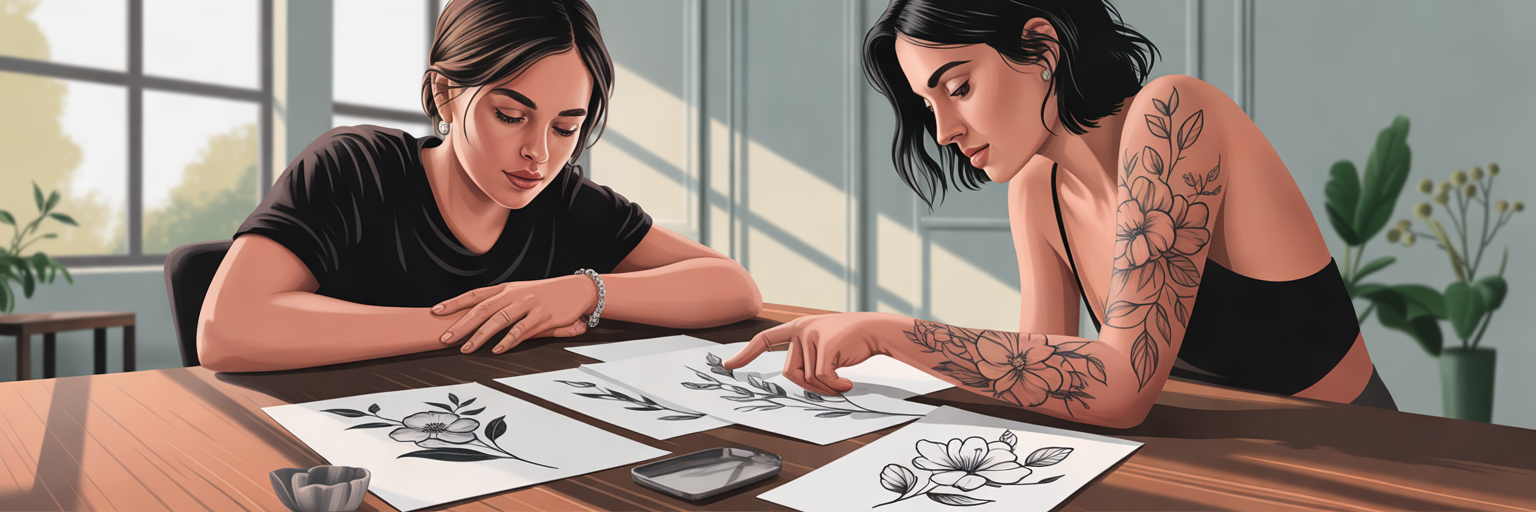
Carbon-based tattoo pigments sit securely in the dermis for decades, making the art of concealing old ink a delicate test of optical physics and skin biology. In Singapore, where contemporary body art leans toward fine-line elegance, reworking outdated designs into minimalist cover up tattoos requires a collaborative approach that balances technical coverage with airy, personalized aesthetics.
The Reality of Minimalist Cover Up Tattoos in Singapore
The Technical Paradox of Negative Space
Every transformation begins with an honest look at how ink behaves inside the skin. Clients often sit in our consultation chairs hoping to place a delicate, single-needle outline directly over a bold tattoo from ten years ago. Here lies the central technical paradox of minimalist cover up tattoos. True minimalism relies on ultra-thin needle groupings and generous open skin, which naturally lack the opaque pigment density needed to obscure older, dark carbon-based ink. Tattooing does not erase what is underneath. Instead, new pigment merges with existing ink in the dermis, much like layering watercolors on canvas.
Traditional concealment methods historically solved this by applying heavy black saturation over the entire area. While effective for hiding mistakes, that heavy approach rarely suits someone seeking refined elegance. Crafting a modern cover up tattoo Singapore clients can wear with pride means trading heavy blocks of ink for calculated optical illusion, a philosophy we detail in our guide to the most effective tattoo styles for covering dark ink.
Visual Misdirection and the Spatial Footprint Rule
Rather than fighting dark pigment head-on, experienced practitioners use visual misdirection to guide the viewer's eye away from the camouflaged zone toward fresh, intentional focal points. To make this optical sleight of hand work, we rely on a vital spatial rule of thumb: expanding the new design footprint by two to three times the original size creates the breathing room required for a lighter aesthetic. That expanded canvas allows us to surround the denser concealment area with delicate linework and uninked negative space. Achieving an effortless, airy look over existing pigment is entirely possible when we prioritize strategic spatial planning over simply tracing fine lines directly atop old work.
Hybrid Styles and Aesthetic Solutions for Faded Ink
Bridging Fine Line Art with Dimensional Shading
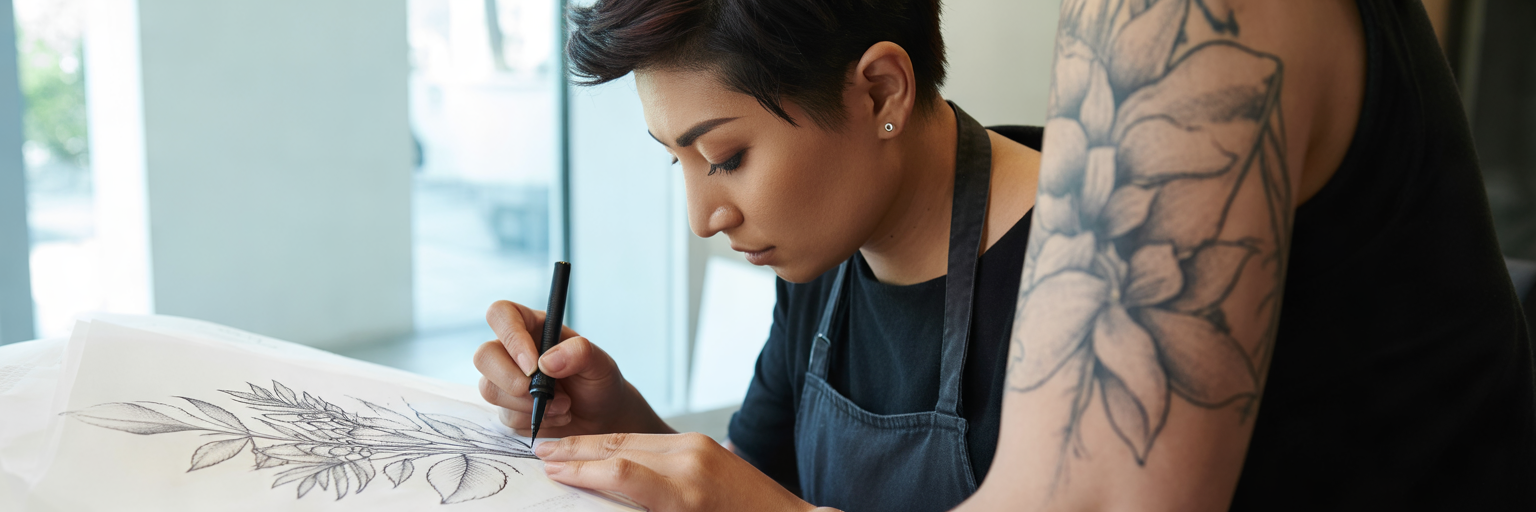
Once we establish the right spatial footprint, our collaborative focus shifts toward selecting textures that harmonize with your skin. We understand why single-line silhouettes and discreet geometric shapes make a fine line tattoo Singapore residents frequently request. However, pure unshaded outlines cannot act as standalone cover-ups over dark ink because the old shapes will simply show through the open gaps. Crafting a successful bespoke tattoo design bridges this technical gap through a thoughtful hybrid approach.
At Memory Lane Tattoo Studio, our artistic director Apple Qu draws on over twenty years of experience to blend minimalist fine-line extensions with targeted areas of hyper-realism, soft tonal washes, or our signature Eastern and Western fusion artistry. By concentrating deeper dimensional shading directly over the old tattoo and letting delicate, whisper-thin lines radiate outward into fresh skin, we neutralize the underlying silhouette without sacrificing modern grace. Even muddied color pieces can be revived when we apply our modern watercolor cover-up techniques to diffuse rigid, outdated edges.
Organic Textures that Mask Old Silhouettes
Nature offers the most forgiving shapes for disguising rigid lines. Organic textures like layered botanical petals, flowing foliage, and intricate feathers utilize high-contrast shading gradients and directional stippling to break up old outlines while preserving a delicate feel. Consider how different hybrid elements interact with existing pigment during our studio assessments:
| Design Approach | Ideal Existing Ink Condition | Primary Concealment Mechanism | Aesthetic Outcome |
|---|---|---|---|
| Botanical Fine-Line & Stipple Shading | Faded outlines or small script | High-contrast dotwork gradients and petal layering | Airy, organic, and timeless |
| Watercolor & Fine-Line Fusion | Discolored or patchy color ink | Color theory neutralization and diffused edge washes | Soft, painterly, and vibrant |
| Micro-Realism & Negative Space | Medium-density symbols or shapes | Three-dimensional shadow mapping and focal redirection | Sophisticated and highly detailed |
| Eastern-Western Brushwork Hybrid | Linear bands or rigid geometric shapes | Dynamic directional flow breaking up static silhouettes | Expressive, bespoke, and fluid |
Remaining open to these hybrid textures during our collaborative design sessions ensures your finished piece reads as intentional bespoke art rather than a heavy cover-up patch.
When to Consider Laser Lightening Before Redesigning
While hybrid shading solves many design challenges, true partnership means knowing when the skin needs clinical preparation before a needle ever touches it. Certain existing pieces simply hold too much pigment density to transition directly into an airy style. Heavily saturated blackwork, thick tribal bands, or deeply blown-out dark ink will overpower delicate stippling or fine linework if we attempt to tattoo over them immediately. In these situations, we guide clients toward laser lightening for cover up preparation rather than forcing a compromised, overly dark design.
Complete removal is rarely necessary when your goal is a bespoke redesign. Undergoing just two to four targeted laser sessions breaks down dense carbon particles in the dermis, lifting stubborn black ink into a faded gray wash. This preliminary fading creates a cleaner, far more versatile canvas for intricate artistry. Taking this multi-step route requires patience, which we help you plan for in our overview on preparing for a multi-session cover-up journey. Waiting for complete dermal recovery between laser treatments and tattooing prevents tissue trauma and dramatically expands your fine-line options.
During our initial assessment, we typically recommend preliminary laser fading if your existing tattoo shows any of these four characteristics:
- Pitch-black pigment density that leaves zero room for lighter tonal gradients or skin breaks.
- Severe ink blowouts where pigment has migrated unevenly into surrounding dermis layers.
- Rigid geometric borders or thick bands that conflict with soft, organic silhouettes.
- Placement on high-visibility areas like the wrist or collarbone where you want an ultra-delicate footprint without significantly expanding the size.
Evaluating whether preliminary fading aligns with your personal aesthetic goals early on saves you from settling for a heavier tattoo than you truly want.
Clinical Skin Assessment and Preparing for Your Consultation
Evaluating Ink Depth and Scar Tissue Relief
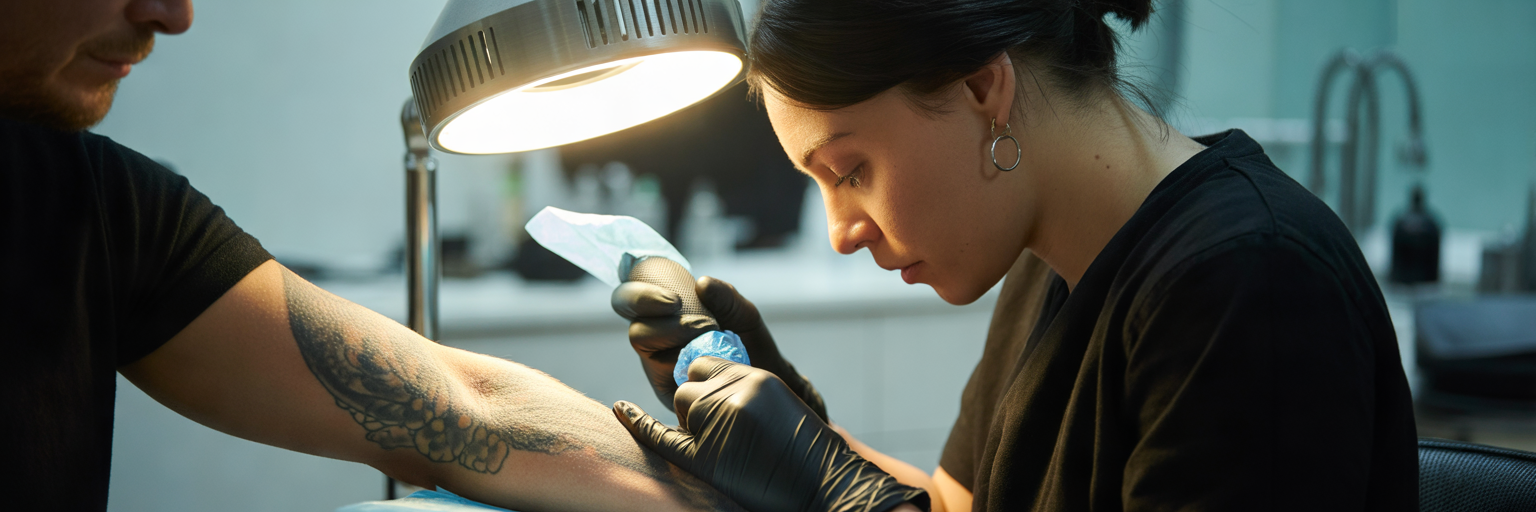
Whether you arrive with naturally faded ink or freshly lightened skin, our next step involves examining the physical topography of your canvas. Before sketching a single line, an experienced artist evaluates physical variables like original ink age, pigment depth, and any raised scar tissue left behind by aggressive previous applications. Tattooing over scarred skin presents a unique optical challenge. Because raised tissue catches and reflects overhead light differently than flat skin, simply coloring over a scarred outline often leaves the old shape visible in relief.
To overcome this textural hurdle, we map custom organic shading patterns and stippled textures that visually flatten and disguise uneven skin relief. You can see how specific organic patterns interact with textured dermis layers in our guide on choosing the best cover-up styles for scars.
How to Document Your Tattoo for a Preliminary Review
A seamless studio experience starts well before you walk through our doors. When reaching out for an initial assessment, sending clear reference material allows our team to evaluate your skin topography accurately. Follow these steps to document your existing tattoo, and explore our consultation preparation checklist to organize your design inspirations beforehand:
- Stand in indirect natural daylight near a window to capture true ink tones and surrounding skin undertones without harsh shadows.
- Turn off your camera flash completely, as artificial flash creates surface glare that hides raised scar tissue and distorts pigment darkness.
- Keep the skin completely bare and dry, avoiding moisturizing lotions or oils that add a reflective sheen to the epidermis.
- Place a ruler or a standard coin beside the tattoo while taking a straight-on, unedited photograph so we can gauge exact spatial proportions.
Providing these clear visuals sets the stage for an accurate, productive consultation where we can focus entirely on creative possibilities.
Collaborating on Long-Term Healing and Pigment Settling
Bringing your new design to life on the skin marks the beginning of its biological settling phase rather than the final step. We view the modern cover-up process as an ongoing partnership between client and artist, never a rushed, single-session fix. Partnering with our dedicated team at Memory Lane Tattoo Studio ensures rigorous hygiene standards, sterile single-use equipment, and thoughtful artistic curation from your first sketch through complete dermal healing. Because we want you to feel completely confident in the studio chair, we encourage asking informed technical questions during your consultation:
- Which specific needle groupings will balance fine-line delicacy with enough pigment weight to mask my old ink?
- How do your opaque pigment formulations neutralize cool, bluish undertones from aged carbon ink?
- What placement adjustments will help these delicate lines hold their crispness in Singapore's warm, humid climate?
Understanding the biological timeline of ink settling keeps expectations grounded as your tattoo matures. Over the first twelve months, macrophage cells in your immune system naturally process the new pigment while your skin remodels over the older ink layers beneath the dermis. Because old and new pigments settle into equilibrium gradually, a planned touch-up session a few months after initial healing is sometimes necessary to refine subtle highlights or deepen a shadow gradient. Protecting your healing skin from equatorial UV rays and excess sweat during those early weeks is vital, so follow our dedicated fine-line aftercare instructions for Singapore's climate to preserve crisp edges. Through open communication, realistic planning, and attentive aftercare, we can transform an unwanted memory into timeless, meaningful body art that feels authentically yours.